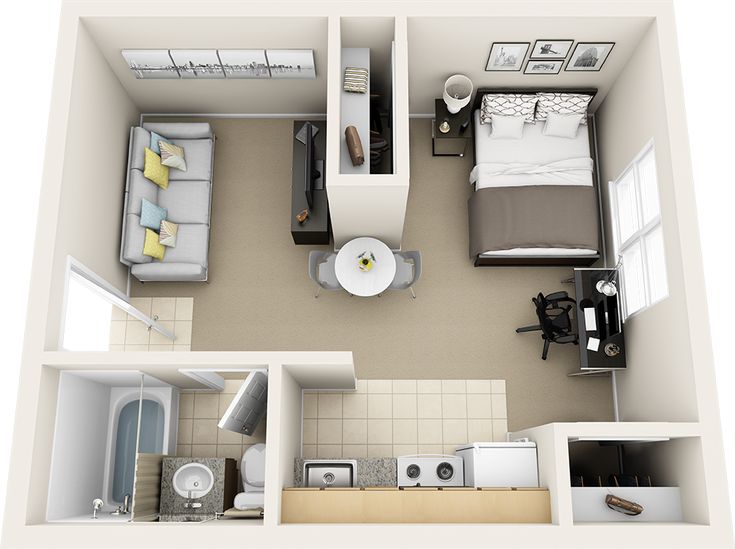
You moved into a studio apartment thinking it would be manageable. Then the movers left, and you stood there staring at your bed, couch, kitchen, and desk — all sharing the same 400 square feet. That moment of quiet panic? Completely normal.
Here’s what most people miss though: a well-planned studio apartment layout isn’t about accepting a cramped situation. It’s about designing around your real daily habits so that every corner of the space actually earns its place. Whether you’re renting your first studio or you’ve been living in one for years and still feel like the furniture is winning, this guide offers grounded, practical answers.
Why Your Studio Apartment Layout Matters More Than You Think
Most people approach a studio the same way — bed against the longest wall, couch somewhere in the middle, and whatever’s left fills in the gaps. It gets the job done on move-in day, but a few weeks later, the space starts to feel restless. Chaotic, even.
That feeling isn’t random. How you arrange your studio apartment layout directly shapes how you experience being home. Environmental psychology research has consistently shown that spatial organization affects stress levels, sleep quality, and the ability to focus. When your sleeping area blends into your living area with no clear boundary, your brain stays in a low-level state of alertness — it literally doesn’t know how to shift gears. That’s not a styling problem. That’s a layout problem, and it has a real solution.
Getting the layout right early also saves you from the cycle of buying storage bins and furniture pieces that treat the symptoms rather than the cause.
Understand Your Floor Plan Before You Move Anything
This step sounds obvious, but most people skip it entirely. Before purchasing a single shelf or area rug, stand in your empty studio and take a few minutes to observe the space honestly. Ask yourself three things:
- Where does natural light enter, and at what time of day?
- What are the fixed elements you cannot move — the kitchen counter, bathroom door, radiator, electrical outlets?
- How do you naturally move through the space from morning to night?
Your answers will shape every decision that follows. A studio apartment layout built for someone who works remotely eight hours a day needs a different approach than one designed for someone who’s rarely home and simply wants a calm place to rest. There’s no single correct answer — only the layout that fits how you actually live.
Take photos of every wall and corner before anything goes in. Sketch a rough floor plan on paper, or use a free tool like Roomstyler or Planner 5D to experiment digitally. Either way, you want a clear picture of what you’re working with before you commit.
The 3-Zone Method: The Foundation of a Functional Studio Layout
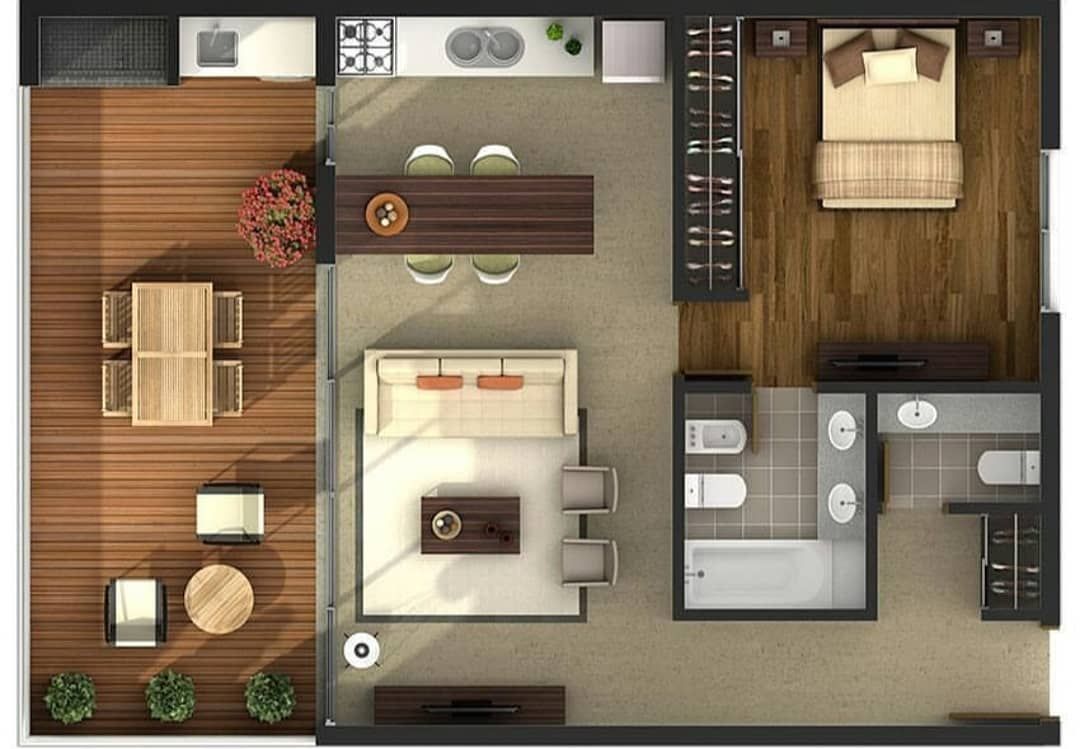
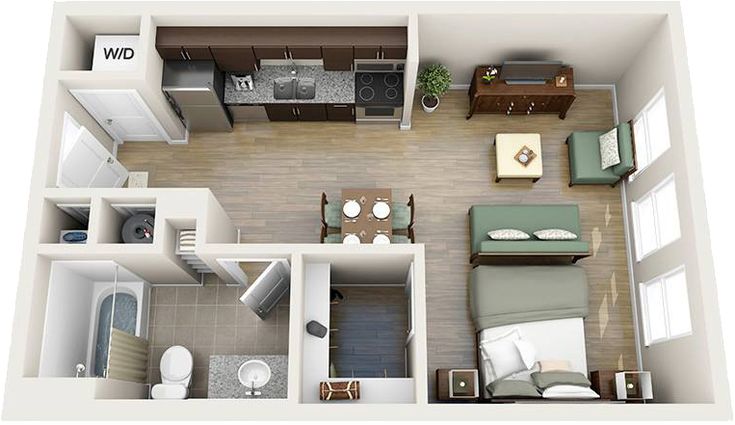
If there’s one principle worth building everything else around, it’s this: a strong studio apartment layout creates distinct zones without relying on walls. Think of it as designing invisible architecture — areas that feel separate because of how furniture, rugs, and placement work together rather than because of physical barriers.
Zone 1: The Sleep Area
The bed is the largest, heaviest piece of furniture in any studio, which makes it the anchor point for the entire layout. Place it where foot traffic is minimal — ideally away from the front door and not in direct line with the main living space. This alone gives the sleeping area a sense of separation.
A platform bed with built-in drawers is one of the more efficient choices here, adding storage without consuming additional floor area. Floating nightstands keep the zone tidy without visual weight. If the apartment is particularly compact, a Murphy bed or a loft bed with a desk built underneath can realistically recover 60 to 80 square feet of usable floor space — a significant gain in a small studio apartment layout.
Zone 2: The Living and Social Area
Orient your seating so it faces away from the sleeping area wherever possible. It’s a subtle shift, but it makes the studio apartment layout feel as though it has distinct rooms. A loveseat or a compact sectional with clean, low-profile lines reads as proportional in a small space. An oversized three-seat sofa, even if it technically fits, tends to dominate and shrink everything around it.
A coffee table with interior storage, or a pair of ottomans that double as seating when guests visit, keeps the zone functional without overloading it.
Zone 3: The Work or Dining Area
If you work from home, desk placement deserves real thought. Positioning it near a natural light source reduces eye strain and creates a mental association with focus and productivity — which matters when your bedroom is only a few feet away. For those who only need an occasional dining spot, a wall-mounted fold-down table is one of the most space-conscious solutions available. It folds flat when not in use and gives back square footage you’d otherwise lose to a permanent table.
Smart Room Dividers That Don’t Shrink Your Space
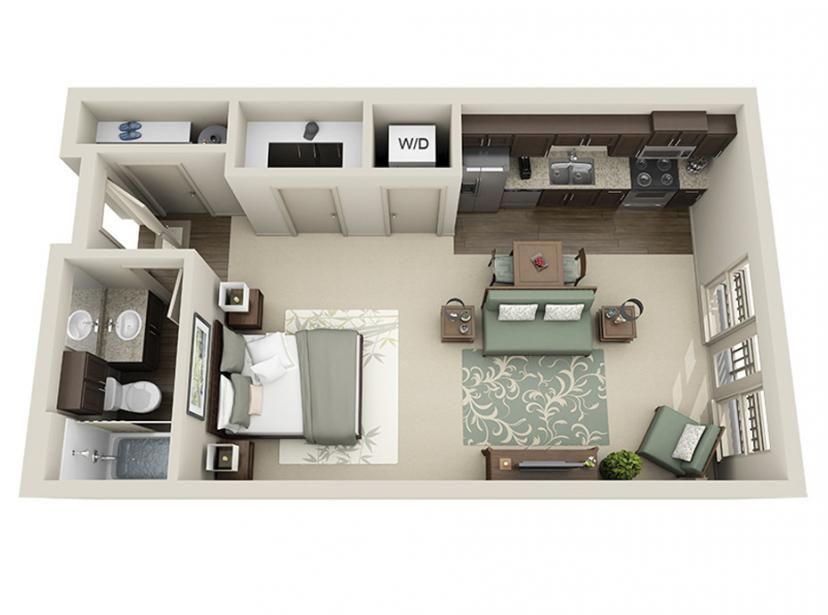
A common hesitation people have when refining their studio apartment layout is that adding any kind of visual division will make the space feel even tighter. It can, but only when done carelessly. The right divider actually creates the perception of more space by giving the eye a sense of structure and depth.
Here are the options that consistently work well:
| Divider Type | Best For | Space Impact |
|---|---|---|
| Bookshelf (open back) | Living/sleep separation | Adds storage, keeps light flowing |
| Curtain panel on ceiling track | Bedroom privacy | Soft, flexible, zero floor footprint |
| Area rugs | Defining zones visually | Zero visual weight, highly effective |
| Sofa back facing bed | Living/sleep boundary | Doubles as furniture, natural barrier |
| Tall plants | Soft, organic separation | Adds life and texture |
| Sheer fabric panels | Light division | Maintains airiness |
Among these, open-back bookshelves are particularly effective and underused. A unit like an IKEA KALLAX or a similar open-frame shelf placed perpendicular to the wall creates a clear boundary between the sleeping and living zones while providing storage access from both sides. You get a functional room divider and a storage unit in a single piece — which, in a studio apartment layout, is exactly the kind of dual-purpose thinking that pays off.
Furniture Choices That Make or Break a Studio Layout
Furniture scale is one of those things that’s easy to get wrong and difficult to fix once everything is in place. In a studio apartment layout, the rule is simple: when you’re unsure between two sizes, go smaller. A loveseat feels appropriately sized in a compact studio. A full three-seat sofa in the same footprint often ends up owning the room in a way that leaves little space for anything else to breathe.
Multifunctional furniture is worth prioritizing from the start. A sofa bed handles occasional guests without requiring a dedicated guest area. A dining table that stays small and expands only when needed means you’re not permanently surrendering floor space for an event that happens a few times a year.
Pay attention to furniture legs. Pieces raised off the ground allow light to pass underneath, which creates a visual sense of openness. The difference between a bed frame with legs and a platform that sits flush to the floor is more noticeable than most people expect — it affects how the entire room feels.
Color, Light, and Visual Tricks That Actually Work
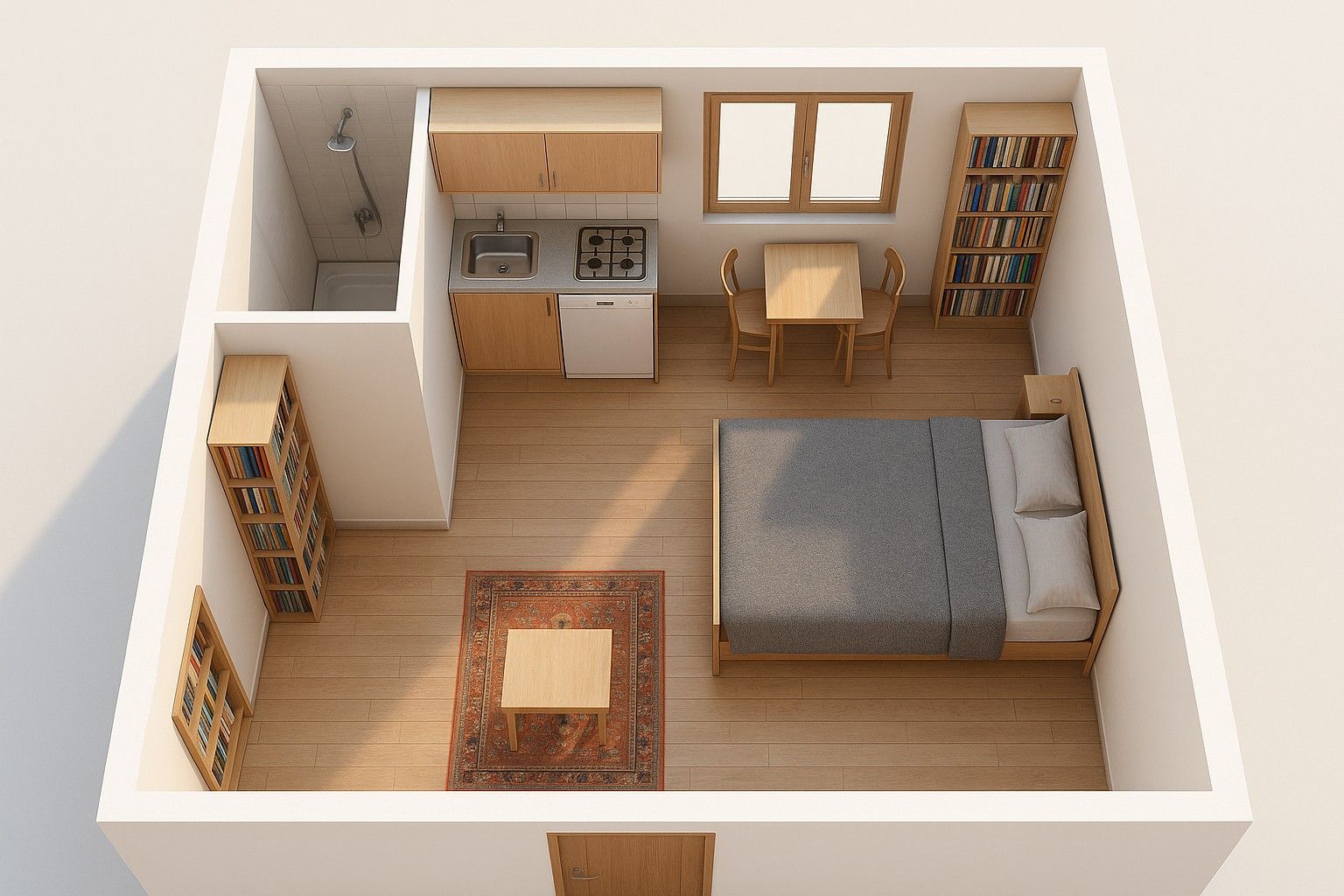
Paint color doesn’t add square footage, but it absolutely changes how much space a room appears to have. In a studio apartment layout, lighter wall and ceiling tones tend to read as more expansive. That doesn’t mean every surface needs to be white — a warm off-white, a pale sage, or a soft greige can feel both welcoming and spacious without being clinical.
Mirrors remain one of the most reliable tools in small apartment design. A large mirror placed on a wall perpendicular to a window reflects natural light across the room and adds a sense of visual depth that’s hard to replicate any other way. One well-positioned mirror consistently does more for a studio than several decorative accessories combined.
Maintain consistent flooring throughout the studio wherever possible. When the eye travels across an uninterrupted floor surface, the room reads as one continuous, larger space. Use rugs to define your zones, not to fragment the floor into separate-looking areas.
A Real-Life Example: How One Studio Transformation Changed Everything
Here’s a straightforward example of how these principles play out in practice. A 380-square-foot city-center studio, occupied by someone working remotely five days a week. The original studio apartment layout had the bed pushed against the longest wall, a desk wedged into a dim corner, and a couch facing a TV placed directly on the floor.
After applying the 3-zone method, the arrangement shifted significantly. The bed moved into a corner alcove with a curtain track installed above for nighttime privacy. The desk relocated to a spot beside the window, giving the work area consistent natural light. A loveseat and a defined area rug created a clear living zone, and a freestanding bookshelf served as the boundary between sleeping and living areas.
Not a single square foot changed. The apartment was identical in size. But it stopped feeling like a room where everything competed for space and started feeling like a home with a clear sense of order — and in compact living, that shift in perception is worth more than almost any renovation.
Common Studio Apartment Layout Mistakes to Avoid
Even with good intentions, certain patterns come up repeatedly in small apartment design and consistently make things harder than they need to be.
Pushing all furniture against the walls. This feels like the logical move in a small space, but it often produces a flat, disconnected look. Furniture pulled slightly away from walls creates depth and allows the room to feel more intentional.
Neglecting the entry area. The first thing you see when you walk in shapes how you feel about the entire apartment. A small console table, a wall hook, or a simple tray near the door gives arriving home a sense of calm rather than clutter.
Scaling furniture too large for the room. If you have to turn sideways to move around a sofa, it’s too big. That minor daily friction adds up and makes the space feel frustrating over time.
Relying on a single overhead light. One ceiling fixture flattens a room and removes any sense of warmth or dimension. Layered lighting — a floor lamp in one corner, a bedside lamp, subtle under-cabinet lighting in the kitchen zone — transforms how a studio apartment layout feels in the evening hours.
Frequently Asked Questions
What is the best studio apartment layout for a small space?
The most effective studio apartment layout for a small space applies the 3-zone method — creating clear distinctions between the sleeping, living, and working areas through furniture placement, area rugs, and visual dividers rather than physical walls. This approach builds structure into the space without closing it in or making it feel divided.
How do I separate my bedroom from my living room in a studio?
Several approaches work well: an open-back bookshelf positioned perpendicular to the wall, a curtain panel on a ceiling-mounted track, a sofa placed with its back oriented toward the bed, or a well-defined area rug anchoring each zone. Each of these creates visual and functional separation without reducing the actual footprint of the space.
What furniture works best in a studio apartment layout?
Multifunctional furniture consistently performs best — sofa beds for occasional guests, storage ottomans, fold-down dining tables, and beds with built-in drawers. Pieces with visible legs also help by allowing light to flow underneath, which keeps the studio apartment layout feeling open rather than heavy.
Can a studio apartment feel spacious?
Yes, genuinely. The right studio apartment layout — combining vertical storage, strategic mirror placement, consistent flooring, properly scaled furniture, and layered lighting — can make a 350-square-foot space feel comfortable and open in a way that surprises most first-time visitors.
In a well-designed studio apartment layout, the strategic use of multifunctional furniture is paramount to maximizing space efficiency. Items such as sofa beds, storage ottomans, and fold-down dining tables not only serve multiple purposes but also contribute to a lighter, more open aesthetic. Additionally, incorporating elements like visible legs on furniture allows for unobstructed light flow, further enhancing the sense of spaciousness. With thoughtful design choices, even the most compact studio apartment can exude comfort and openness, challenging preconceived notions about small living spaces.
Conclusion: Your Studio Is a Design Opportunity, Not a Limitation
A well-considered studio apartment layout isn’t a compromise. It’s a focused exercise in understanding how you live and designing specifically around that. When you approach the space with intention — applying clear zoning, selecting furniture that earns its place, and using light and proportion thoughtfully — a small studio becomes a home that supports you rather than one you’re constantly working around.
Start with one deliberate change. Move the bed, introduce a bookshelf divider, or replace an oversized piece of furniture with something better scaled to the room. In a small space, single adjustments create visible results quickly. The version of your studio apartment layout that genuinely works for you doesn’t require more square footage. It just requires a clearer plan.