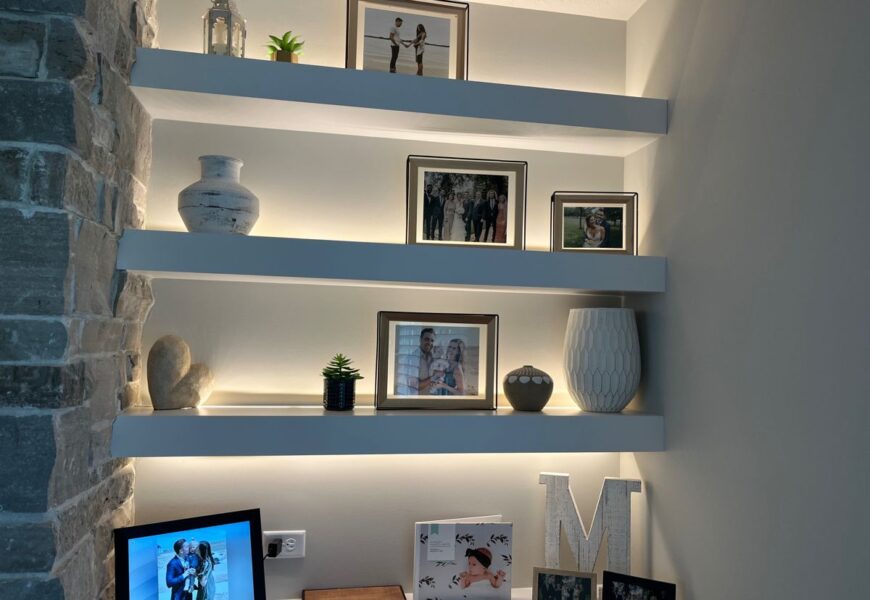
Ever walked into a room and sensed that something was off, even though every piece of furniture seemed to be in its place? Nine times out of ten, the problem is the walls. They’re either bare and forgettable, or crowded with mismatched frames that don’t add up to any real story. That’s precisely the gap floating shelf decor fills, and it manages to do so without taking up floor space or draining your budget.
Over the past few years, floating shelf decor has grown from a niche design choice into something close to a staple. It isn’t just a trend borrowed from home renovation shows and forgotten a season later. It solves a genuine problem many homeowners face: how do you bring personality, storage, and visual depth to a wall without hauling in bulky furniture? This guide covers the full process, from choosing the right shelf to arranging it the way someone with a trained eye would.
What Makes Floating Shelf Decor So Popular Right Now
Living spaces keep shrinking. Rents are climbing in most cities, and few people have room for a heavy bookcase that eats up an entire corner of the living room. Floating shelf decor responds to that shift quite naturally, since it makes use of vertical wall space instead of competing for floor space.
There’s a visual appeal at play too. A well-mounted floating shelf appears to hover against the wall, with no obvious brackets pulling focus. That “invisible support” look gives even a modest apartment a touch of boutique-hotel polish. Add in how easily the decor can be swapped out season to season, and it becomes clear why floating shelf decor continues to show up across interior design feeds and renovation blogs alike.
There’s also a practical reason renters gravitate toward it. Most floating shelves need only a handful of small screw holes, which is a far smaller commitment than mounting a heavy cabinet into drywall. For anyone who relocates every year or two, that difference matters more than people expect.
Choosing the Right Floating Shelves Before You Decorate
Before any styling begins, the shelf itself needs to suit the room it’s going into. Strong floating shelf decor starts with the right foundation, not with the objects eventually placed on top of it.
Materials That Match Your Style
Wood shelves bring warmth into a space and tend to suit bohemian, farmhouse, or Scandinavian-style interiors particularly well. Metal or glass shelves, on the other hand, lean toward an industrial or modern look, and they photograph beautifully in minimalist rooms. Reclaimed wood adds character but often carries more weight, so it’s worth checking that your wall anchors can handle it.
Here’s a quick breakdown of common materials and where they tend to work best:
| Material | Best For | Weight Capacity | Style Vibe |
|---|---|---|---|
| Solid Oak/Walnut | Living rooms, offices | High | Warm, classic |
| MDF with Veneer | Budget rooms, rentals | Medium | Modern, clean |
| Glass | Bathrooms, minimalist decor | Low-Medium | Sleek, airy |
| Metal/Iron | Kitchens, industrial lofts | High | Bold, edgy |
| Reclaimed Wood | Bohemian, rustic spaces | Medium-High | Textured, cozy |
Size and Spacing Rules Nobody Tells You
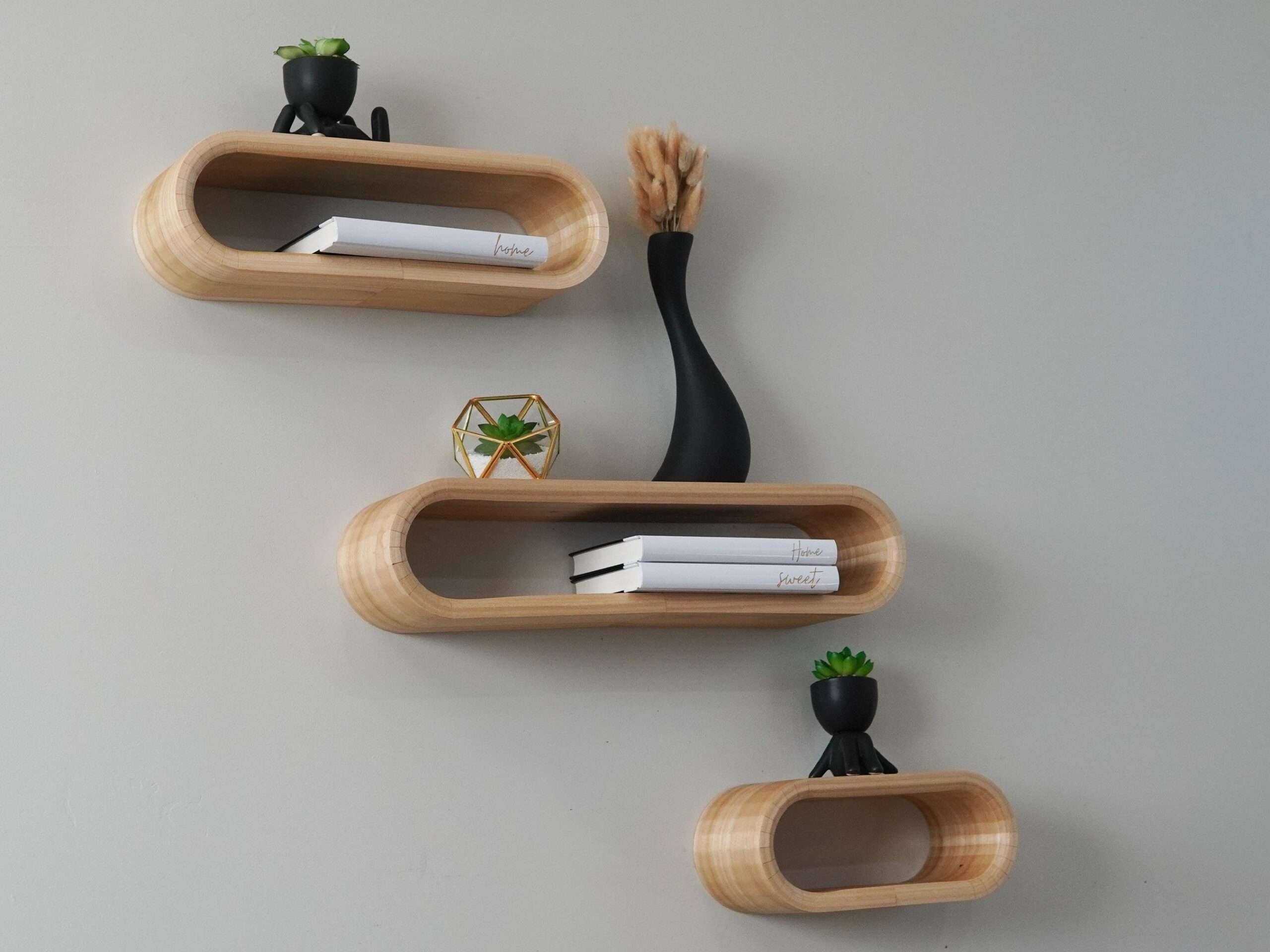
A single 24-inch shelf floating alone on a large, empty wall tends to look stranded rather than intentional. A helpful rule of thumb is to leave about 8 to 10 inches between stacked shelves, giving books and taller decor pieces enough room to breathe. For a gallery-style arrangement, three shelves staggered at slightly different heights usually beats a perfectly even row, since the variation gives the eye somewhere natural to travel.
Eye level matters more than most people realize when planning this out. Shelves mounted too high end up as little more than dust collectors that nobody actually looks at. Anything meant to be admired, rather than simply stored, should sit roughly at or just above the eye level of an average adult standing in that room.
Floating Shelf Decor Ideas Room by Room
Every room asks for a slightly different approach. What feels right in a bathroom rarely translates well to a home office, and that mismatch is where a lot of people lose momentum.
Living Room
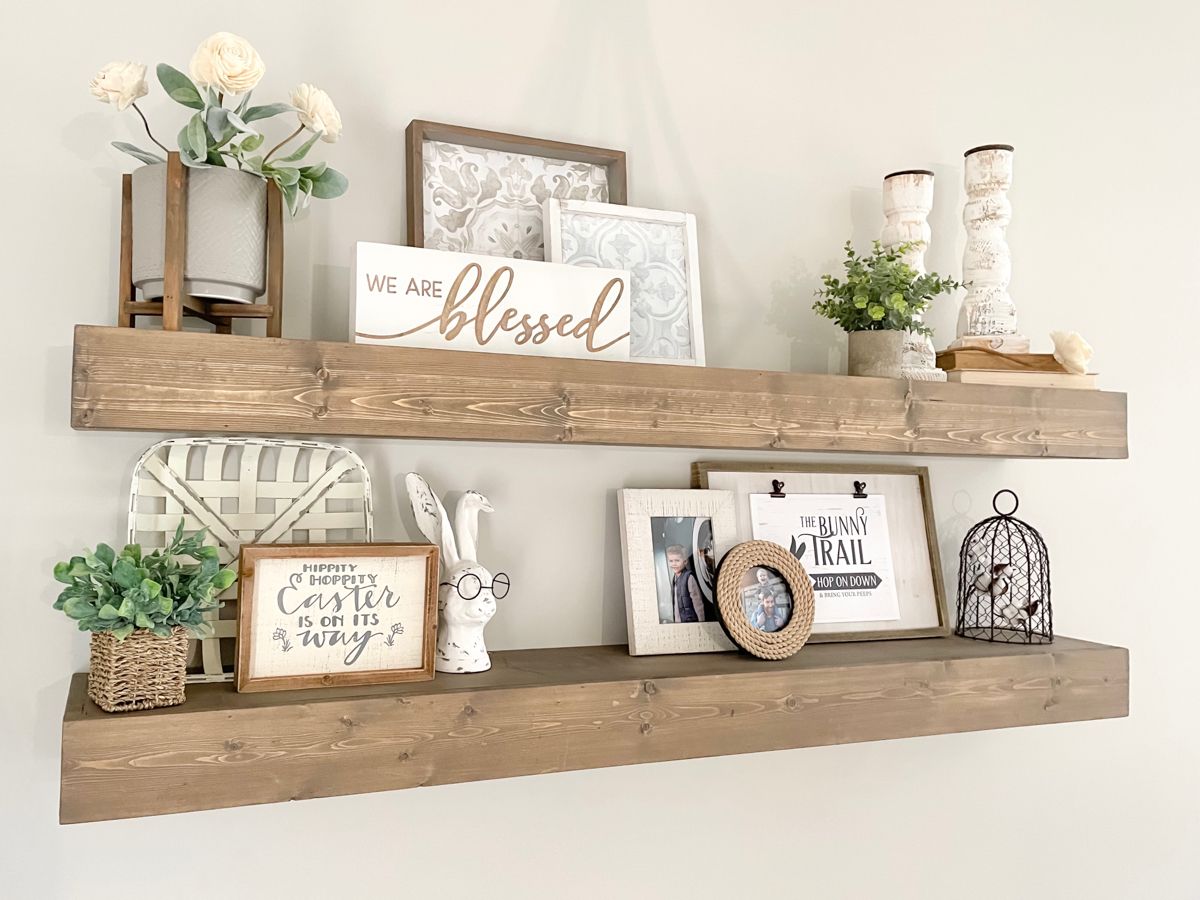
This tends to be the room where floating shelf decor gets the most attention, simply because it’s the space guests actually spend time in. A good starting point is grouping a small plant, a short stack of two or three books, and one meaningful object, such as a ceramic bowl or a framed photo. It’s worth avoiding strict symmetry across multiple shelves; letting each one hold its own small “scene” tends to feel more natural and lived-in.
A friend of mine transformed a plain rental living room using nothing more than three staggered oak shelves above her sofa. She combined a trailing pothos, a couple of art prints leaned casually against the wall rather than hung, and a small brass candle holder. The whole setup cost her under fifty dollars, yet it became the first thing every visitor noticed and asked about.
Bedroom
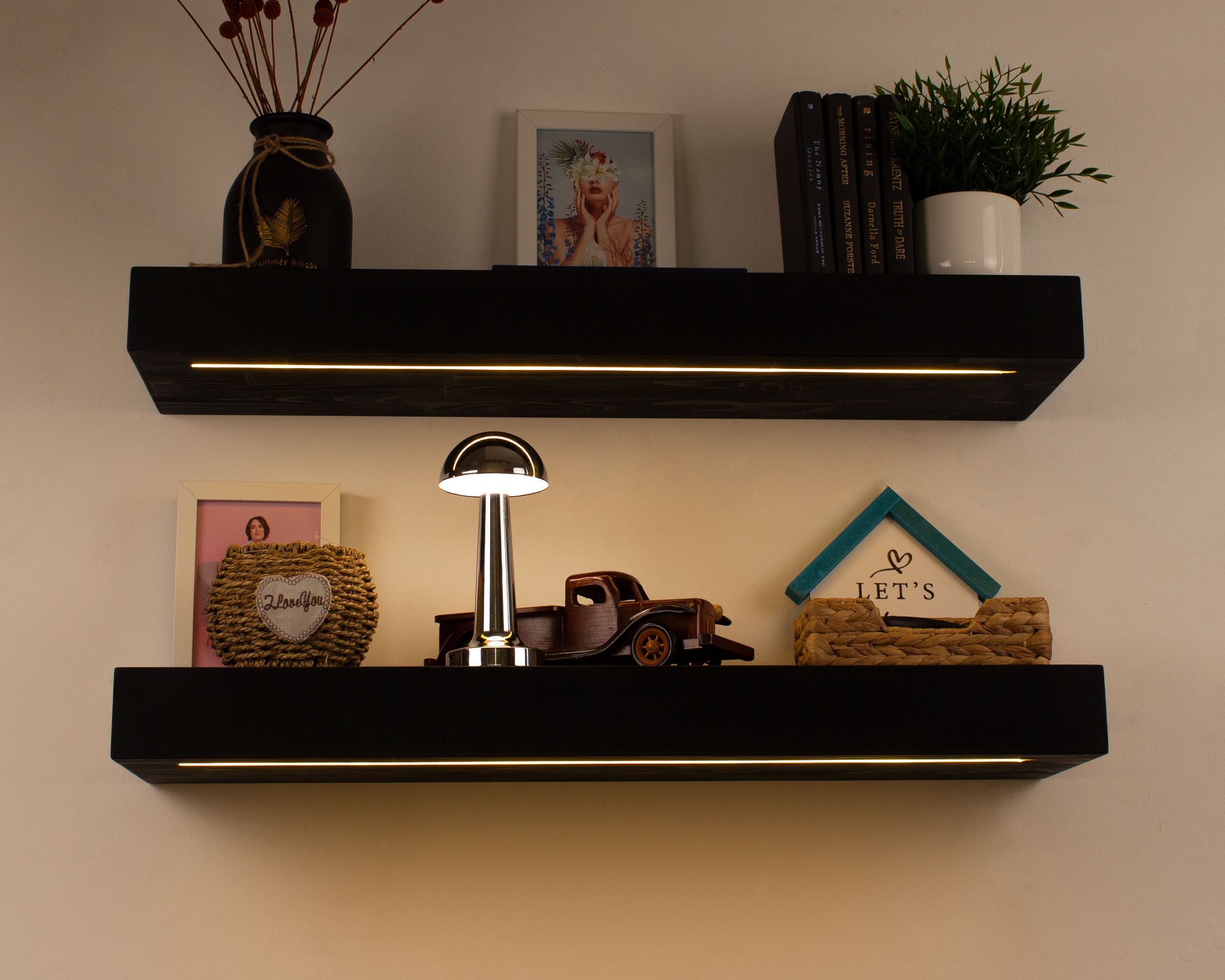
Bedroom floating shelf decor tends to work best when it feels calm rather than busy. Soft lighting, one or two framed photos, a small vase, and perhaps a candle usually do the trick. It’s best to steer clear of anything too loud or colorful here, since the goal is rest, not a bold statement.
Kitchen
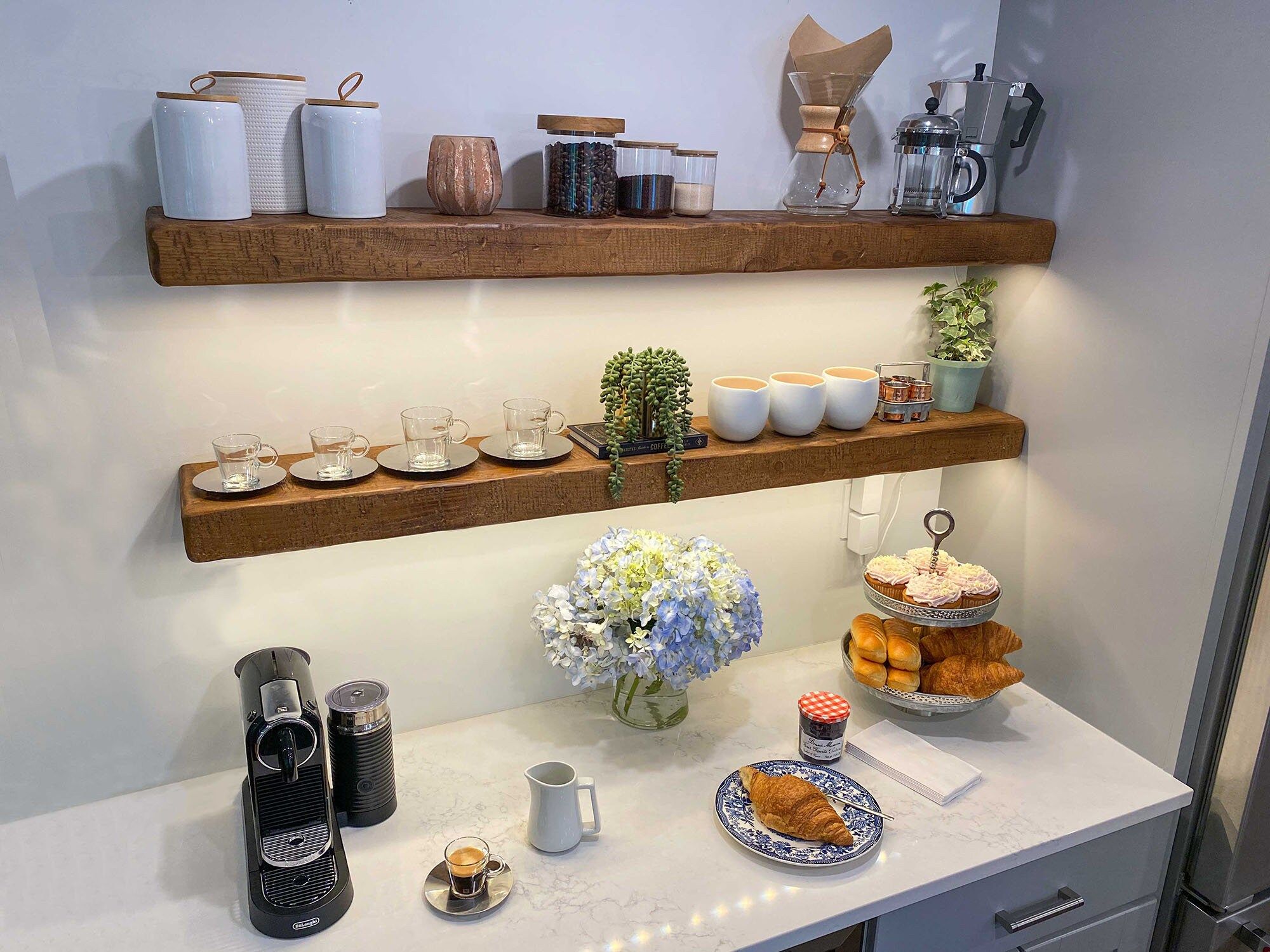
Open kitchen shelving has its share of critics, mostly because of concerns around dust and grease, but when handled thoughtfully, it can look genuinely striking. Sticking to items used regularly works well: a stack of everyday plates, a few glass jars filled with pasta or coffee beans, and one small plant that can tolerate heat. Rotating a few seasonal pieces in and out keeps the display from feeling stagnant.
Bathroom
Small bathrooms gain a lot from floating shelf decor, since every inch of counter space tends to be in short supply. Rolled towels, a small plant that enjoys humidity, such as a pothos or fern, and one or two glass containers for cotton balls or soap all work nicely in this setting.
Home Office
A home office shelf benefits from mixing function with a bit of personality. Books arranged both vertically and stacked horizontally, paired with one small plant and a personal item like a travel souvenir, keep the space from feeling sterile without tipping into clutter.
Styling Techniques That Actually Work
Choosing attractive shelves is only half the job. What you place on them, and how, is usually where the difference between a polished result and a forgettable one really shows.
The Rule of Three
Interior designers consistently lean on groupings of three, since odd numbers tend to look more balanced to the eye than even ones do. A tall item, a medium item, and a small item placed together create a sense of visual rhythm rather than a flat, predictable line. This one adjustment alone can instantly improve most floating shelf decor.
Mixing Heights and Textures
Uniform heights across a shelf can look stiff and a little lifeless. Pairing a tall vase with a short stack of books and a flat dish gives the eye somewhere interesting to move. Mixing materials matters just as much, so a wooden shelf holding a ceramic pot, a woven basket, and a metal frame together creates contrast that reads as intentional rather than accidental.
Layering with Books and Art
Books serve a second purpose beyond reading when it comes to shelf styling; they act as natural height boosters. Stacking two or three together and placing a small object on top, like a tiny plant or a paperweight, adds instant dimension. Leaning a small framed print against the wall behind other objects also brings a sense of depth that flat, single-item shelves usually lack.
A few quick, low-effort styling moves worth trying today:
- Group objects in odd numbers, ideally three or five, rather than pairs
- Add at least one plant, even a faux one, for a natural touch
- Leave some empty space; not every inch needs to be filled
- Vary textures, mixing matte, glossy, woven, and smooth finishes together
- Rotate seasonal decor every few months to keep the display feeling current
Common Mistakes to Avoid
Even well-intentioned floating shelf decor can go sideways. Overcrowding is probably the most common issue, since cramming ten small trinkets onto one shelf tends to read as cluttered rather than curated. Ignoring scale is another frequent misstep, where tiny objects get lost on a long shelf while oversized pieces overwhelm a shorter one.
Lighting is often overlooked as well. A beautifully arranged shelf sitting in a dim corner loses much of its impact once the sun goes down. A small clip-on light or a nearby lamp can change how the entire display reads in the evening.
Finally, matching everything too perfectly can backfire. A shelf where every object shares the same color and shape starts to resemble a store display rather than a real home. A little imperfection is usually what makes floating shelf decor feel authentic instead of staged.
Budget-Friendly vs High-End Floating Shelf Decor
Not everyone is working with the same budget, and that’s fine, since floating shelf decor scales comfortably in both directions.
On the more affordable end, thrifted vases, inexpensive plants, and secondhand books repainted or re-covered can look surprisingly polished once arranged with care. A can of spray paint alone can turn a mismatched set of frames into a cohesive collection for just a few dollars.
On the higher end, investing in solid wood shelves, handmade ceramics, or a single statement art piece can elevate the entire display. The reassuring part is that the underlying principles, such as the rule of three and mixing textures, matter far more than the price tag attached to each item. A well-styled thrifted shelf will consistently outshine an expensive one that’s overcrowded.
Is spending more always worth it? Not necessarily. What actually makes the difference is intentionality: choosing a smaller number of thoughtful pieces rather than filling every gap simply because the space is there.
FAQs
How high should floating shelves be mounted?
Most designers recommend somewhere between 60 and 66 inches from the floor for comfortable eye-level viewing in living rooms and bedrooms, though kitchens and bathrooms often sit a bit lower for practical reach.
How many items should go on one floating shelf?
Three to five items generally works well. Fewer than three can look sparse, while more than five often tips into clutter unless the pieces are quite small and visually cohesive.
Can floating shelves hold heavy books?
Yes, provided the shelf and its wall anchors are rated for the load. Solid wood shelves mounted into wall studs typically handle books far better than lightweight MDF options can.
What’s the best way to keep floating shelf decor from looking cluttered?
Leave some visible negative space on each shelf, avoid matching every object too closely, and stick to a limited color palette so the eye isn’t pulled in too many directions at once.
Conclusion
Floating shelf decor isn’t as complicated as it might first appear once a few basics fall into place: the right shelf, thoughtful spacing, and a small handful of well-chosen objects grouped in odd numbers. It’s one of the rare home upgrades that costs relatively little yet noticeably changes how an entire room feels. A good place to start is with just one shelf in whichever room bothers you most, applying the rule of three and observing how it looks after a week or so. The small adjustments that follow will teach you more about your own taste than any single guide ever could.