Healthy plants don’t start above ground. They start in the soil, and the quality of that soil determines almost everything — how deep roots grow, how well water drains, and how much nutrition reaches your plants through the season. Most garden soil, whether you’re in a city backyard or a rural plot, has room for improvement.
Mixing compost with topsoil is one of the most reliable methods gardeners have for making that improvement. It’s practical, affordable, and grounded in decades of horticultural experience. You don’t need a degree in soil science or a warehouse of supplies. What you do need is a clear understanding of why this combination works, how to get the ratios right, and which mistakes are worth avoiding before you start.
This guide walks through all of that — from the basics of each material and how they work together, to specific ratios for different garden situations, to a step-by-step mixing process and a clear breakdown of what commonly goes wrong. By the end, you’ll have a solid foundation for improving any growing space.
Why Mixing Compost with Topsoil Beats Using Either Alone
It helps to start with the logic, because once you understand it, everything else falls into place naturally. Topsoil is the uppermost layer of earth — typically the top 2 to 8 inches. It contains mineral particles (sand, silt, and clay), trace minerals, and some naturally occurring organic material. It gives plant roots something stable to anchor into and provides the mineral content that sustains growth over the long term. The problem is that topsoil alone — especially in gardens that have been dug over, built on, or neglected — often lacks the biological life and organic matter that plants genuinely need. It compacts under pressure, drains unevenly, and over time becomes a fairly poor growing environment.
Compost works differently. It’s decomposed organic material — kitchen scraps, garden clippings, leaves, wood chips, and manure broken down by bacteria, fungi, and other soil organisms into a dark, crumbly, nutrient-rich substance. It improves drainage in clay-heavy soils, improves moisture retention in sandy soils, and supports the microbial activity that makes nutrients accessible to plant roots. The catch is that compost alone doesn’t provide adequate structural support. It can’t anchor roots reliably, and it shrinks significantly as decomposition continues.
Mixing compost with topsoil addresses both limitations at once. The mineral structure of topsoil provides stability and long-term mass. The organic richness of compost delivers fertility, aeration, and biological activity. Together, they create a growing medium that performs better than either material could independently — and one that continues to improve as the organic matter breaks down further over the seasons.
Understanding Topsoil: What You’re Actually Working With
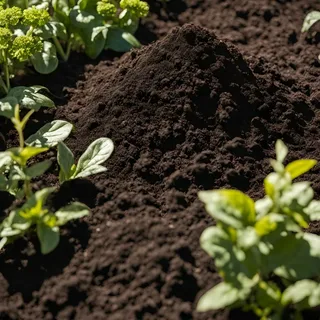
Before mixing compost with topsoil, it’s worth taking a moment to assess what kind of topsoil you’re dealing with. The material varies significantly, and those differences directly affect how much compost you’ll need and what results to expect.
Loamy topsoil is the ideal starting point — a balanced mix of sand, silt, and clay that drains well, retains adequate moisture, and provides a good structure for roots. If your soil already has this quality, you need less compost to achieve strong results.
Clay-heavy topsoil is a different story. It compacts easily, holds water for too long after rain, and dries into hard, cracked ground in warm weather. It’s common across much of the UK, large parts of Australia, and the central and eastern United States. Clay soil benefits greatly from compost additions because the organic matter physically separates the clay particles, creating space for air and water movement.
Sandy topsoil presents the opposite problem. It drains so quickly that water and dissolved nutrients move past the root zone before plants can absorb them. Coastal regions and areas with ancient river sediment often have naturally sandy soils. Here, compost acts as a binding agent and moisture reservoir, holding water and nutrients near the surface where roots can reach them.
Purchased topsoil introduces its own uncertainties. A widespread problem in the industry is suppliers delivering fill dirt — essentially subsoil scraped from construction sites — under the label of topsoil. It lacks organic matter, biological activity, and the nutrient content of genuine topsoil. If you’re buying topsoil for a larger project, always ask for a product specification, inquire about the source, and prioritize screened, certified material.
Knowing your starting point makes the process of mixing compost with topsoil far more precise and far less guesswork.
Understanding Compost: Quality Matters More Than Quantity
This is something experienced gardeners learn early, sometimes through a disappointing season: the quality of your compost has more influence on the final result than the exact ratio you use. Two gardens using the same proportions can get very different outcomes depending on what went into the compost and how mature it is.
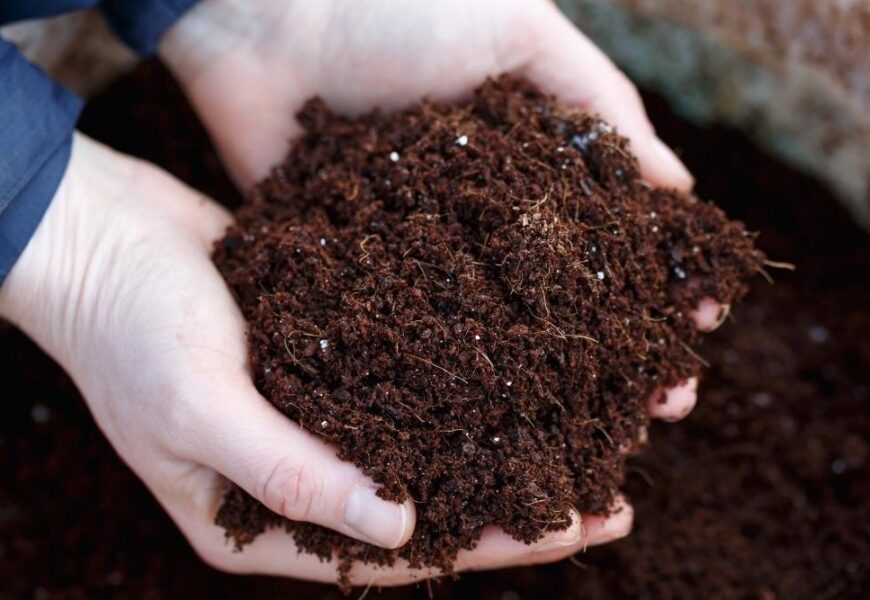
Finished compost looks dark brown to black, crumbles easily between your fingers, and smells like rich forest floor — earthy and clean, not unpleasant. You shouldn’t be able to identify any of the original materials in it. At this stage, it’s microbially stable and ready to use.
Immature compost is the most common culprit behind disappointing results. When compost hasn’t fully broken down, the microbes still working to finish decomposition will consume soil nitrogen in the process — a phenomenon called nitrogen drawdown. Rather than feeding your plants, the compost effectively competes with them for the nutrient they need most. If your compost smells sour, like ammonia, or still shows visible food scraps or plant material, give it more time.
Commercial compost varies widely depending on the source. Municipal green waste compost, food-waste-based compost, and agricultural residue compost can all be excellent. But some commercial products contain weed seeds from inadequately heated piles, pesticide residues carried in from treated crop material, or trace heavy metals from industrial waste streams. Independently tested, certified products offer more confidence, and it’s always reasonable to ask a supplier for their testing data.
Homemade compost made from a diverse range of inputs — kitchen scraps, garden trimmings, fallen leaves, small amounts of aged manure, coffee grounds — tends to be microbiologically richer than single-source commercial products. The variety of organic materials creates a more complex microbial community, which translates into broader nutrient availability for your plants. The limitation is volume; most home composters simply don’t produce enough to cover large garden areas in a single season.
When mixing compost with topsoil, start with the best compost you can source. Everything else depends on it.
The Right Ratios for Mixing Compost with Topsoil
The most common practical question is simply: how much compost do I need? There’s no universal answer, but there are well-established guidelines for each situation.
For General Garden Beds
A 3:1 ratio — three parts topsoil to one part compost — is the most practical starting point for general in-ground garden beds. It enriches the soil meaningfully without overwhelming it with organic matter, which can cause drainage problems or nutrient imbalances at higher concentrations.
If your beds are already in reasonable condition and you’re simply refreshing them between growing seasons, an annual top-dressing of 1–2 inches of compost raked into the surface is sufficient. You don’t need to rebuild the entire bed every year.
For Raised Beds
Raised beds work best with a richer blend. Because plant roots are confined to the bed volume and can’t extend into surrounding native soil for additional water or nutrients, the growing medium carries more responsibility. Mixing compost with topsoil at a 50/50 ratio is a common and effective approach. Alternatively, many experienced gardeners use a 60/30/10 formula: 60% quality topsoil, 30% compost, and 10% perlite or coarse sand to ensure reliable drainage.
The three-way mix used widely in professional landscaping — equal parts topsoil, compost, and coarse sand — is another proven option for new raised bed construction.
For Vegetable Gardens
Crops like tomatoes, peppers, squash, corn, cucumbers, and brassicas are nutrient-intensive. They produce large amounts of foliage, fruit, and seed over a single season and draw heavily on soil fertility. For dedicated vegetable beds, mixing compost with topsoil at 30–50% compost content by volume gives these plants what they need — fertility alongside good drainage and structural support.
For Lawn Renovation
Whether you’re establishing a new lawn from seed, overseeding patchy areas, or rehabilitating thin grass, mixing compost with topsoil at a 1:4 ratio — one part compost to four parts topsoil — applied to a depth of 4–6 inches creates an excellent seedbed. Rake it level, water it thoroughly, and seed without delay.
For Trees and Established Shrubs
Mature woody plants generally need far less fertility input than annual vegetables. Excessive compost around trees can encourage shallow root development, where roots stay close to the surface seeking moisture and nutrients rather than anchoring deeply. For backfilling planting holes or improving soil around existing trees and shrubs, a 10–20% compost proportion is appropriate.
For Container Gardening
Containers demand a mix that balances moisture retention with drainage, since waterlogged roots in confined spaces are a reliable path to plant failure. A workable blend for pots and planters is 40% topsoil, 40% compost, and 20% perlite — structural enough to hold plants, fertile enough to sustain them, and airy enough to drain properly.
How to Mix Compost with Topsoil: Step-by-Step
The technique matters. A mix that’s blended unevenly will deliver uneven results — patches of rich fertility next to areas of compacted mineral soil. Here’s how to do it properly.
What You’ll Need
- Mature finished compost
- Quality topsoil (screened and loamy where available)
- Wheelbarrow or large tarp
- Spade or garden fork
- Rake
- Measuring buckets or containers for ratio accuracy
Step 1: Test Your Existing Soil First
A basic soil test — widely available as an inexpensive kit from garden centers — tells you your current pH, nitrogen, phosphorus, and potassium levels before you start amending. This step is easy to skip, and many gardeners do skip it. That’s a mistake. Knowing your starting point means you can target your amendments accurately rather than guessing. Most vegetables and ornamentals prefer a soil pH between 6.0 and 7.0. Compost tends to buffer pH toward neutral over time, which is genuinely useful in both acidic and alkaline soils.
Step 2: Calculate Your Volumes
Before mixing compost with topsoil, work out how much material you need. A raised bed measuring 4 feet by 8 feet by 12 inches deep holds approximately 32 cubic feet — roughly 1.2 cubic yards — of growing medium. At a 60/30 ratio, that means around 19 cubic feet of topsoil and 10 cubic feet of compost. Taking a few minutes to calculate this avoids the frustration of running short mid-project.
Step 3: Layer and Combine
Spread alternating layers of topsoil and compost on your tarp or in your wheelbarrow, then mix thoroughly with a spade or fork, turning from the bottom several times. Work until the blend has a consistent color and texture throughout. Unblended streaks of pure compost or dry topsoil mean uneven nutrient distribution in your bed — something plants will make obvious to you within a few weeks of planting.
Step 4: Apply at the Right Depth
Spread the blended mix evenly across your bed. Vegetable beds and raised planters need a minimum depth of 8–12 inches to support healthy root development. For lawn areas, 4–6 inches is standard practice. Use a rake to level the surface, pressing gently to remove large air pockets without reversing the aeration work you’ve just done.
Step 5: Water Before Planting
Watering the freshly prepared bed activates microbial life in the compost and allows the mix to settle into a stable structure. Where your schedule allows, wait 24–48 hours before seeding or transplanting. Freshly turned compost can release small amounts of anaerobic gas during this settling period, and allowing it to dissipate gives your seeds and seedlings a cleaner start.
Application-Specific Tips for Better Results
Amending Heavy Clay Soil
Clay soil requires a more generous compost addition than other soil types. For dense, slow-draining clay, mixing compost with topsoil at 25–30% compost content, incorporated to a depth of 8–10 inches, produces noticeable improvement within a single season. Repeating this annually for two to three years achieves a lasting transformation of the soil profile. When working with clay, adding coarse sand alongside the compost further improves drainage — but never add fine sand alone to clay, as the two materials together create something closer to concrete than garden soil.
Amending Sandy Soil
Sandy soil’s core weakness is its inability to hold onto either water or nutrients. Both drain past the root zone before plants can use them. When mixing compost with topsoil in sandy conditions, a 20–25% compost addition significantly improves both moisture retention and nutrient availability. Sandy soils tend to break down organic matter faster than clay soils, so consider adding compost twice a year rather than once to maintain consistent soil quality.
Topdressing an Established Lawn
For a lawn that’s thinning, patchy, or simply underperforming, mixing compost with topsoil and spreading a light layer — no more than half an inch — across the surface before overseeding is a practical rehabilitation method. Use the back of a rake to work it gently down to soil level so the blend makes contact with the ground rather than sitting on top of the grass blades.
Mistakes That Undermine Mixing Compost with Topsoil
Most gardening setbacks are avoidable. With this particular process, the same errors come up repeatedly — and knowing them in advance is genuinely useful.
Using compost that isn’t finished. This is the most frequent mistake. Immature compost triggers nitrogen drawdown in the soil, leaving your plants short of the nutrient they need most at the exact moment they’re trying to establish. When in doubt, leave the compost pile for a few more weeks and check again.
Not integrating the compost. Laying compost on the soil surface without digging it in leaves the improvement where roots aren’t. The root zone — the top 6–8 inches of soil — is where nutrients and moisture need to be available. Mixing compost with topsoil through that depth, rather than just across the surface, is the difference between real improvement and surface-level optics.
Using too much compost. More compost doesn’t always mean better plants. Above 50% compost content in a mix, drainage can suffer, excess nitrogen can cause foliage to burn, and structural support for roots weakens. The mineral content of topsoil isn’t just filler — it’s what gives the blend its stability.
Buying low-quality topsoil. Fill dirt sold as topsoil remains a genuine and widespread issue. It compacts quickly, contains minimal organic matter, and sometimes includes debris from construction sites. Large-volume purchases always warrant verification of the source and a clear product specification.
Skipping the soil test. Mixing compost with topsoil without testing first is a bit like seasoning food without tasting it. An inexpensive test takes the guesswork out of how much amendment to add and which nutrients are already present in sufficient quantities.
The Long-Term Approach: Building Soil Over Time
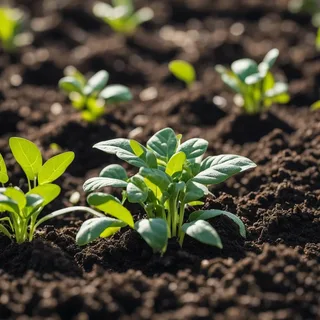
The gardens that consistently produce the best results aren’t the ones that had the most done to them in a single season. They’re the ones tended consistently and intelligently over multiple years.
The real benefit of mixing compost with topsoil regularly is cumulative. Each season’s addition of organic matter builds on the last. Microbial diversity increases. Soil structure becomes more stable. Water retention and drainage balance out. Over time, the soil reaches a condition where it almost manages itself.
A practical long-term framework looks like this:
Year one: Fully incorporate compost into the planting depth, address any major pH or drainage issues, and establish a working soil structure.
Year two and beyond: Shift to annual top-dressing. Spread 1–2 inches of finished compost over bed surfaces each spring or autumn and allow earthworms, rainfall, and root activity to work it downward naturally. The effort decreases while the improvement continues.
Every 3–5 years: Run a fresh soil test. As soil health improves, it may need less amendment than it once did. Adjusting the program based on test results is more accurate than maintaining a fixed annual routine regardless of what the soil actually needs.
Organic mulches — straw, wood chips, shredded autumn leaves — applied between plantings work alongside mixing compost with topsoil by protecting the surface, reducing moisture loss, moderating soil temperature through seasonal extremes, and contributing additional organic matter as they break down.
Buying vs. Making: Which Compost Is Right for You?
Homemade compost from a well-managed pile remains the first choice for most gardeners who have the space and patience for it. It’s free beyond the initial setup, the inputs are within your control, and the diversity of materials typically produces richer, more microbiologically active compost than single-source commercial products. Volume is the main constraint — most home compost setups simply can’t produce enough to cover a large garden in a single season.
Bulk compost from landscape supply companies is the most practical and economical option for larger projects. Ask about the source materials and whether the product has been tested. Certified compost offers greater confidence for vegetable gardens where soil quality directly affects food.
Bagged compost available from garden centers is a reliable choice for smaller projects. Read the ingredient label — look for composted bark, green waste, aged manure, or worm castings rather than vague descriptions. The more specific the label, the more reliable the product.
Worm castings (vermicompost) are worth singling out as a premium amendment. They’re highly concentrated in available nutrients and beneficial microbial activity. When mixing compost with topsoil for containers, seed-starting mixes, or high-value productive beds, replacing a portion of the standard compost with worm castings adds measurable quality. Use them at 10–15% of the total mix volume — they’re more potent than standard compost and a higher proportion isn’t necessary.
Quick Comparison: Compost, Topsoil, and Mixed Blend
| Property | Topsoil Alone | Compost Alone | Mixed Blend |
|---|---|---|---|
| Nutrient content | Moderate | High (variable) | High and stable |
| Drainage | Varies (can compact) | Can be too retentive | Balanced |
| Root structure support | Good | Poor | Excellent |
| Microbial activity | Low to moderate | High | High |
| Long-term stability | High | Shrinks over time | Stable |
| Water retention | Variable | High | Balanced |
| Best use | Base layer, lawns | Amendment only | All-purpose growing |
This comparison makes clear why mixing compost with topsoil consistently outperforms either material used alone. Each compensates for the other’s weakness, and the combined result is better than the sum of its parts.
FAQ: Mixing Compost with Topsoil
Q: What is the best ratio for mixing compost with topsoil in a vegetable garden?
For most vegetable gardens, a blend of 60% topsoil, 30% compost, and 10% drainage material — perlite or coarse sand — delivers reliable results. For heavy-feeding crops like tomatoes and squash, the compost content can go as high as 40–50% without causing problems, provided the drainage component is maintained.
Q: Can I just put compost on top of topsoil instead of mixing?
Surface application provides some benefit, particularly as a mulch and slow-release amendment. But for genuine structural improvement — better drainage, healthier root development, wider nutrient distribution — mixing compost with topsoil through the top 6–8 inches of the root zone is significantly more effective.
Q: How often should I add compost to my garden?
For most established beds, once or twice a year is sufficient. An annual application of 1–2 inches each spring or autumn maintains fertility and organic matter levels. Vegetable gardens that are cropped heavily through the growing season benefit from an additional mid-season application to replenish what the plants have drawn down.
Q: Does mixing compost with topsoil change my soil pH?
Finished compost sits in the near-neutral range — typically pH 6.5 to 7.5 — and regular additions tend to move soil pH toward that range over time. For most garden plants, this is a positive effect. If you grow acid-preferring plants such as blueberries or rhododendrons, monitor pH levels and supplement with sulfur if the soil is drifting toward neutral.
Q: Can you use too much compost when mixing with topsoil?
Yes, and it’s more common than people expect. Above 40–50% compost content, problems emerge: excess nitrogen that can burn foliage and promote vegetative growth at the expense of fruit, drainage issues as the organic material holds more water than roots can tolerate, and reduced structural support for anchoring deeper root systems. The mineral backbone of topsoil is not optional — it’s what keeps the blend functioning.
Q: What’s the difference between topsoil and garden soil?
Garden soil is essentially enriched topsoil — topsoil that has been combined with compost or other organic amendments and prepared for planting. It’s a commercially produced version of exactly what you’re making when mixing compost with topsoil yourself. The advantage of making your own is control over the quality of both components.
Q: Is mixing compost with topsoil good for lawns?
Yes, for a new lawn, a 1:4 compost-to-topsoil ratio at 4–6 inches depth creates a strong seedbed for grass roots. For an existing lawn that’s thinning or patchy, a light top-dressing — no more than a quarter to half an inch — of the blended mix spread before overseeding is an effective, low-labor rehabilitation technique.