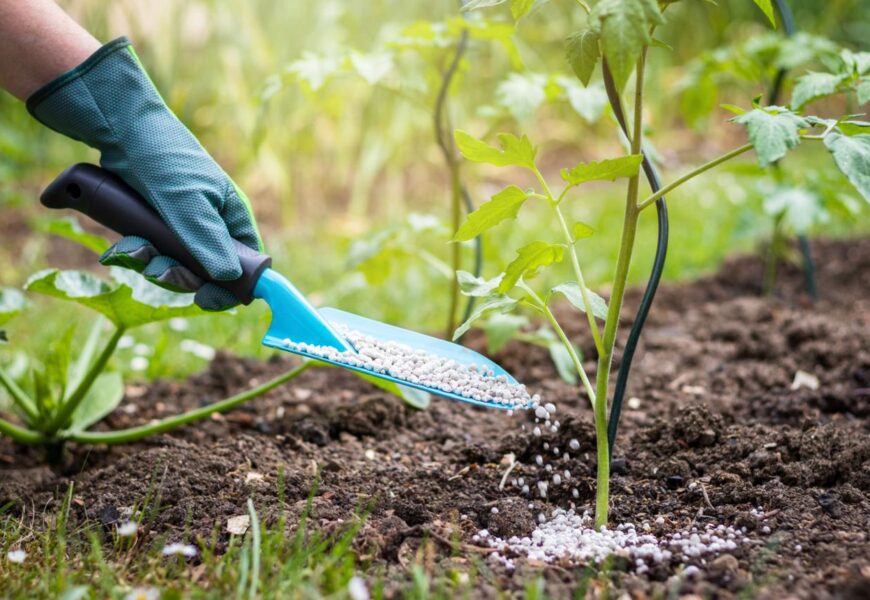
Your neighbor’s lawn looks like a golf course. Yours looks like it gave up sometime in March. If you have been waiting weeks for a slow-release fertilizer to show results — or you have a backyard event coming up next weekend — there is a faster path forward. Quick release fertilizer for lawns delivers a near-immediate nutrient boost, and when applied correctly, it is one of the most reliable tools any homeowner can keep in their lawn care routine.
This guide covers everything you need to know: how these products work at a basic science level, when to use them, what types exist, how to avoid the most common mistakes, and how to read a product label so you actually know what you are buying.
What Is Quick Release Fertilizer for Lawns?
Quick release fertilizer for lawns is a category of lawn food made from water-soluble nutrient compounds — primarily nitrogen sources like ammonium nitrate, urea, and potassium nitrate — that dissolve rapidly once they contact moisture. Unlike coated or organic fertilizers that break down slowly over several weeks, these products make their nutrients available to grass roots within hours of a proper watering.
A simple way to think about it: slow-release fertilizer works like a time-release capsule. Quick-release fertilizer is like dissolving a tablet directly in water. The nutrients reach your soil right away, and your grass can begin absorbing them before the day is out. That is why lawn professionals reach for these products when a client needs visible results on a deadline — whether for a spring green-up, an upcoming event, or a patchy lawn struggling after seasonal stress.
The science behind this comes down to solubility. When water contacts the granules or powder, the nitrogen compounds dissolve and move through the soil toward the root zone. Grass roots absorb those nitrogen ions directly, triggering rapid cell division in leaf tissue. That process is what produces the rich green flush most homeowners notice within three to five days of a proper application.
How Fast-Acting Lawn Fertilizer Actually Works
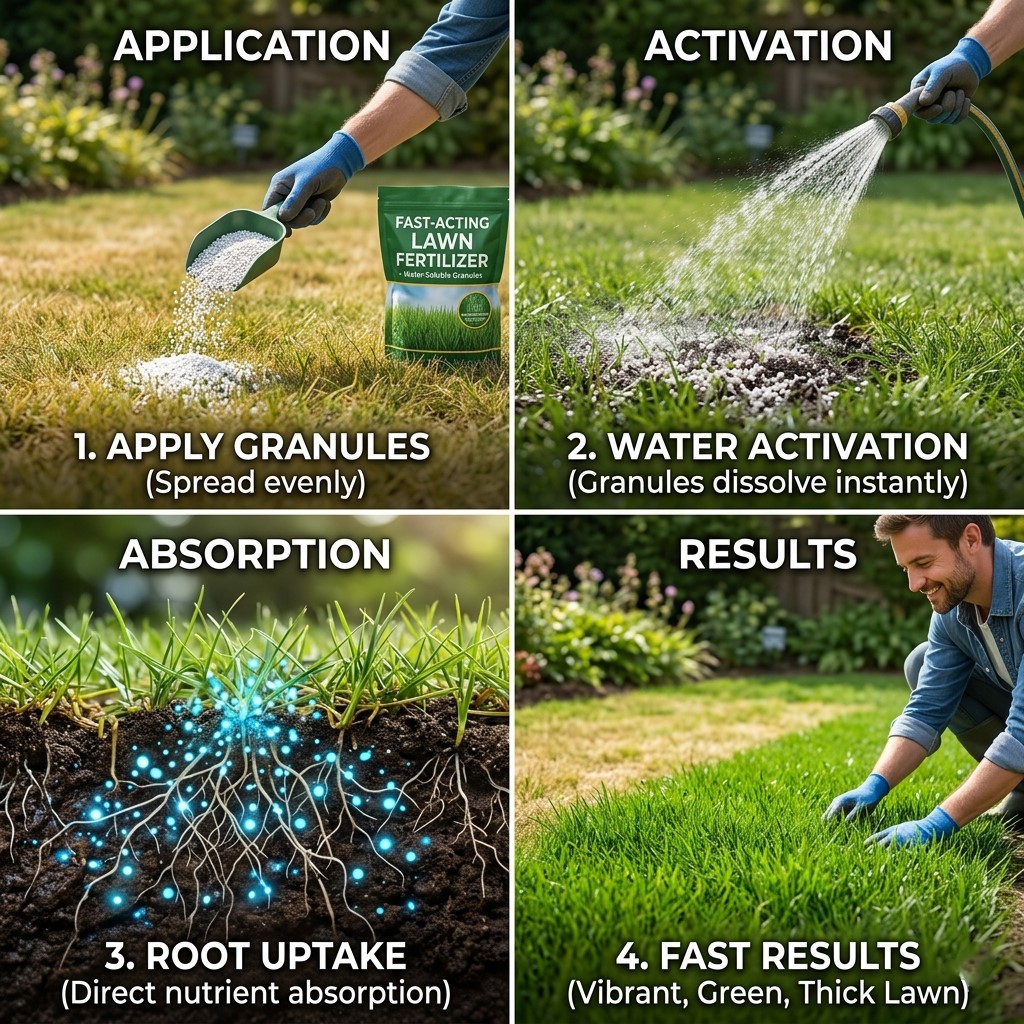
Understanding the basic mechanism helps you use these products more effectively. Grass depends on three primary macronutrients: nitrogen (N), phosphorus (P), and potassium (K). Nitrogen is the main driver of top growth and the green color you are trying to achieve. In quick release fertilizer for lawns, nitrogen exists in its ionic form — either as ammonium (NH₄⁺) or nitrate (NO₃⁻). This means grass roots can pull it in immediately, without waiting for soil microbes to process or break anything down first.
Phosphorus plays a supporting role by encouraging root development and early establishment. Potassium handles stress tolerance — helping grass hold up under drought, heat, and disease pressure. A balanced fast-acting product labeled 10-10-10, 30-0-4, or similar NPK ratios delivers all three in an immediately available form. Some specialized products also include chelated iron, which produces a noticeably deeper, golf-course-style green within days rather than weeks.
Why results happen so fast:
- Water-soluble nitrogen dissolves within minutes of irrigation or rainfall
- No polymer coating or microbial breakdown is required before uptake
- Dissolved ions travel directly to the root zone through soil water
- Grass responds with visible greening in as little as 3 to 5 days
- Shoot growth accelerates within the first week of application
Types of Quick Release Fertilizer for Lawns
Not all fast-acting fertilizers come in the same form. Each type carries its own application method, advantages, and risk level. Knowing which form suits your lawn and your comfort level makes a real difference in the results you get.
1. Liquid Quick Release Fertilizers
Liquid formulas are the most straightforward option for beginners. They come pre-mixed in hose-end sprayer bottles, so you simply attach the container to your garden hose and walk the lawn. The product dilutes automatically as water flows through. Coverage tends to be even, application is fast, and results follow quickly. The main drawback is cost — large lawns require multiple bottles, which can add up significantly per square foot.
2. Granular Water-Soluble Fertilizers
These dry pellets look similar to slow-release granules at first glance, but they dissolve rapidly once watered in. Applied with a broadcast or drop spreader, they provide consistent coverage across larger areas. Once irrigation runs or rain falls, the granules break down within hours. This format is popular with homeowners who prefer working with dry products but still want the speed of a fast-acting formula.
3. Powder (Water-Soluble) Fertilizers
Sold in powder form that you mix into water yourself, these are the most economical option per application. Professional lawn care companies often favor them because the concentrate can be adjusted for specific nitrogen requirements of a given lawn. The tradeoff is precision — mixing ratios must be exact. Too concentrated a solution carries a real risk of burning your turf, especially during warm weather when the lawn is already under temperature stress.
4. Concentrated Liquid Fertilizers
Designed primarily for professional use, concentrate-form quick release fertilizer for lawns contains very high nutrient density and must always be diluted before application. When calibrated correctly, concentrates produce excellent results and are cost-effective across large properties. Used incorrectly, however, the high salt content can cause significant lawn damage. This is one product type where following the label is not optional — it is necessary.
Quick Release vs. Slow Release Fertilizer: The Real Differences
Most lawn care content tells you to simply pick one or the other. The reality is more nuanced. Both types serve specific purposes at different points in the growing season. Knowing when each one earns its place will save you both money and unnecessary frustration.
| Feature | Quick Release | Slow Release |
|---|---|---|
| Speed of results | 3–7 days visible greening | 2–4 weeks |
| Duration of feeding | 2–4 weeks | 6–12 weeks |
| Application frequency | Every 2–4 weeks | Every 6–12 weeks |
| Burn risk | Higher | Lower |
| Best for new lawns | Yes | Less ideal |
| Best for event prep | Yes | No |
| Cost per application | Generally lower | Generally higher |
| Leaching risk | Higher | Lower |
| Good for fall dormancy prep | Yes | Situational |
Many experienced lawn care specialists use a hybrid approach throughout the season — quick release fertilizer for lawns to kickstart spring green-up or support recovery after stress, then a slow-release product to provide steady, even feeding as the growing season continues. The two are not competitors. Used with intention, they work well alongside each other.
When to Use Quick Release Fertilizer on Your Lawn
Timing matters enormously with fast-acting fertilizers. Apply at the wrong time and you are either wasting product or damaging grass you spent months building. These are the specific situations where quick release fertilizer for lawns genuinely earns its place:
Spring Green-Up
When turf grass comes out of winter dormancy, it needs a readily available energy source to restart the growing season. A single application of quick release nitrogen in early spring — once soil temperatures reach around 55°F — jumpstarts leaf growth, helps crowd out early weeds, and delivers that first satisfying flush of green. This is one of the most well-established use cases among both homeowners and professional turf managers.
New Lawn Establishment
Grass seed and new sod both benefit from readily available nitrogen during their establishment period. The rapid nutrient delivery supports early root development and speeds up coverage. If you have overseeded thin areas or laid fresh sod patches, a fast-acting fertilizer gets those sections looking uniform faster than waiting on a slow-release product to begin working.
Recovery After Stress or Damage
Drought stress, pest damage, or heavy foot traffic can leave a lawn looking worn and thin. A targeted application of quick release fertilizer for lawns helps damaged turf channel its energy toward recovery. Color returns and growth resumes noticeably faster compared to waiting on a slow-release alternative.
Pre-Event Preparation
Planning a graduation party, wedding, or family gathering in your backyard? Lawn professionals regularly use fast-acting fertilizer to achieve a deep-green result on a specific timeline. Applied seven to ten days before the event, it gives the grass time to green up fully while ensuring no fresh fertilizer residue remains on the surface when guests arrive.
Late Fall Before Dormancy
For cool-season grasses heading into dormancy, a quick-release nitrogen application in late fall — sometimes called a dormant feeding — helps the turf store carbohydrates before going dormant. The grass needs to absorb those nutrients rapidly before soil temperatures fall too low for root activity, and that is precisely what fast-acting fertilizer provides.
Timing Warning: Do not apply quick release fertilizer for lawns during drought stress, extreme heat, or when grass is already brown and dormant. The high salt content will pull moisture from already-stressed grass blades, making the situation worse rather than better.
The Fertilizer Burn Risk: What No One Tells You
Here is the honest truth about quick release fertilizer for lawns that most product descriptions skip over: the same property that makes it work fast — high water solubility and immediate salt availability — is exactly what makes it capable of burning your lawn when it is misused.
Fertilizer burn works through a straightforward osmotic process. The salt compounds in synthetic fertilizer draw moisture out of grass blades and roots. When concentrations are within the correct range, this exchange is gentle and beneficial. When concentrations are too high — from over-application, overlapping spreader passes, or applying during peak heat — the salts extract moisture faster than the plant can replace it. The result is brown, dried-out grass that can take weeks or even months to fully recover.
A scenario that comes up often in lawn care: a homeowner doubles the recommended application rate of a fast-acting fertilizer, reasoning that more product will produce greener results faster. Instead, the lawn develops dark brown stripes following the spreader pattern, and recovery takes over a month. The logic does not hold — overapplication by even 20 percent can cause visible damage, particularly during warm weather when the grass is already managing heat stress.
Burn Prevention Checklist:
- Follow label rates exactly. Application rates are calculated by agronomists based on real turf science — they are not rough suggestions.
- Water before and after application. Pre-moistening the soil helps buffer the fertilizer on contact. Watering immediately after flushes nutrients into the root zone.
- Never apply to wet foliage. Granules sitting directly on wet grass blades will burn the tissue where they rest.
- Apply during cooler hours. Early morning is ideal. It reduces the window of high-temperature, high-salt concentration on leaf surfaces before the product is absorbed.
- Avoid spreader overlaps. Double-passing any section with a granular spreader effectively doubles the application rate in that area.
- Check weather forecasts. Light rain within a day or two after application helps incorporate the product. Heavy immediate rain causes runoff and nutrient loss.
- Never fertilize drought-stressed grass. Water the lawn adequately for several days leading up to any fast-acting fertilizer application.
How to Apply Quick Release Fertilizer for Lawns: Step-by-Step
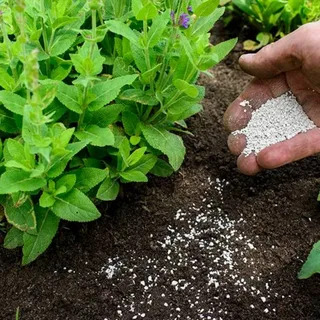
Proper technique separates consistent results from guesswork. These steps apply whether you are working with granular, liquid, or powder formulations.
Step 1 — Conduct a soil test first. Before purchasing any fertilizer, find out what your soil actually needs. Soil pH, existing nitrogen levels, and organic matter content all influence how your lawn responds to added nutrients. Many county extension services offer testing for $15 to $30. That modest investment often saves far more in products purchased for the wrong problem.
Step 2 — Choose the right NPK ratio. For pure green-up and shoot growth on an established lawn, a nitrogen-heavy formula like 30-0-4 or 32-0-6 works well. For new lawn areas or recovering patches that also need root development, a balanced ratio like 10-10-10 provides a broader foundation alongside the immediate nitrogen.
Step 3 — Calibrate your spreader. For granular products, set your broadcast or drop spreader to the recommended setting listed on the bag. Walk a test strip on a driveway or hard surface first to verify distribution rate before moving onto the lawn.
Step 4 — Apply in the early morning. Cooler temperatures and lower evaporation rates give the fertilizer more time to be watered in before afternoon heat compounds the salt effect. Evening applications work as well — just avoid the peak heat of midday.
Step 5 — Use two perpendicular passes for granular products. Walk north to south at half the recommended application rate, then east to west with the remaining half. This pattern produces more even nutrient distribution than a single-direction pass.
Step 6 — Water immediately and thoroughly. After applying quick release fertilizer for lawns, run irrigation for at least 15 to 20 minutes. This activates the fertilizer and moves dissolved nutrients into the root zone where the grass can absorb them, rather than leaving high-salt residue sitting on the soil surface.
Step 7 — Keep foot traffic off the lawn for 24 to 48 hours. Allow the fertilizer to fully absorb before the lawn sees regular use, particularly with liquid products that need time to dry into the soil surface.
What to Look for When Choosing a Quick Release Lawn Fertilizer
The market for quick release fertilizer for lawns is crowded and can feel overwhelming. Rather than navigating specific brand claims, focus on what the product label actually communicates.
Reading the NPK Label
Every fertilizer bag lists three numbers separated by dashes — for example, 32-0-6 or 10-10-10. These represent the percentage by weight of nitrogen (N), phosphorus (P₂O₅), and potassium (K₂O) respectively. For fast green-up on an established lawn, a higher first number signals more nitrogen. For new lawn areas, a meaningful middle and final number indicates support for root development alongside leaf growth.
Water-Soluble Indicators
Look for phrases like “water soluble nitrogen,” “fast acting,” “soluble,” or “quick release” stated clearly on the packaging. In the guaranteed analysis section, if all or most of the nitrogen is listed as water-soluble nitrogen (WSN), you have a genuinely fast-acting product. If the label shows a significant amount of water insoluble nitrogen (WIN), you are looking at a slow-release blend — regardless of what the front of the bag implies.
Iron-Enhanced Formulas
Products that include chelated iron — typically between 2 and 5 percent — alongside quick-release nitrogen produce noticeably deeper green color than nitrogen alone. Iron does not feed the plant in the same way NPK nutrients do. It acts more as a pigment enhancer. But the visual results are meaningful, especially in lawns with naturally lighter grass color or iron-deficient soil.
Professional-Grade vs. Consumer Products
Professional-grade quick release fertilizer for lawns typically comes in larger bags with finer particle sizes for more even distribution and uses purer nitrogen sources. Consumer products sometimes include fillers and binders that reduce effective nutrient concentration per bag. Neither is automatically better — professional formulas simply offer more precise control over application rates, which becomes more important as the size of the lawn increases.
Grass Type Matters: Matching Fertilizer to Your Turf
Different grass species carry different nitrogen requirements and different tolerances for fast-acting fertilizers. Applying the same product and rate to Kentucky bluegrass as you would to Bermuda grass can produce very different results, and not always in the direction you want.
Cool-Season Grasses
Kentucky bluegrass, tall fescue, fine fescue, and perennial ryegrass are cool-season grasses that grow most actively in spring and fall. These are the natural windows for quick release fertilizer for lawns — early spring applications from March through April and early fall applications from September through October produce the strongest responses. Avoid fast-acting nitrogen during summer dormancy on these species. It forces growth during a period when the grass is heat-stressed and unable to process nutrients efficiently.
Warm-Season Grasses
Bermuda, Zoysia, St. Augustine, Centipede, and Buffalo grasses enter their active growth phase from late spring through summer. Their peak fertilization window with fast-acting products runs from May through August. A timely spring application when soil temperatures consistently exceed 65°F gets warm-season turf moving early in the season. Stop nitrogen applications six weeks before the average first frost in your region to avoid stimulating tender new growth that cold temperatures can damage.
Pro Tip — The 1-Pound Rule: A widely accepted guideline is to apply no more than 1 pound of actual nitrogen per 1,000 square feet per application when using quick-release fertilizers. To calculate this: if your bag contains 30 percent nitrogen (as in a 30-0-4 product), apply approximately 3.3 pounds of product per 1,000 square feet to stay within that limit. This keeps application rates safe without requiring any specialized knowledge.
Environmental Considerations Worth Knowing
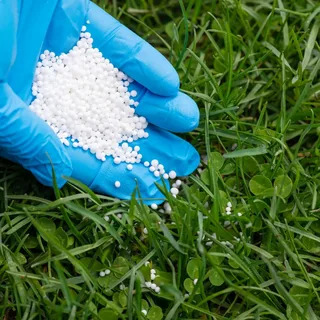
Quick release fertilizer for lawns does not stay exactly where you apply it when conditions are not managed carefully. Because the nutrients are immediately water-soluble, heavy rainfall or excessive irrigation can carry them below the root zone — into groundwater, storm drains, or nearby waterways — before the grass has a chance to absorb them.
Nitrogen runoff, specifically nitrates, is a recognized water quality concern. Excess nitrogen entering waterways can trigger algal blooms that deplete oxygen and harm aquatic life. This is not a reason to avoid fast-acting fertilizers. It is a reason to apply them with care. Keep applications away from drainage ditches, waterways, and storm drain openings. Apply to dry grass, water in at a measured rate, and avoid applying before predicted heavy rainfall.
Some homeowners choose a product that blends quick- and slow-release nitrogen in a single formula. These hybrid options deliver an initial fast green-up from the soluble nitrogen fraction, followed by sustained feeding from the controlled-release portion over time. They carry a lower leaching risk than 100 percent quick-release formulas while still producing noticeable results within the first week of application.
Frequently Asked Questions
How quickly will I see results from quick release fertilizer for lawns? Most homeowners notice visible greening within 3 to 7 days of application, provided the product is watered in properly right after use. The actual timeline depends on grass type, soil temperature, and the nitrogen percentage in the product. Warm-season grasses actively growing in summer tend to respond the fastest.
How often should I apply quick release fertilizer? Because nutrients are made available within days, they are also depleted faster — typically within 2 to 4 weeks. Most lawn care schedules call for reapplication every 3 to 4 weeks during active growth periods. Applying more frequently than that can cause excess nitrogen salts to accumulate, raising both burn risk and the likelihood of nutrient runoff.
Can quick release fertilizer kill my grass? Yes, when over-applied or applied to already-stressed turf. The high salt index of fast-acting fertilizers draws moisture from grass blades through osmosis. Over-application causes fertilizer burn — brown, dead patches that can take weeks to recover from. Following label rates, watering adequately, and avoiding applications during heat waves or drought are the core safeguards.
Is quick release fertilizer better than slow release for lawns? Neither is universally better. They serve different functions. Quick release fertilizer for lawns excels at delivering fast results — spring green-up, new lawn establishment, event preparation, and post-stress recovery. Slow-release products are better suited to steady, long-term feeding of established lawns with lower burn risk and less frequent applications needed. Many experienced turf professionals use both strategically throughout the season.
Should I water before or after applying quick release fertilizer? Both steps matter. Lightly water the lawn 24 to 48 hours before application to ensure the soil has moisture and the grass is not under stress. Then water thoroughly — at least 15 to 20 minutes — immediately after applying. This moves the dissolved nutrients down into the root zone rather than leaving a concentrated, high-salt layer sitting on the soil surface.
What NPK ratio should I look for in a quick release lawn fertilizer? For green color and shoot growth on an established lawn, a nitrogen-heavy ratio like 30-0-4, 32-0-6, or 28-0-6 is appropriate. For new lawn areas or thin, recovering patches that also need root development support, a more balanced ratio like 10-10-10 or 12-8-12 provides a broader nutritional foundation alongside the immediate nitrogen boost.
Is quick release fertilizer safe for pets and children? Synthetic quick release fertilizers should be treated as off-limits to pets and children until the product has been fully watered in and the lawn surface has dried — typically 24 to 48 hours after application. Loose granules carry an ingestion risk, and concentrated residues on wet grass can irritate paws and skin. Always check the product label for the specific re-entry interval recommended by the manufacturer.