You forget to water your window box for four days. Life got busy — a long work week, an unexpected trip, or simply one of those stretches where the garden slips your mind. You come back half-expecting a row of wilted stems. Instead, everything looks perfectly fine. That is not luck. That is what happens when you choose the right drought tolerant window box plants from the start.
Most gardeners pick window box plants based entirely on how they look at the garden center — the colors catch your eye, you buy them, and you figure the rest out later.
The problem is that appearance tells you nothing about how a plant will perform through a hot week in July when you are traveling or genuinely cannot keep up with watering. The result tends to be the same: dead plants, wasted money, and a vague sense of failure. But here is the thing — drought tolerant window box plants have come a long way. They are no longer limited to cactus arrangements or minimalist rock gardens. With the right selection, you can have real color, texture, and visual interest in your window box without being tied to a watering schedule.
This guide covers the best plant choices, practical setup advice, and everything you need to know to build a window box display that holds up even when life pulls you in other directions.
Why Drought Tolerant Window Box Plants Are a Smart Choice
Window boxes are genuinely one of the more challenging environments you can ask a plant to grow in. The containers are shallow, the soil volume is small, and the exposure is constant. Sun reaches the box from multiple angles throughout the day, wind accelerates drying, and unlike a garden bed, there is no deeper soil layer to hold moisture reserves between waterings. That is why common annuals like impatiens and standard petunias often collapse in summer unless you water them daily — sometimes twice.
Drought tolerant window box plants are built differently. Through evolution or careful breeding, they have developed ways to cope: storing water in thick leaves and stems, slowing their metabolism during dry spells, or minimizing water loss through reduced or waxy leaf surfaces. These are exactly the characteristics you need in a container that spends its days sitting in full sun on a south-facing ledge or exposed balcony.
A simple way to think about it: you would not plant a water-loving fern next to a radiator and expect it to thrive. The same logic applies here. Drought tolerant window box plants are matched to their environment in a way that most common window box choices simply are not.
The Best Drought Tolerant Window Box Plants (Ranked by Performance)
1. Portulaca (Moss Rose) — The Showstopper That Loves Neglect
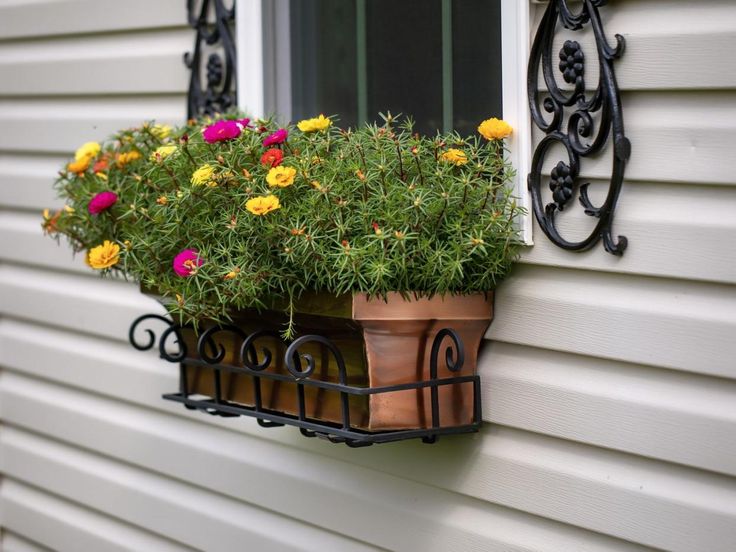
If there is one drought tolerant window box plant that consistently surprises first-time growers, it is portulaca. Also sold under the names moss rose and sun plant, it produces vivid flowers in orange, pink, red, yellow, and cream — and it performs best in exactly the kind of relentless heat that destroys most other container plants.
Portulaca is a succulent-type annual. Its thick, fleshy leaves hold water effectively, which means it can go several days without irrigation and recover quickly once watered. The stems sprawl naturally over the sides of a window box, creating a full, trailing look that many gardeners spend significant effort trying to achieve with less resilient plants.
The most important thing to know about portulaca is that it actually blooms more freely under mild stress. Overwatering is the most common way it fails. Give it full sun, a well-draining soil mix, and a light touch with the watering can — and it will reward you with flowers throughout the season.
2. Lavender — Fragrant, Structured, and Genuinely Drought Ready
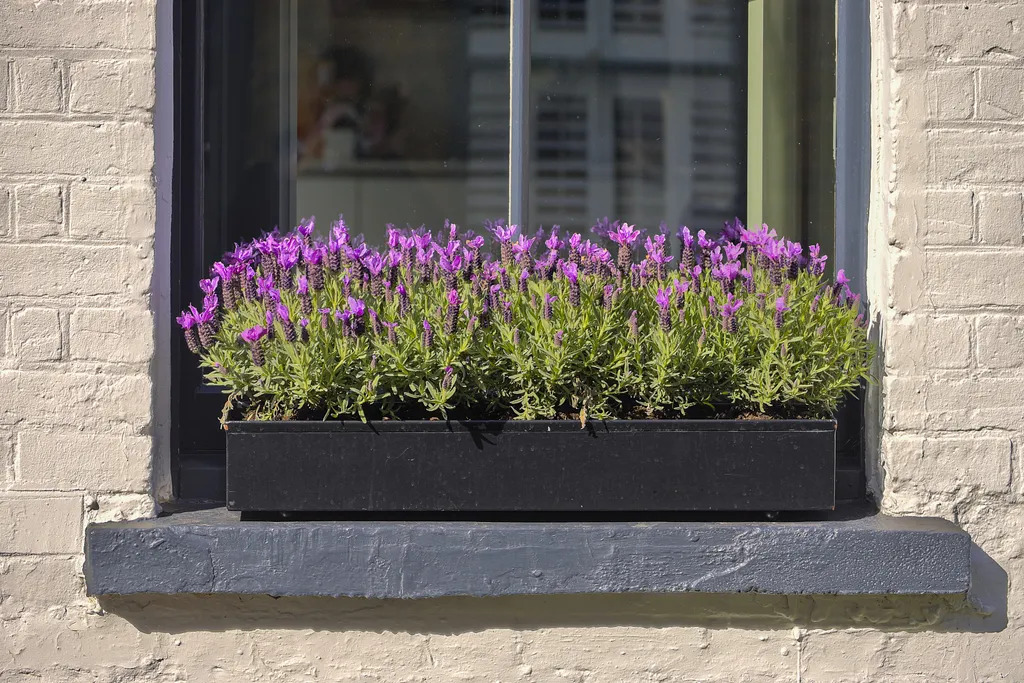
Lavender is one of the most consistently underestimated drought tolerant window box plants, particularly for gardeners who want both visual structure and fragrance in the same container. It originates from the Mediterranean — a region of long, dry summers and thin, rocky soils — which maps almost perfectly onto the conditions of a sun-exposed window box.
Compact varieties such as ‘Hidcote’ and ‘Thumbelina Leigh’ fit well within a standard 60–80 cm box without overwhelming neighboring plants. The flowers appear in purple and blue-violet tones, and the fragrance carries noticeably on warm days. There is also a practical benefit: lavender naturally deters aphids and a number of other common window box pests.
One firm rule with lavender — it cannot tolerate sitting in wet or compacted soil. Before planting, work in perlite or coarse grit to open up drainage. Done correctly, lavender becomes one of the most reliable and long-lasting drought tolerant window box plants you can grow.
3. Sedums — Architectural Interest With Zero Water Fuss
Sedums are true succulents, and among drought tolerant window box plants, they rank among the most forgiving and versatile. They are available in a wide range of forms — spreading, upright, rosette-shaped, ground-hugging — which gives you real flexibility in how you use them within a planting.
‘Autumn Joy’ is a taller sedum variety that produces clusters of dusty pink flowers aging to bronze, carrying visual interest well into autumn and even early winter. Lower-growing varieties like ‘Dragon’s Blood’ and ‘Blue Spruce’ spread horizontally to fill gaps and work effectively as ground cover within a mixed box. When planted together, different sedum varieties build a layered, textured display that changes gradually through the season.
Sedums store water in their leaves and stems, prefer lean rather than rich soil, and respond calmly to heat, drought, and the reflected warmth from surrounding walls. As drought tolerant window box plants go, they are among the easiest to maintain over the long term.
4. Verbena — Color, Cascading Form, and Impressive Drought Tolerance
Trailing verbena is one of the drought tolerant window box plants that most closely rivals petunias for visual impact — which is a significant thing to say, given how popular petunias are for window displays. It flowers in purple, red, pink, coral, and white from late spring right through to the first hard frost, and its naturally tumbling habit softens the front edge of a window box in a way that few other plants manage.
Verbena is not a succulent, but it handles periods of reduced water well once it has established itself. The important principle is to let the soil dry slightly between waterings rather than maintaining constant moisture. This small adjustment makes a meaningful difference in how the plant performs over a full season.
One useful tip worth noting: if verbena begins to look stretched or untidy in midsummer, cutting it back by about a third encourages fresh growth and continued flowering into autumn. That combination of resilience and responsiveness is what earns verbena its place among the best drought tolerant window box plants for a maintained garden display.
5. Gazania — The Heat-Loving Daisy That Thrives Under Stress
Gazanias are African daisies that developed in some of the driest conditions on the continent. As drought tolerant window box plants, they are nearly unmatched in exposed, full-sun positions. The flowers are bold and patterned — often featuring contrasting central rings in shades of orange, yellow, red, and bronze — and they create a striking, almost unexpected visual effect in a standard window box.
An interesting behavioral quality of gazanias is that they close their flowers at night and on overcast days. This is an adaptive response to conserve moisture, and it means the plant is essentially regulating its own exposure. On bright, sunny days — which are also the most demanding days for water loss — gazanias open fully and put on their best display.
They grow low, which places them naturally at the front of a window box arrangement. They are one of those drought tolerant window box plants that reward restraint: less water, less fertilizer, and minimal interference generally produces better results than attentive management.
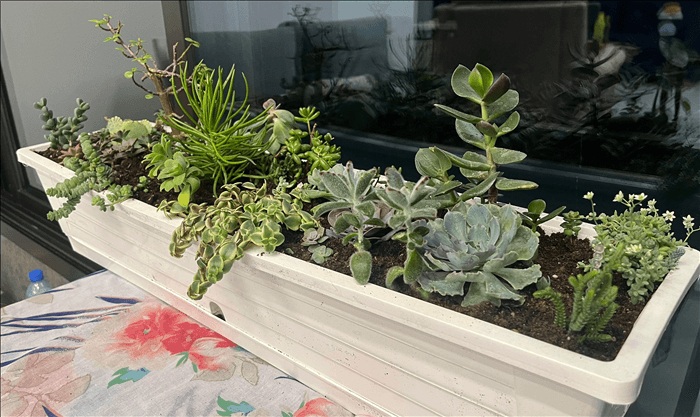
6. Echeveria and Succulent Mixes — Modern, Minimal, Maintenance-Free
For a window box that leans toward a cleaner, more contemporary aesthetic, a mixed succulent planting using echeveria, haworthia, and sedum creates something quietly striking. These are arguably the most committed drought tolerant window box plants on this list — adapted through thousands of years to survive in habitats where rainfall is infrequent and unpredictable.
They perform particularly well on covered windowsills or balconies where the box does not receive direct rainfall. In those conditions, most standard plants struggle significantly. Succulents are indifferent. They sit in their geometric rosettes, grow slowly, maintain their form, and ask very little in return.
One consideration: most echeveria varieties are not frost-hardy and should be treated as seasonal plants or brought indoors during winter in cold climates. In warm or tropical environments like Singapore, however, these drought tolerant window box plants perform consistently well throughout the year and make an excellent low-maintenance choice.
7. Thyme — Edible, Aromatic, and Genuinely Drought Proof
Creeping thyme and woolly thyme are both well-suited drought tolerant window box plants with the added advantage of being useful in the kitchen. They are native to the Mediterranean, grow low and spreading, and release a distinct herbal fragrance when touched or brushed against. In spring and early summer, small flowers appear that pollinators find attractive.
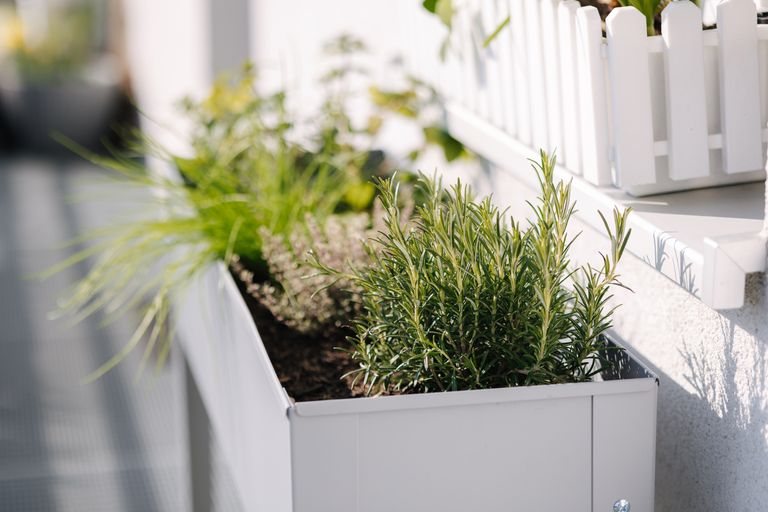
Thyme grows comfortably in poor soil and handles heat and dry spells without significant decline. It works well along the front edge of a window box where it can spill slightly over the sides, filling space that taller plants leave open. Paired with lavender or rosemary, it contributes to a fragrant, fully functional, edible window display that doubles as an attractive one.
Drought Tolerant Window Box Plant Combinations That Actually Work
Selecting drought tolerant window box plants individually is only part of the process. The other part is thinking about how they will grow together — whether their heights, habits, and textures will complement each other rather than compete.
A layered approach works well here. Think of the box in terms of four zones, and assign plants accordingly:
| Layer | Plant Role | Example Drought Tolerant Plants |
|---|---|---|
| Back (tallest) | Height and structure | Lavender, upright rosemary, ornamental grass |
| Middle | Bulk and color | Gazania, portulaca, verbena, sedum ‘Autumn Joy’ |
| Front/Edge | Trailing and softening | Creeping thyme, trailing sedum, verbena, portulaca |
| Accent | Texture and interest | Echeveria rosettes, blue fescue, succulents |
Working with this kind of structure gives the box a planted, intentional look without requiring plants that need constant watering to maintain their appearance. Every layer contributes something distinct, and because every plant on the list is a drought tolerant window box plant, they share similar care requirements — which simplifies maintenance considerably.
How to Prepare Your Window Box for Drought Tolerant Plants
Even the most resilient drought tolerant window box plants will underperform if the container itself is poorly set up. The physical environment matters just as much as the plant selection.
Soil mix: Standard garden soil is too dense and water-retentive for container growing. A free-draining blend — roughly 60% quality potting mix, 20% perlite, and 20% coarse grit — works well for most drought tolerant window box plants. For succulent-heavy plantings, increase the grit and perlite proportions.
Drainage holes: Without adequate drainage, no drought tolerant window box plant can perform reliably. Water that pools at the base of the container leads to root rot, which is fatal even in the most drought-adapted species. Check before planting, and add holes if needed.
Light conditions: The majority of drought tolerant window box plants perform best in full sun — a minimum of six hours of direct light per day. A few, including certain sedums and thyme, tolerate partial shade, but they are the exception rather than the rule.
Establishing the plants: Even drought tolerant window box plants need regular water in their first few weeks. Water thoroughly at planting, then taper off gradually over four to six weeks as the root systems develop and the plants settle into their new environment.
Common Mistakes to Avoid With Drought Tolerant Window Box Plants
Have you ever purchased a plant described as tough and low-maintenance, only to watch it decline within a fortnight? It happens more often than most gardeners would admit — and it is rarely the plant’s fault. Here are the most common errors people make with drought tolerant window box plants, and how to avoid them.
Overwatering out of habit. The instinct to water frequently is hard to break, but it is the primary reason drought tolerant window box plants fail in containers. These plants need to dry out between waterings. Keeping the soil consistently moist creates conditions they are not built for — the soil should feel slightly dry to the touch before you water again.
Using containers without drainage. Decorative containers are often sealed at the base. Even the most drought-adapted plants will develop root rot if sitting in water. Always verify drainage before you commit to a planting.
Mixing plants with different water needs. Placing lavender next to impatiens forces a compromise that serves neither plant well. Group drought tolerant window box plants together and keep moisture-demanding plants in separate containers.
Neglecting fertilizer. There is a tendency to assume that because drought tolerant window box plants prefer lean conditions, they need no nutrition at all. A slow-release granular fertilizer applied at planting, with a light top-up in midsummer, supports healthy growth and sustained flowering without pushing plants toward the overfed, floppy growth that undermines their structure.
Real-World Example: A Balcony Window Box in a Hot Climate
A home gardener in Melbourne, Australia, had a balcony that received direct sun from early morning to late afternoon — the kind of exposure that pushes most container plants to their limits. Over the course of one growing season, she worked through three separate plantings of standard annuals before making the decision to switch entirely to drought tolerant window box plants.
Her final arrangement used portulaca in orange and yellow along the front edges, a compact lavender variety positioned at the center back for height and structure, and creeping thyme as a low-growing filler across the remaining space. She watered twice weekly during summer and once weekly during cooler months. The display held well for the full season with no plant losses and no replanting.
The cost of that final planting was approximately AU$28. The three failed plantings that preceded it had cost around AU$120 in total. The saving is practical, but the more significant gain was not having to replace plants mid-season or maintain a daily watering routine.
That is the honest case for drought tolerant window box plants. The investment in the right selection pays for itself quickly.
What Makes a Plant Truly Drought Tolerant?
The term “drought tolerant” is used fairly loosely in retail garden settings, and not every plant labeled as such will perform with equal reliability. Understanding the actual biology behind drought tolerance helps when evaluating drought tolerant window box plants at the garden center.
Genuine drought tolerance is usually the result of one or more specific adaptations. Water storage in leaves, stems, or root tissue — as seen in sedums and echeveria — is the most obvious. Reduced leaf surface area limits the rate of water loss through transpiration, which is why lavender and thyme cope so well. Some plants have extensive root systems that can draw moisture from deeper in the soil, though this matters less in shallow containers. Others enter a light dormancy during dry conditions and resume normal growth once water returns.
When assessing drought tolerant window box plants, a few visual characteristics offer useful clues: thick or waxy leaf surfaces, silver or grey foliage that reflects solar radiation, fine hairs on leaves that slow air movement and reduce moisture loss, and origins in Mediterranean, southern African, or arid North American climates. Any combination of these traits tends to indicate reliable drought tolerance in a container setting.
Frequently Asked Questions
What are the most drought tolerant window box plants for full sun?
Portulaca, gazania, and sedums are consistently the most reliable performers in hot, exposed window boxes. All three tolerate high temperatures, handle reduced watering schedules without decline, and produce sustained color across a long growing season.
Can drought tolerant window box plants survive without any watering?
No plant can survive indefinitely without water, including drought tolerant window box plants. What distinguishes them is that they need significantly less water than standard varieties, and they recover reliably from dry periods. In a container setting without natural rainfall access, plan on watering once or twice weekly in summer as a general guide.
How do I make a window box more drought resistant if it is already planted?
A layer of fine gravel mulch applied over the soil surface reduces evaporation meaningfully. If the box is in an extremely exposed position, moving it slightly to reduce afternoon sun can also help. Self-watering containers fitted with a water reservoir are another practical option for extending the interval between waterings for drought tolerant window box plants.
Are succulents good drought tolerant window box plants in humid climates?
Yes, with one important qualification. Succulents handle humidity well provided the soil drains freely. In humid climates, the risk is not the atmospheric moisture but rather the wet soil conditions that can develop if drainage is inadequate. Ensure the container drains properly, and succulent-type drought tolerant window box plants will perform reliably in Singapore, coastal Australia, and comparable environments.
Conclusion
The assumption that a beautiful window box requires constant watering and daily attention is one that experience tends to correct fairly quickly. Drought tolerant window box plants have demonstrated, consistently and across a range of climates, that low-water gardening does not mean sacrificing visual appeal. Color, fragrance, texture, and seasonal interest are all available without a daily watering commitment.
Starting with one or two well-chosen plants — portulaca and lavender are both forgiving entry points — gives you a practical way to see how they perform in your specific conditions before committing to a larger planting. Once you have seen a window box hold its appearance through a warm week without attention, the logic for drought tolerant window box plants becomes self-evident.
The best window box is not the one that demands the most from you. It is the one you set up correctly at the start and then largely enjoy without stress.
Action step: Before your next visit to a garden center, take note of how many hours of direct sun your window box receives on a typical day. That single detail will help you filter which drought tolerant window box plants are genuinely suited to your conditions — and give you a much better starting point than choosing by appearance alone.