Have you ever paused on your garden path, watching a thin line of black ants move with quiet, focused purpose — and wondered where every single one of them came from? They appear in their thousands, each one seeming to know exactly where to go and what to do, without any visible leader giving orders. That kind of coordination doesn’t happen by chance. The black garden ant life cycle is one of the most precisely organised systems in the natural world, and most of us walk past it every day without a second thought.
People tend to see garden ants as a minor irritation — something to deal with when they appear on the kitchen counter or build a mound near the patio. But the black garden ant life cycle, when you look at it properly, tells a completely different story. It’s a story about survival, instinct, and a colony working as a single living unit. Whether you’re a gardener who wants to understand what’s happening beneath your soil, a biology student, or simply someone dealing with a stubborn ant problem, knowing how these insects develop from beginning to end gives you something genuinely useful.
Let’s go through it properly — stage by stage, with no unnecessary padding.
What Is the Black Garden Ant?
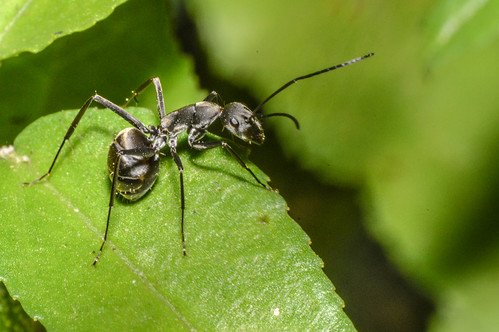
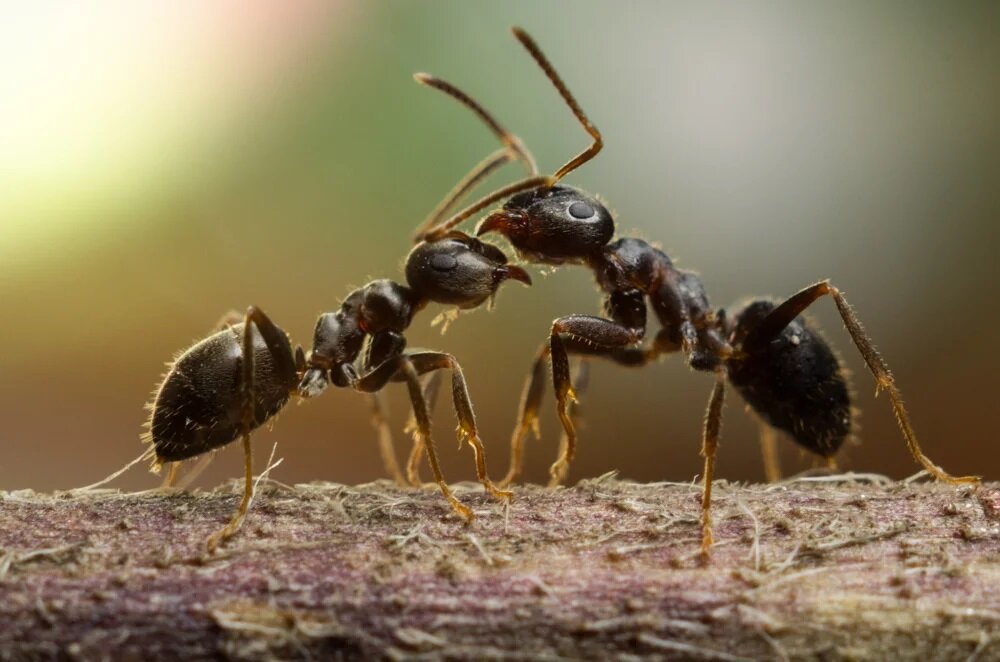
Before getting into the black garden ant life cycle itself, it’s worth being clear about the species we’re discussing. The black garden ant (Lasius niger) is one of the most widespread ant species in the world, found throughout Europe, large parts of North America, and across much of Asia. These small, dark insects — usually between 3 and 5mm in length — nest underground, beneath garden lawns, under paving slabs, along the edges of flower beds, and in cracks between stonework.
A single Lasius niger colony can contain anywhere from 5,000 to 15,000 individual workers, and larger, well-established colonies can go well beyond that number. They are not known for aggressive biting, but they are exceptionally persistent and adaptable. The black garden ant life cycle is, in large part, what makes them so resilient — it is a system built for continuity, not speed.
The Black Garden Ant Life Cycle: An Overview
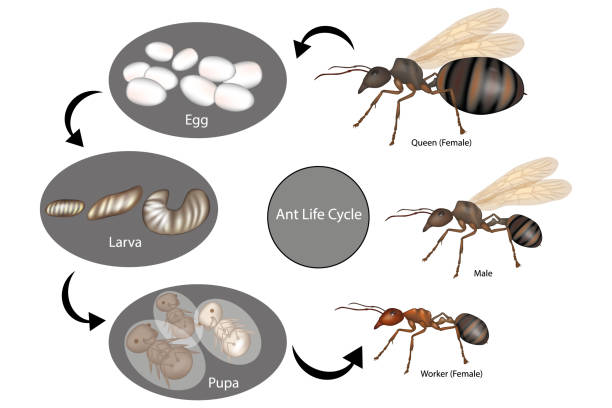
The black garden ant life cycle follows what biologists call complete metamorphosis, or holometabolism. This means the ant moves through four structurally distinct phases between birth and adulthood, each serving a specific biological purpose:
| Stage | Duration (Approx.) | Description |
|---|---|---|
| Egg | 1–4 weeks | Tiny, oval, pale white — laid by the queen |
| Larva | 3–4 weeks | Legless, grub-like, fed by worker ants |
| Pupa | 2–3 weeks | A transformation phase; internal restructuring |
| Adult | Weeks to years | Worker, male (drone), or queen |
Each phase of the black garden ant life cycle plays an essential role. Disrupting even one stage — through temperature changes, loss of the queen, or damage to the nest — can have lasting consequences for the entire colony. With that context in place, here is how each stage actually works.
Stage 1: The Queen and the Beginning of It All
Every black garden ant life cycle begins with a single individual: the queen. A newly mated queen — referred to scientifically as a gyne — carries the entire future of a potential colony within her. After the nuptial flight (covered in detail later), she lands on the ground, removes her own wings by biting them off, and begins searching for a suitable place to establish a nest. Soft soil, a gap under a flat stone, or the base of an old wall are all common choices.
What happens next is genuinely remarkable. During this early founding stage, the queen does not eat. She draws entirely on the energy stored in her now-redundant flight muscles and her body fat reserves to fuel her own survival and to tend to her first clutch of eggs. She works alone — no workers, no support, no backup. Just her and the eggs she has laid in a small underground chamber.
The queen of a Lasius niger colony can live for 15 to 30 years, making her one of the longest-lived insects on the planet relative to her size. Throughout the entire black garden ant life cycle of the colony, she remains the sole reproductive female and the biological core of everything that follows.
Stage 2: Egg Laying and Early Colony Development
Once the queen has secured a nesting chamber and conditions are stable enough, she begins laying eggs in earnest. In the earliest stages of the black garden ant life cycle, she produces a small initial clutch. The first ants to emerge from these eggs are called nanitic workers — undersized compared to later workers, but capable enough to take over foraging, feeding, and nest maintenance. Their arrival marks the point at which the queen can step back from direct caregiving and focus on what she does best: laying eggs.
The eggs themselves are small, sticky, and pale white or cream in colour. Their stickiness helps them stay clustered together in groups, which allows workers to move entire batches efficiently and helps maintain the warmth and humidity levels the developing embryos need.
As the colony grows in size and the worker population increases, the queen’s output scales significantly. A mature Lasius niger queen can produce hundreds of eggs every day during the active season, which runs broadly from late spring through the height of summer.
Stage 3: The Larval Stage — Hungry and Helpless
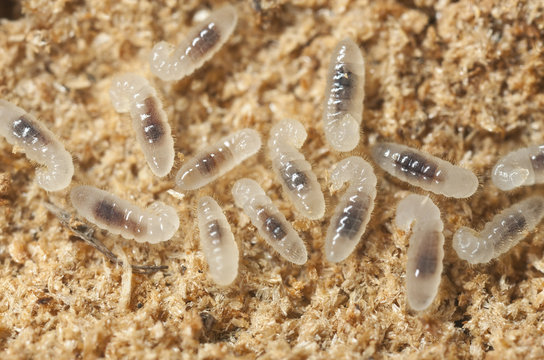
Once the eggs hatch, the black garden ant life cycle enters what might be its most demanding phase: the larval stage. Ant larvae are small, soft, legless grubs. They cannot move independently, they cannot feed themselves, and they are entirely reliant on the adult workers around them for everything.
Worker ants feed the larvae through a process called trophallaxis, in which a worker regurgitates partially digested food directly into the larva’s mouth. This food includes proteins from insects and other organic material foraged from the surrounding environment, as well as the sweet, sticky honeydew secreted by aphids — a substance the colony actively harvests and prizes.
This larval stage is also where one of the most fascinating aspects of the black garden ant life cycle takes place: caste determination. The path a larva follows — whether it will become a worker, a reproductive female, or a male — is shaped by a combination of genetics, colony-level pheromone signals, available nutrition, and ambient temperature. Larvae being raised as future queens receive considerably more food than those destined to become workers. It is a quiet, chemical negotiation happening in the dark, beneath your garden.
Stage 4: The Pupal Stage — Transformation in Silence
After the larval period is complete, the ant enters the pupal stage. In Lasius niger, this phase has a distinctive characteristic worth noting: the pupa does not spin a silk cocoon, as some other ant species do. Instead, the Lasius niger pupa is what entomologists call “exarate” — naked and exposed — which means the developing adult form is visible to careful observers, with limbs and antennae folded against the body.
What is happening internally during this phase of the black garden ant life cycle is substantial. Larval tissues are broken down and completely rebuilt into adult structures — functional legs, compound eyes, a jointed exoskeleton, antennae, and, where the individual is destined to become a reproductive, wings. The process takes roughly two to three weeks under normal conditions, though temperature has a significant effect on timing.
Worker ants continue to monitor and care for pupae throughout this stage, relocating them within the nest tunnel system to take advantage of warmer or cooler zones. When conditions are warm and dry in late spring, it is common to find workers carrying pupae close to the surface to benefit from solar warmth — a form of passive temperature management that reflects just how responsive the colony is to its environment.
Stage 5: Adult Emergence — Workers, Drones, and Queens
When the pupal stage concludes, a fully formed adult ant emerges. However, not all adults in the black garden ant life cycle are the same. The colony produces three very distinct types, each with a defined role:
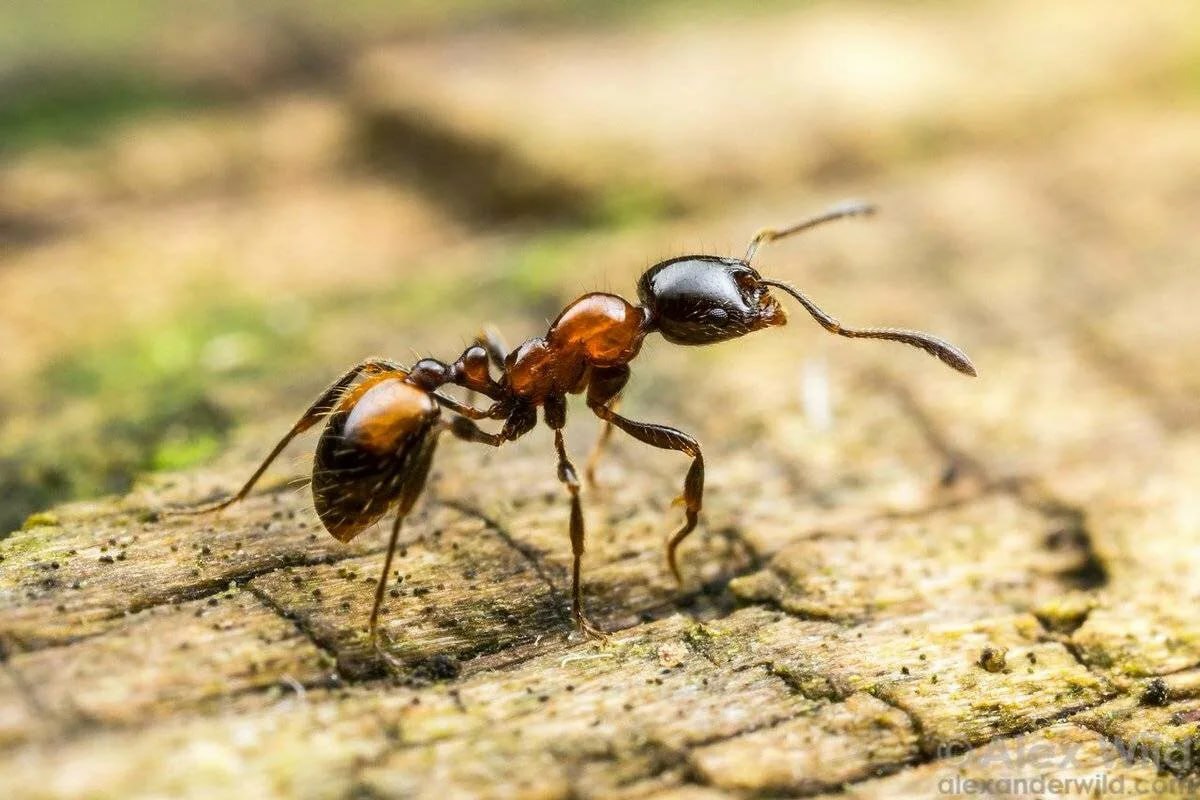
Worker Ants (Sterile Females) Workers are the colony’s backbone, comprising the overwhelming majority of its population. Their responsibilities cover almost everything: foraging for food, feeding and caring for larvae, maintaining the nest structure, defending the colony from threats, and attending to the queen. In summer conditions, workers typically live for one to three months. Workers that survive into winter — when the colony enters a slow, low-activity state — can live considerably longer.
Male Ants (Drones) Males serve a single biological function within the black garden ant life cycle: reproduction. They are produced seasonally, usually in late spring or early summer, and are equipped with wings in preparation for the nuptial flight. Once mating is complete, males die — usually within a matter of days. They do not forage, they do not defend the colony, and they do not contribute to its maintenance in any way. Their role is brief, but without it, the cycle could not continue.
Reproductive Females (Future Queens) These are the winged females, known as alates, that are produced when a colony is mature and well-resourced enough to invest in expansion. They are noticeably larger than workers and receive generous nutrition during development. Their purpose is to leave the colony, mate, and establish new nests — extending the black garden ant life cycle into the next generation.
Stage 6: The Nuptial Flight — Nature’s Most Dramatic Moment
If you have ever been caught off guard by what appears to be a sudden eruption of flying ants on a warm summer afternoon, you have witnessed one of the most dramatic moments in the entire black garden ant life cycle: the nuptial flight.
This event is triggered by a specific combination of environmental conditions — warm temperatures, high humidity, and typically a period of rain followed by sunshine, most commonly in July or August across the UK and similar climates. When these conditions arrive, winged males and females from multiple colonies in the surrounding area take to the air almost simultaneously. The timing of this synchronisation is not coincidence. It is an evolved strategy designed to increase the likelihood that females mate with males from different colonies rather than their own, which promotes genetic diversity across the broader population.
Mating takes place in the air. Once it is complete, the males die. The newly mated females — now carrying enough stored sperm to fertilise eggs for the rest of their reproductive lives — descend to the ground, shed their wings, and begin searching for a suitable place to start the whole black garden ant life cycle again from the beginning.
In Britain, this mass emergence has become so culturally familiar that it has earned a popular name: “Flying Ant Day”. In practice, it tends to span a handful of clustered days rather than a single event, though the impression of sudden, region-wide activity on one afternoon is not far from accurate.
Stage 7: Colony Maturity and Long-Term Survival
A mature Lasius niger colony is far from a static structure. The black garden ant life cycle at the colony level is one of constant, ongoing renewal — workers being replaced as they age, new eggs being laid throughout the year (at a reduced rate during winter), and the underground tunnel network expanding steadily as the population grows.
One of the more remarkable aspects of a mature colony is its relationship with other species. Black garden ants are well known for their practice of “farming” aphids — they protect aphid populations from natural predators such as ladybirds and lacewing larvae, and in return they harvest the sweet honeydew that aphids produce as a waste product. Some colonies take this relationship a step further: they carry aphid eggs underground during the winter months, effectively overwintering their food source and collecting them again when spring arrives. This level of resource management is a direct product of the black garden ant life cycle operating at full maturity over many years.
How Temperature Affects the Black Garden Ant Life Cycle
Temperature is one of the most influential external factors in how quickly each phase of the black garden ant life cycle progresses. In warm conditions, eggs hatch in a matter of days, larvae develop through their stages faster, and pupae complete their transformation in less time. When temperatures fall, every stage slows considerably.
During winter, Lasius niger colonies do not die out — they enter a period of significantly reduced activity. Workers cluster together deep within the nest structure, movement slows, and the queen either stops egg production entirely or reduces it to a very low rate. This is why black garden ants seem to disappear between November and March, even when their nest is located directly beneath a garden path you use every day.
As soil temperatures rise in spring — typically from March onward in temperate climates — the black garden ant life cycle resumes with surprising speed. Worker activity increases, egg production begins again, and within weeks the colony is operating at close to full capacity.
Common Questions About the Black Garden Ant Life Cycle
How long does the full black garden ant life cycle take?
From the point a fertilised egg is laid to the moment a fully formed adult emerges, the black garden ant life cycle typically spans 8 to 10 weeks under warm, favourable conditions. In cooler temperatures, the same process can take noticeably longer, particularly through the larval and pupal stages.
Can a colony survive without a queen?
No. The queen is the only individual in the colony capable of laying fertilised eggs. If she dies or is removed, the black garden ant life cycle cannot continue. No new workers are produced, and the existing workforce ages and declines over the following weeks and months until the colony ceases to function entirely.
How do worker ants know what to do without central direction?
The answer is pheromone communication. Worker ants release and respond to a wide range of chemical signals that convey specific information — the location of a food source, the presence of a threat, the needs of the larvae, and the condition of the queen. It is this chemical language, operating constantly and invisibly throughout the nest, that allows the black garden ant life cycle to run with such apparent efficiency and without any single decision-maker.
Are black garden ants harmful to a garden?
In most cases, no. Ants contribute positively to garden health by aerating the soil, breaking down organic matter, and controlling populations of certain other insects. The more complex issue is their protective relationship with aphids. By actively defending aphid colonies from predators, black garden ants can allow aphid populations to build to levels that cause real damage to plants — particularly soft-stemmed species and young growth.
Practical Tips If You Are Dealing With a Garden Ant Problem
Understanding the black garden ant life cycle gives you a meaningful advantage if ant activity has become a problem in your garden or home. Acting with that knowledge in mind is far more effective than reaching for a spray and hoping for results.
- Target the queen, not just the workers. Eliminating the workers you can see on the surface has almost no lasting effect. Slow-acting bait — designed to be carried back to the nest and eventually reach the queen — is a significantly more effective approach.
- Disrupt nesting conditions. Black garden ants prefer dry, undisturbed, warm soil. Regularly watering the affected area and disturbing identified nest sites makes the environment noticeably less attractive for colony establishment.
- Address aphid populations. Since aphid honeydew is a primary food incentive for black garden ants, managing aphids on your plants reduces one of the colony’s key reasons for remaining in your garden.
- Seal physical entry points. If ants are accessing your home, concentrate on closing the gaps, cracks, and joints through which they enter. Spraying entry points treats the symptom; sealing them removes the cause.
A Note Worth Making on Conservation
It is easy to view black garden ants as a problem to be solved, but it is worth pausing on that instinct. These insects are a functional part of garden ecosystems. They improve soil structure, assist in the decomposition of organic matter, and support broader food web dynamics. Eliminating an entire colony unnecessarily — particularly in a garden setting — can produce ecological gaps that are harder to predict than they appear.
Understanding the black garden ant life cycle helps put their presence in proper context. In most situations, the goal is sensible management rather than complete removal, and that distinction matters both practically and ecologically.
Conclusion: The Black Garden Ant Life Cycle Is a Masterclass in Nature
The black garden ant life cycle — from a single queen working alone in a dark underground chamber, tending to her first batch of eggs with no assistance, through to a colony of tens of thousands of workers operating as a coordinated whole — is one of the more extraordinary systems the natural world has produced. Every stage has a purpose. Every individual has a defined role. And the entire structure is held together not by any visible authority, but by chemistry, instinct, and an evolutionary history stretching back tens of millions of years.
The next time you see a trail of black ants crossing your garden, take a moment before you step over them. What you are looking at is the surface expression of something far more complex happening beneath the soil — a living system that has barely needed to change since long before the first humans walked the earth.
Action step: If you want to observe the black garden ant life cycle in genuine detail, a purpose-built formicarium (ant farm) housing a Lasius niger queen is one of the most genuinely educational things you can keep at home. You will be able to watch every stage unfold at close range — eggs being tended, larvae being fed, pupae undergoing transformation, and workers going about their tasks just a few centimetres from your eyes. It is, without question, worth the effort.