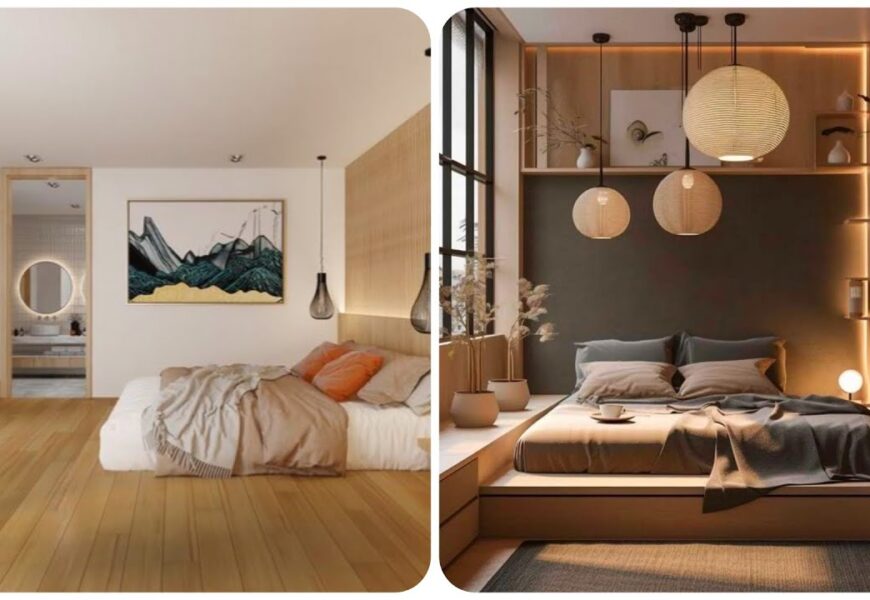
There is something almost quietly unfair about how a well-designed Japandi bedroom looks. Minimal furniture. Soft, muted tones. A single plant resting in the corner. And yet, somehow, it feels more complete and considered than rooms filled with carefully curated collections. If you have ever paused on an editorial-quality bedroom photo and felt an instant sense of calm wash over you, chances are you were looking at Japandi design — whether you recognized it by name or not.
This style has steadily grown in interior design circles, and the reasons are not hard to see. It offers something that most design movements simply do not prioritize: genuine visual peace. In a world that rarely slows down, your bedroom has every right to be a true sanctuary.
Here is exactly how you can bring japandi bedroom ideas to life — thoughtfully, practically, and without starting from scratch.
What Is Japandi Design and Why Is Everyone Drawn to It?
Japandi is the design outcome of two powerful cultural philosophies coming together. Japanese minimalism contributes discipline — clean lines, intentional placement, and a deep respect for negative space. Scandinavian design brings warmth — natural wood, soft layered textiles, and the Danish concept of hygge, which loosely translates to coziness, comfort, and a sense of quiet contentment. When these two traditions meet, the result is a space that feels simultaneously edited and genuinely livable.
It is worth being clear about one thing early on: Japandi is not about having nothing. It is about having the right things, placed with purpose.
The Japanese philosophy of wabi-sabi runs quietly through everything here. It finds beauty in imperfection — the slight wrinkle in a linen pillowcase, the uneven glaze on a ceramic lamp base, the visible grain running through a wooden nightstand. In a Japandi room, these are not flaws. They are precisely what makes the space feel real and considered.
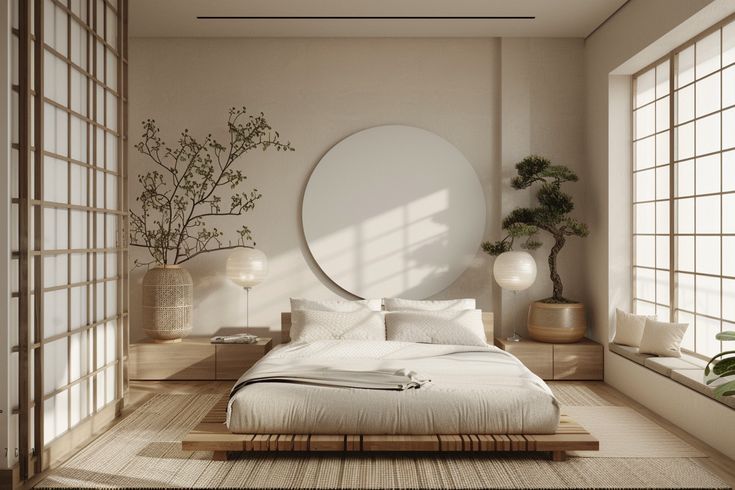
The Core Principles Behind Japandi Bedroom Ideas
Before purchasing a single item, it helps to understand the framework that holds everything together:
- Simplicity over abundance — Every object in the room needs a clear reason to be there
- Natural over synthetic — Wood, linen, cotton, rattan, and stone take priority over plastic and chrome
- Functional beauty — If something does not serve the space in some meaningful way, it probably does not belong
- Muted, earthy tones — The palette avoids high contrast, bold pops, or anything visually demanding
- Low-profile furniture — Floor-level beds, low dressers, and grounded proportions define the look
Once these principles become second nature, every design decision in the room becomes considerably easier to make.
The Japandi Color Palette — Getting the Foundation Right
Color is where most people make their first misstep. They find a japandi bedroom idea they love, feel genuinely inspired, and then make one decision — perhaps a bold accent wall or a saturated tone — that shifts the entire feeling of the space away from what drew them to it in the first place.
The Japandi color palette operates within a specific emotional range: calm, grounded, and soft without feeling cold. Think warm whites, soft greys, muted sage, deep charcoal, warm taupe, dusty blush, and earthy terracotta — but always used sparingly and with a clear sense of intention.
| Color Family | Japandi-Friendly Shades | What They Contribute |
|---|---|---|
| Warm Whites | Cream, Ivory, Off-white | Openness, light, a sense of airiness |
| Earthy Neutrals | Taupe, Sand, Clay | Warmth and visual grounding |
| Soft Greens | Sage, Moss, Eucalyptus | Calm and a quiet connection to nature |
| Deep Anchors | Charcoal, Warm Black | Contrast and subtle depth |
| Muted Blush | Dusty Rose, Terracotta | Gentle warmth without disruption |
Choose two or three shades from within the same temperature family — either all warm or all cool — and build from there. A reliable starting point for most japandi bedroom ideas is warm white walls, a charcoal or sage note introduced through bedding or a cushion, and natural wood tones layered consistently throughout.
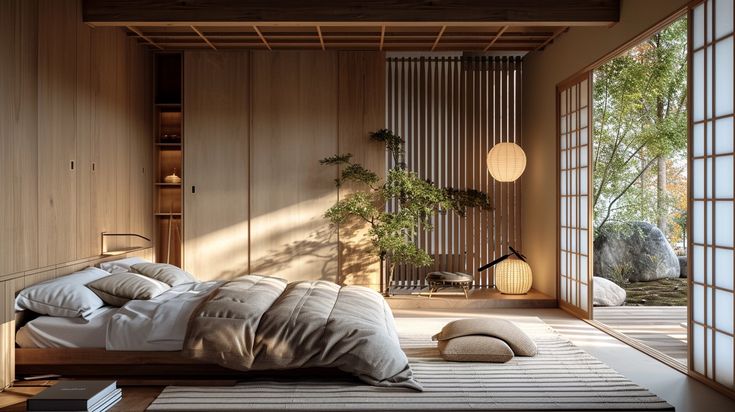
12 Japandi Bedroom Ideas You Can Actually Apply
1. Start With a Low-Profile Bed Frame
The bed is the visual anchor of any japandi bedroom idea. Traditional Japandi design draws meaningfully from Japanese sleeping culture, where beds sit low — often just a few inches from the floor. This deliberate choice creates a grounded, settled quality that sets the tone for everything else in the room.
Look for solid wood frames in oak, walnut, or ash. Avoid ornate headboards or beds with storage drawers in metallic finishes — both tend to pull against the aesthetic. A simple slatted wooden headboard, proportional to the mattress height, achieves exactly the right balance.
2. Layer Your Bedding With Texture, Not Color
This is where Scandinavian influence earns its place most visibly. Hygge is fundamentally about tactile comfort, and in the context of japandi bedroom ideas, that means building visual richness through texture rather than color contrast.
Begin with crisp white or oatmeal-toned linen sheets as your base. Layer a chunky knit throw in a complementary neutral across the foot of the bed. Add two or three cushions in slightly varied textures — linen, cotton waffle, or a matte velvet in a muted tone. The goal is a bed that looks genuinely inviting without appearing over-styled.
3. Treat Negative Space as a Design Element
This principle tends to challenge people most, particularly those accustomed to Western design sensibilities that favor fullness. In Japandi design, the empty areas of a room carry real weight. They are not gaps to fill — they are part of the composition.
Resist the urge to place furniture in every corner, cover every wall with art, or fill every surface with objects. A clean wall beside a simple wooden shelf communicates more clarity and intention than a gallery wall in this context. Negative space is not absence — it is breathing room, and it changes how everything else in the room is perceived.
4. Bring Natural Materials Into Every Layer
Japandi bedroom ideas rely heavily on materiality to create authenticity. Wherever possible, replace synthetic materials with natural alternatives:
- Rattan or bamboo for lampshades, baskets, or open shelving
- Oak or walnut for bed frames, side tables, and storage pieces
- Linen or cotton for curtains, bedding, and cushion covers
- Stone or ceramic for lamp bases, candle holders, and decorative objects
- Jute for area rugs and simple wall hangings
One practical advantage of these materials is that they age well. The worn edge developing on a wooden nightstand or the slight softening of a linen curtain over time — these are entirely consistent with the wabi-sabi aesthetic that gives Japandi design much of its character.
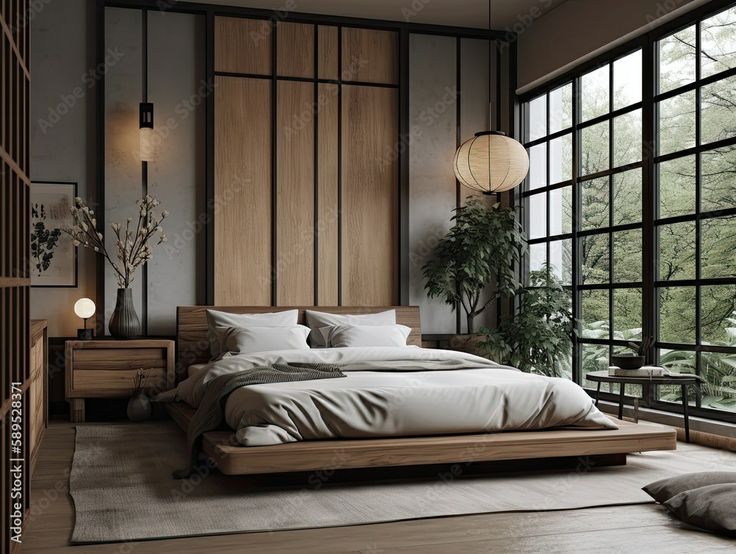
5. Build a Warm, Layered Lighting Scheme
Overhead lighting works against the Japandi bedroom aesthetic in almost every scenario. A single bright ceiling fixture flattens the room visually and removes the sense of warmth that makes the style so appealing.
Instead, approach lighting as a layered system. A paper lantern pendant or a rattan shade diffuses light in a way that feels natural and considered. A ceramic table lamp with a warm-toned bulb on each nightstand adds symmetry and intimacy to the space. A low floor lamp placed thoughtfully in a corner adds depth without visual noise. When choosing bulbs, aim for 2700K — warm without crossing into orange territory.
6. Add Plants, but Edit Your Choices
Plants belong in a Japandi bedroom, but the key is restraint. One or two plants placed intentionally contribute to the calm, nature-connected quality of the space. More than that, and the room risks feeling busy in a way that contradicts the entire philosophy.
A single snake plant in a simple terracotta pot. A trailing pothos resting on a low wooden shelf. A compact monstera in a ceramic planter positioned near a window. Choose plants that have a clean, architectural quality — ones that complement the room’s lines rather than softening the space into visual complexity.
7. Select Art That Is Quiet and Considered
If bold, colorful artwork is part of your current aesthetic, this aspect of Japandi design will ask for genuine restraint. That restraint, however, is very much the point.
Art that works well within japandi bedroom ideas includes Japanese ink wash prints, simple black-and-white photography, botanical line drawings, or abstract pieces in muted, earthy tones. One piece — slightly larger than you might typically choose — centered thoughtfully on a wall tends to create a stronger impact than a cluster of smaller works. If you do group pieces, keep them tonally consistent and allow generous space between them.
8. Solve Storage Before You Style
This is a step that many japandi bedroom ideas guides move past too quickly. The truth is straightforward: no amount of considered styling can compensate for unresolved clutter. Before selecting lamps or art or bedding, work out where everything in the room actually lives.
Built-in wardrobes with flat-panel doors and minimal or concealed hardware integrate seamlessly into the aesthetic. Under-bed storage in woven baskets maintains the natural material theme. A solid wood bench at the foot of the bed can serve as both a storage chest and a grounding visual element. Address the practical problem first, then layer the beauty on top of it.
9. Create a Small Corner for Rest and Stillness
If the room allows for it, setting aside a small corner dedicated to quiet activity adds a layer of intentionality that feels very aligned with japandi bedroom ideas. A floor cushion or zafu meditation cushion in natural cotton. A low wooden tray holding a single candle and a book. A simple floor lamp positioned overhead. This kind of deliberate micro-space reinforces the broader philosophy — that a bedroom is not simply a place to sleep, but a space designed to genuinely restore.
10. Choose Curtains That Filter Rather Than Block Light
Heavy curtains in strong colors or patterns introduce visual weight that tends to work against the Japandi aesthetic. Sheer linen panels in white or natural tones are a far better choice — they filter incoming light in a way that creates the soft, diffused quality that makes Japandi bedrooms feel so consistently beautiful in photographs and even better to actually be in.
For those who need functional blackout capability — which is entirely reasonable — a simple blackout blind installed behind sheer linen panels provides the practicality without sacrificing the look.
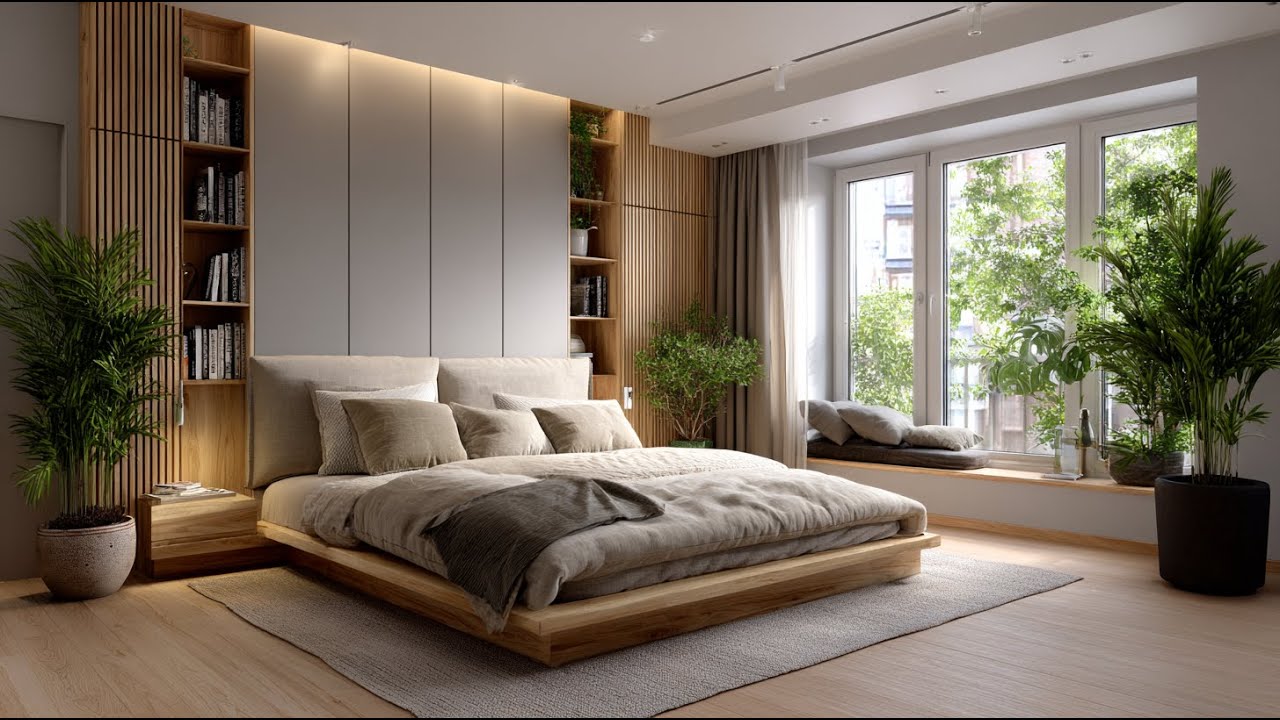
11. Ground the Room With a Neutral, Textural Rug
Rugs in Japandi bedrooms are meant to anchor the space quietly, not define it. A natural jute rug, a flatweave cotton runner, or a tufted wool rug in a solid muted tone all serve this purpose well. Avoid bold geometric patterns or high-contrast designs — the rug should settle the room, not compete with it.
12. Edit the Room — and Then Edit It Again
Of all the japandi bedroom ideas covered here, this one may carry the most weight. Once the room is styled, step back and look at it with fresh eyes. Look for anything that does not genuinely contribute to the space. A decorative tray holding seven objects might work better with three. A wall with two prints might be more powerful with one. An extra throw pillow might be exactly what tips the balance from calm to cluttered.
Japandi design consistently rewards restraint. Each time the impulse to add something arises, it is worth pausing to ask whether it serves the room — or simply satisfies the moment.
A Real-Life Example Worth Noting
Consider a modest city apartment bedroom — roughly ten by twelve feet — that felt cramped and visually busy when furnished in the conventional way. By applying core japandi bedroom ideas, the space was transformed without structural changes: a low walnut bed frame, crisp white linen bedding, a single rattan pendant light, two ceramic table lamps on simple wooden nightstands, one large snake plant, and a natural jute rug underfoot. No art on the walls. A single small wooden shelf holding three carefully chosen objects.
The outcome was a room that felt noticeably larger, consistently calm, and far easier to maintain — because with less in the space, there was simply less to manage.
Common Mistakes That Pull Japandi Bedrooms Off Course
A few patterns tend to undermine japandi bedroom ideas even when the intention is right:
- Too many wood tones in the same space — Limit yourself to one or two, kept within the same warmth range
- Leaning too cold — Japandi is warm minimalism. Without texture and natural warmth, it can tip into sterility
- Overlooking sensory details — A diffuser with cedarwood or hinoki oil, or a simple white noise machine, both align naturally with the overall philosophy
- Choosing fast furniture — Inexpensive particleboard pieces undermine the authenticity of everything else in the room
Frequently Asked Questions About Japandi Bedroom Ideas
Is Japandi the same as minimalism?
Not exactly. Minimalism focuses primarily on reduction — having as little as possible. Japandi bedroom ideas go further by pairing that reduction with warmth, texture, and a clear appreciation for natural beauty. A minimalist room can feel cold or impersonal; a Japandi room should always feel considered and calm.
Can japandi bedroom ideas work in a small room?
Absolutely — and in many cases, they work best there. The emphasis on low furniture, negative space, and clean proportions makes small rooms feel more open and intentional. The discipline required is the same: every item must genuinely earn its place.
What is the best Japandi color for a darker room?
Warm whites and soft ivory on walls will reflect available light most effectively. Strategically placed mirrors — ideally simple frameless styles or thin wood-framed ones — help bounce light without feeling decorative for its own sake. In low-light rooms, avoid dark accent tones, as they tend to make the space feel heavier than it needs to.
How do I apply japandi bedroom ideas without renovating?
No renovation is necessary. Begin with the simplest, most accessible changes: swap synthetic bedding for linen, replace a plastic lamp with a ceramic or rattan alternative, clear surfaces of items that do not need to be there, and introduce one well-chosen plant. Small, intentional changes compound over time into something that genuinely reflects the spirit of a japandi bedroom.
Is Japandi design expensive to achieve?
It does not have to be. Because the style is built around having fewer things, a higher per-item budget for quality pieces often balances against a lower total spend. One well-made bed frame and a set of quality linen bedding will consistently do more for the space than ten moderately priced decorative items competing for attention.
Conclusion
Japandi bedroom ideas are not a trend to follow for a season — they represent a way of thinking about space that is worth adopting more permanently. The philosophy is consistent throughout: be intentional. Choose materials that age well and feel honest. Choose colors that create calm. Choose furniture that genuinely serves the people living with it. Then remove what is not necessary, and allow the space to breathe.
A larger budget or a complete renovation is not required. What is required is patience, a willingness to remove rather than add, and a genuine appreciation for the quiet beauty that simplicity can produce.
Begin with one part of the room. Get the bedding right. Bring in one plant. Remove a few things that do not contribute. Notice how the space feels different. That is precisely how every well-considered japandi bedroom begins — one quiet, deliberate decision at a time.