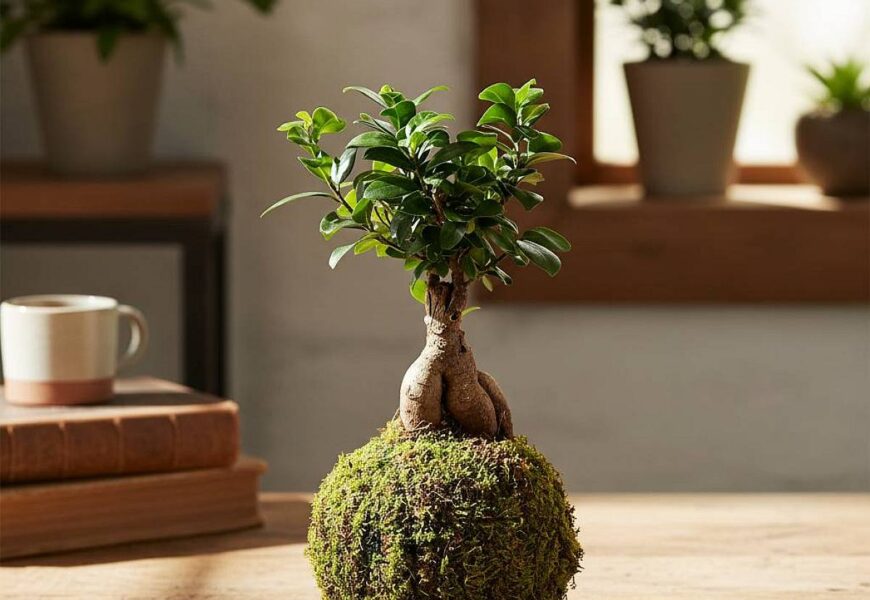
There is something quietly magnetic about a kokedama. You spot one hanging near a sunlit window — a compact green plant growing from a sphere of dark, wrapped moss — and it stops you for a moment. It looks like it belongs in a botanical garden, yet somehow it is sitting on someone’s kitchen shelf.
That is exactly the appeal. But here is something most beginners find out the hard way: not every plant is suited to life inside a moss ball. Some develop root rot within a few weeks. Others wither from inconsistent moisture before they ever get settled. The plant choice matters far more than the technique, and getting it right from the start saves a lot of frustration.
This guide walks through the best kokedama plants for a range of skill levels, living spaces, and visual styles — with enough practical detail to help you make a confident choice rather than a hopeful guess.
What Makes a Plant Perfect for Kokedama?
It helps to understand what kokedama actually asks of a plant before selecting one. The word itself comes from Japanese — “koke” meaning moss, and “dama” meaning ball. The plant is rooted in a carefully prepared soil mixture, shaped into a compact sphere, wrapped in sheet moss, and secured with twine or jute string. It is a centuries-old Japanese gardening tradition that has found a new audience among modern plant enthusiasts.
The conditions inside a kokedama are different from those in a standard container. Soil volume is limited. Roots stay relatively close to the surface. Moisture levels shift more noticeably between waterings compared to a deep pot. Because of this, plants with aggressive root systems or those that require consistently saturated soil are often poor candidates.
The best kokedama plants tend to share several practical qualities:
- Moderate to low water requirements, or a natural tolerance for brief dry periods between soaks
- Compact root structures that do not need significant space to expand
- Comfortable with ambient humidity, particularly for hanging kokedama displays
- Adaptable to indirect light, since kokedama is rarely placed in full direct sun
These characteristics create a realistic starting framework. Now, on to the plants themselves.
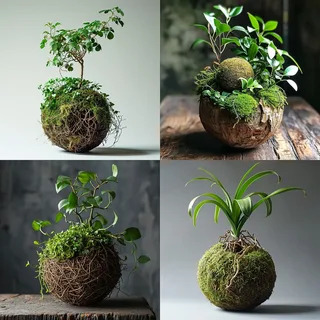
The 12 Best Kokedama Plants (Ranked by Ease and Beauty)
1. Pothos (Epipremnum aureum)
Pothos has earned its reputation as one of the most reliable houseplants available, and that reliability transfers well to kokedama. It tolerates low light, handles uneven watering without visible distress, and adjusts to a range of indoor humidity levels. For anyone approaching kokedama for the first time, pothos removes much of the uncertainty from the experience.
Its trailing vines are particularly well-suited to hanging displays. When the moss ball is suspended at eye level, the leaves cascade naturally downward, creating a layered, full appearance over time. The golden variety offers warm yellow-green tones, while the marble queen introduces a softer, variegated pattern — both striking without being demanding.
2. Peace Lily (Spathiphyllum)
For those who want the added reward of occasional flowering, peace lily is a thoughtful choice. It prefers indirect light and slightly moist growing conditions — both of which align naturally with the kokedama environment. The white, sail-shaped blooms appear several times throughout the year and bring a clean, elegant quality to any space.
What makes peace lily especially practical for new growers is its transparency. When the plant needs water, the leaves droop in a very visible way. There is no need to guess or check the calendar. Once you water it, the leaves recover within hours, and the cycle continues. It is one of the more communicative plants on this list.
3. Japanese Fern (Asplenium antiquum)
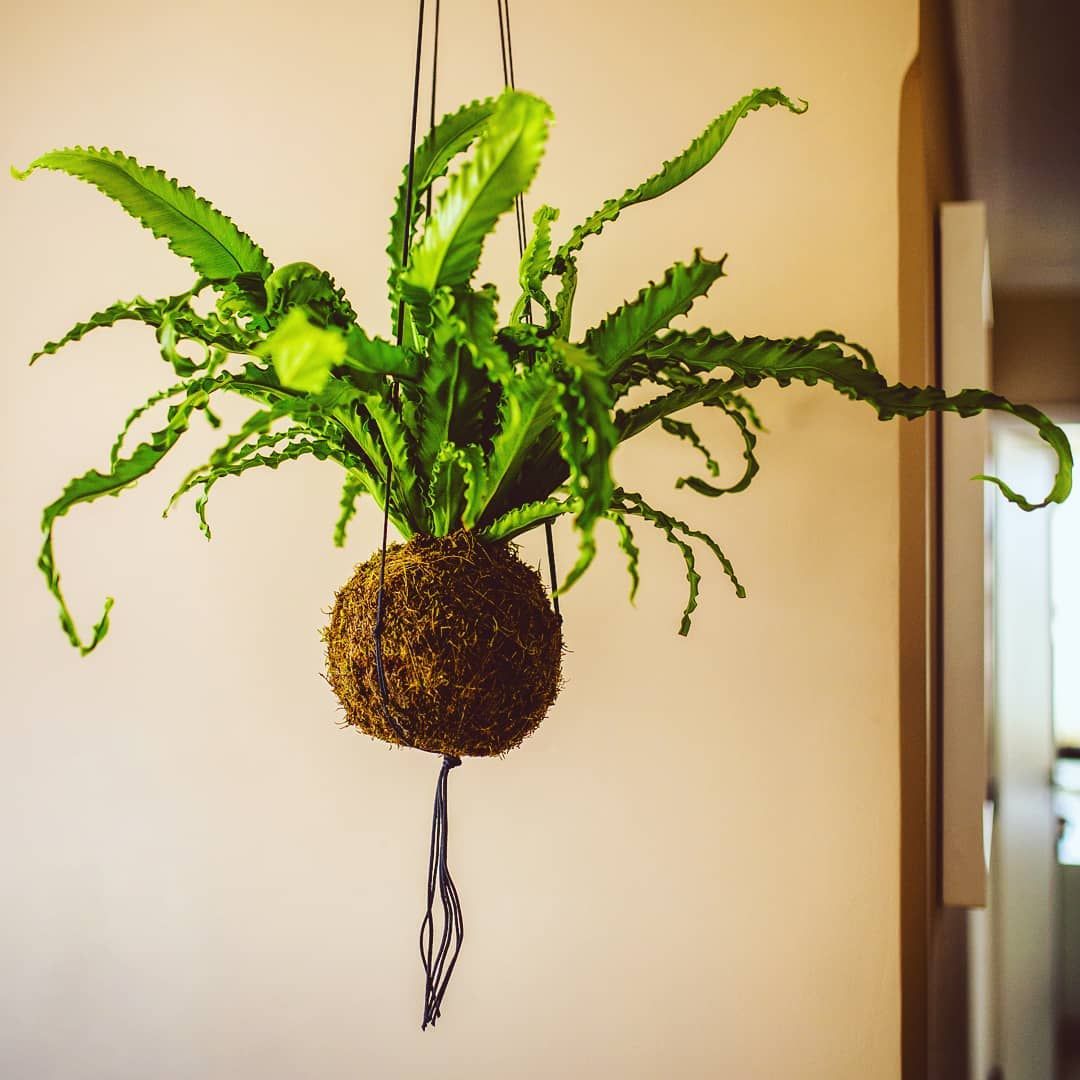
This is where kokedama begins to feel like a genuine expression of Japanese garden art. The bird’s nest fern — sometimes called Japanese fern — produces broad, smooth fronds that spread outward from the center in a rosette pattern. Perched on a round moss base, it looks carefully arranged even when it is simply growing as it naturally would.
It prefers soft, filtered light and consistently moist moss. Bathrooms and kitchens work particularly well for this plant because the ambient humidity in those rooms reduces the need for additional misting. Among the best kokedama plants for a humid interior setting, Japanese fern stands out for its refined appearance.
4. Boston Fern (Nephrolepis exaltata)
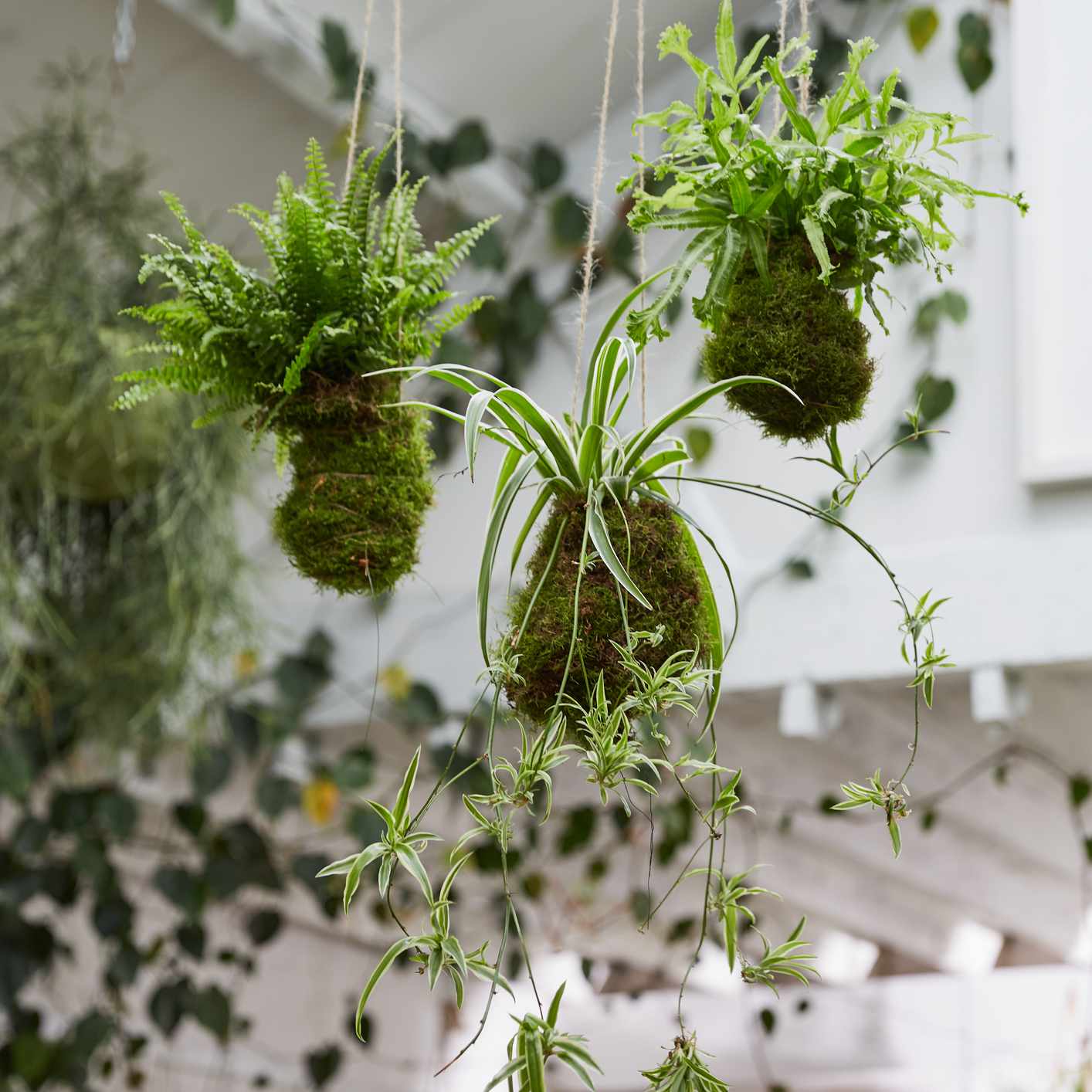
Boston fern brings a different kind of visual energy — full, feathery, and slightly wild in the best possible way. Hanging kokedama displays benefit enormously from this plant’s texture. The arching fronds fill out around the moss base and create a layered, voluminous look that is genuinely difficult to achieve with most other plant choices.
The trade-off is maintenance. Boston fern needs regular misting and prefers bright indirect light to stay at its best. It does not respond well to prolonged dry periods. But for a prominently placed hanging kokedama where visual impact matters most, the extra attention is often considered worthwhile.
5. Philodendron (Heartleaf Variety)
Heartleaf philodendron grows with an enthusiasm that makes it rewarding to watch. New leaves appear regularly, the vines extend quickly, and the heart-shaped foliage maintains a glossy, deep green finish even in lower light conditions. It performs similarly to pothos in terms of durability but has its own distinct character.
This is one of the best kokedama plants for apartments with limited natural light. North-facing rooms, interior spaces, and spots far from windows that would challenge most plants are handled by heartleaf philodendron without visible stress. It is a practical choice that does not compromise on appearance.
6. Selaginella (Moss Fern)
Selaginella occupies an interesting space in the kokedama world. It is a low, creeping plant with a texture so close to moss that it visually merges with the outer wrapping of the ball. The result is a fully unified, seamless green sphere — a living object that looks almost architectural in its simplicity.
It requires consistent moisture and thrives in low to medium light. Small tabletop displays suit it well, particularly in minimalist or nature-inspired interiors where the goal is subtle, textural interest rather than bold statement pieces.
7. Mini Orchid (Phalaenopsis)
The idea of an orchid in a moss ball surprises many people, given the plant’s reputation for being temperamental. In practice, however, mini phalaenopsis varieties adapt quite well to kokedama conditions. This is partly because orchids naturally grow on tree bark and branches in the wild — not in dense, moisture-retaining soil. The open, breathable structure of a well-made moss ball actually suits their root preferences.
When in bloom, mini orchids are among the most visually striking best kokedama plants you can display. The flowers arch elegantly above the moss, and the overall arrangement looks more considered than almost any other combination. The key care requirement is allowing the moss to dry slightly between waterings to prevent root rot — a detail worth keeping in mind.
8. Young Monstera Deliciosa
A mature monstera is far too large for kokedama. A young plant or a compact specimen, though, is a different situation entirely. Even at an early stage, the signature split leaves are beginning to form, and that immediately recognizable shape creates a strong visual presence above a moss ball.
It is worth treating this as a transitional display. As the plant matures and its root system expands, it will eventually need to be moved into a larger kokedama or a standard container. Think of it as a beautiful temporary arrangement that bridges the gap between a planted gift and a long-term feature.
9. Snake Plant (Sansevieria trifasciata)
Snake plant is one of the most drought-tolerant houseplants in common cultivation. It stores water within its thick, upright leaves, which means a delayed watering schedule has very little immediate effect on the plant’s health. For anyone whose lifestyle involves frequent travel or an irregular routine, this tolerance is genuinely valuable.
The upright, structured form of a snake plant creates a modern, architectural quality in kokedama — particularly when placed in clean, minimal interior spaces. A dwarf or compact variety, such as Sansevieria trifasciata ‘Hahnii,’ works best for maintaining a balanced proportion between plant and moss ball.
10. Asparagus Fern (Asparagus setaceus)
Asparagus fern has a lightness to it that other plants on this list simply do not replicate. The fine, needle-like foliage forms soft, layered sprays that give the kokedama a delicate, almost cloud-like quality when viewed from a short distance. Once established, the plant grows with real vigor and fills out the display naturally.
It performs particularly well in outdoor settings — shaded patios, covered balconies, and sheltered garden corners where humidity levels are naturally higher than inside a typical home. It is one of the best kokedama plants for those who want to extend the art form beyond interior spaces.
11. Lucky Bamboo (Dracaena sanderiana)
Lucky bamboo has long been associated with clean, considered design in Asian-inspired interiors. A single stalk or a small grouped cluster rising from a wrapped moss ball creates a composed, intentional display that fits naturally into contemporary rooms. The vertical lines of the bamboo contrast well against the round form of the moss base.
It grows comfortably in indirect light and tolerates slightly damp conditions, which aligns with the standard kokedama watering cycle. The one consistent note of caution is avoiding oversaturation — standing water around the roots will cause problems over time, even for a relatively forgiving plant.
12. Nerve Plant (Fittonia)
Nerve plant earns its place at the end of this list not because it is the easiest to care for, but because it is the most visually distinctive. The contrast between its dark green leaves and the vivid pink, red, or white veining running through them is unlike anything else commonly found in indoor gardening. Small in size and compact in habit, it draws attention proportionally far beyond what its scale would suggest.
It is one of the best kokedama plants for tabletop placement where close observation is possible and where you want a genuine point of interest. High humidity and indirect light are its primary requirements. Keeping it away from heating vents and air conditioning units — both of which reduce ambient moisture — makes a considerable difference to its long-term health.
Quick Comparison: Best Kokedama Plants at a Glance
| Plant | Light Needs | Water Needs | Skill Level | Best Display Style |
|---|---|---|---|---|
| Pothos | Low to medium | Low | Beginner | Hanging or shelf |
| Peace Lily | Low to medium | Medium | Beginner | Tabletop |
| Japanese Fern | Low to medium | Medium-high | Intermediate | Tabletop or wall |
| Boston Fern | Medium | High | Intermediate | Hanging |
| Philodendron | Low to medium | Low-medium | Beginner | Hanging or shelf |
| Mini Orchid | Medium-bright | Low-medium | Intermediate | Tabletop |
| Monstera (young) | Medium-bright | Medium | Intermediate | Statement piece |
| Snake Plant | Low to bright | Very low | Beginner | Modern interior |
| Asparagus Fern | Medium | Medium | Intermediate | Outdoor/patio |
| Lucky Bamboo | Low to medium | Low-medium | Beginner | Minimalist display |
| Nerve Plant | Low to medium | High | Intermediate | Tabletop accent |
| Selaginella | Low to medium | High | Beginner | Small display |
How to Keep Your Kokedama Healthy Long-Term
Selecting the right plant is the first and most important decision. Even so, the best kokedama plants will underperform without consistent, informed care. A few practices make a meaningful difference over time.
Watering with intention — The standard method is to submerge the moss ball in a bowl of room-temperature water for 10 to 15 minutes, then allow it to drain fully before returning it to its display position. Every 7 to 10 days is a reasonable starting frequency, though this varies with the season, the plant, and your home’s humidity. A practical check: if the moss ball feels noticeably lighter than usual and the surface feels dry rather than cool and slightly damp, it is ready for a soak.
Humidity as a maintenance tool — Kokedama developed in Japan, where seasonal humidity is considerably higher than in most centrally heated or air-conditioned homes. Misting the moss between regular waterings helps compensate for this difference. Ferns, nerve plants, and selaginella benefit most from this practice, but nearly all kokedama plants respond well to slightly elevated ambient moisture.
Measured fertilization — The soil volume in a kokedama is limited, which means nutrient salts can accumulate more quickly than they would in a larger pot. A diluted liquid fertilizer applied once per month during the active growing season — typically spring through early autumn — is sufficient for most plants on this list. More frequent feeding is rarely necessary and can cause more harm than good.
Regular rotation — Plants consistently orient their growth toward the nearest light source. Turning your kokedama a quarter rotation every week or two keeps the growth pattern even and prevents the plant from leaning heavily to one side over time.
FAQs About Kokedama Plants
What is the easiest kokedama plant for beginners?
Pothos and heartleaf philodendron are consistently the most accessible choices among the best kokedama plants for those just starting out. Both tolerate the two most common beginner challenges — inconsistent watering and limited natural light — without significant complaint. Starting with either of these plants gives you room to learn the technique without the pressure of managing a more sensitive species.
How long does a kokedama plant last?
A well-maintained kokedama typically remains in good condition for one to three years before the plant’s root system outgrows the moss ball and requires repotting. Among the best kokedama plants, pothos and most ferns tend toward the longer end of that range, particularly when the outer moss layer is refreshed periodically to maintain its structure and appearance.
Can kokedama grow outdoors?
Several best kokedama plants perform well outdoors, provided they are placed in shaded or partially sheltered positions. Asparagus fern, Boston fern, and certain orchid varieties are well-suited to outdoor display during warmer months. Direct sun exposure should be avoided — it dries the moss ball too rapidly and can scorch foliage that is accustomed to filtered indoor light.
Why is my kokedama turning brown?
Browning moss is most often a sign that the ball dried out too completely between waterings. Browning at the tips of the leaves, on the other hand, generally points to insufficient humidity rather than a watering problem. Both issues are straightforward to address once the underlying cause is correctly identified, and neither represents permanent damage if caught early.
Do kokedama need special soil?
Traditional kokedama soil is prepared using a combination of akadama — a fired Japanese clay soil used in bonsai culture — peat moss, and fine bonsai potting mix. This blend creates a structure that holds its shape when molded, retains adequate moisture, and allows sufficient air circulation around the roots. Using the correct kokedama soil mix is genuinely important; it directly affects how well the best kokedama plants establish and maintain themselves over time.
Conclusion
Kokedama occupies a rare position in the world of indoor gardening. It is an art form with genuine historical depth, and yet it is entirely achievable for someone with a free afternoon and a willingness to try something new. The visual result — a living, growing plant emerging from a carefully wrapped sphere of moss — is quietly impressive in a way that few other gardening styles can match.
The difference between a kokedama that thrives and one that fades often comes down to the plant selection. With the right choice from the beginning, the learning curve becomes manageable and the experience genuinely enjoyable. Whether you are drawn to the quiet simplicity of pothos, the architectural presence of a snake plant, or the rare beauty of a mini orchid in bloom, the best kokedama plants are ultimately the ones that suit your space, your schedule, and your honest level of attention.
Start with a single plant. Give it the care it needs. Watch it settle and grow within its moss ball over the coming weeks. You will likely find, as many plant enthusiasts have before you, that one kokedama is rarely the last.
Your next step: Choose one plant from this list, gather your akadama, peat moss, sheet moss, and jute twine, and set aside an hour this weekend to create your first kokedama. The process is straightforward, the materials are widely available, and the result is something genuinely worth displaying.