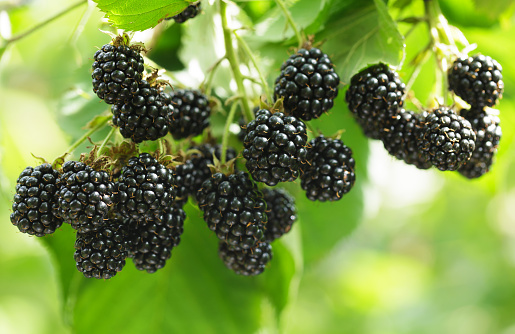
Most people blame bad weather when their blackberries underperform. The real culprit is almost never the rain, the sun, or the season. It is wrong — or worse, zero — fertilizer. Get the feeding right, and your canes will reward you in ways you did not think possible from a backyard planting.
Growing blackberries is one of the most satisfying things you can do in a home garden. But there is a frustrating gap between a decent harvest and the kind where you genuinely cannot keep up with the fruit. That gap almost always comes down to soil nutrition and a thoughtful blackberries fertilizer routine. Whether you are growing Triple Crown, Ouachita, or thornless varieties suited to your region, what you feed your plants — and when you feed them — shapes everything from cane vigor to the depth of flavor in each berry.
Why Blackberries Fertilizer Is the Most Overlooked Step in Berry Growing
Here is something most gardening guides gloss over: blackberry plants are heavy feeders compared to other cane fruits. They push out new primocanes every season, develop lateral shoots, flower, and fruit — often all within the same growing cycle. That kind of output takes real nutritional energy, and the soil does not always have enough of it on its own.
If you have ever noticed your canes looking pale or spindly, or ending up with berries that are small and seedy despite decent growing conditions, soil nutrient deficiency is very likely the reason. Nitrogen drives vigorous cane growth and healthy foliage. Phosphorus supports root development and encourages strong flowering. Potassium improves fruit quality, increases sugar content, and helps the plant resist disease. Without a balanced blackberries fertilizer program that addresses all three, you are essentially asking your plants to perform at a high level while running on empty.
The encouraging part is that once you understand what your blackberry plants actually need, building a feeding routine around those needs is neither complicated nor expensive.
Understanding NPK: The Foundation of Any Blackberries Fertilizer Program
NPK refers to Nitrogen (N), Phosphorus (P), and Potassium (K) — the three primary macronutrients printed on every fertilizer label. Choosing the right NPK ratio is the first meaningful decision you will make when putting together a blackberries fertilizer plan, and it is worth taking a moment to think through before buying anything.
What NPK Ratio Works Best for Blackberries?
A balanced formula like 10-10-10 works well as a general-purpose blackberries fertilizer for most home gardens. That said, during the early spring growth flush, many experienced growers shift to a slightly higher nitrogen product — something closer to 16-4-8 — to give primocanes the push they need to establish strong and thick.
By midsummer, when berries are actively setting and beginning to ripen, the priority changes. You want to ease off nitrogen and let potassium do more of the work. Too much nitrogen late in the season channels the plant’s energy into leafy growth rather than fruit, which often results in a delayed harvest and berries that taste flat.
| Growth Stage | Recommended NPK Focus | Example Formula |
|---|---|---|
| Early Spring (Cane emergence) | Higher N, balanced P & K | 16-4-8 or 10-10-10 |
| Late Spring (Flower bud formation) | Balanced or lower N | 10-10-10 |
| Summer (Fruit set & ripening) | Lower N, higher K | 5-10-15 or 0-10-20 |
| Fall (After harvest) | Minimal — prepare for dormancy | Compost top-dress only |
This phased approach to blackberries fertilizer is one of the more impactful adjustments a grower can make, particularly if you have been applying the same product at the same rate throughout the entire year.
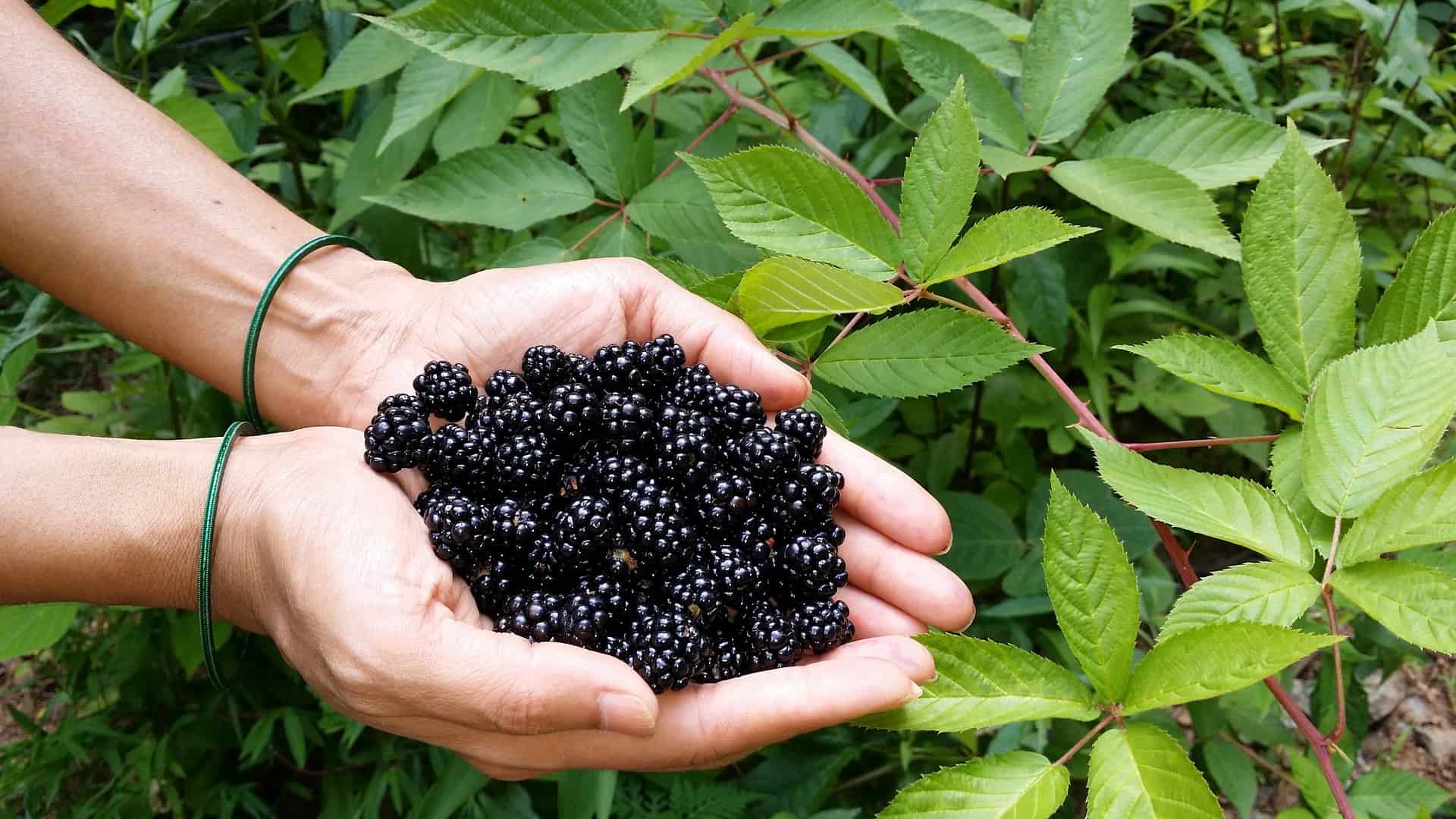
The 7 Best Blackberries Fertilizer Tips Growers Swear By
1. Test Your Soil Before You Feed Anything
This step is genuinely non-negotiable, and yet it is the one most home growers skip. A basic soil test — available through county extension offices for around $15 to $20 — tells you your current nutrient levels and, just as importantly, your soil pH. Blackberries perform best in a pH range of 5.5 to 6.5. Outside that window, nutrients already present in the soil become chemically unavailable to the plant, meaning your blackberries fertilizer cannot do its job regardless of how much you apply or how often.
If your pH reads too high, a sulfur amendment will bring it down gradually. Too low, and agricultural lime will raise it. The rule of thumb is simple: fix the pH first, then build your fertilizer program on that corrected foundation.
2. Time Your First Application to Early Spring
The most effective moment to apply blackberries fertilizer is in early spring, right as new growth starts to push from the crown. In most temperate climates, that window falls between late February and early April depending on your location. The plant is coming out of dormancy and primed to take up nutrients quickly, which means your investment works harder at this stage than at almost any other point in the season.
A common mistake among newer growers is applying fertilizer in late fall with the intention of getting a head start on spring. The problem is that fall fertilization stimulates soft new growth that frost can damage or kill outright. Hold your blackberries fertilizer applications until the plant is actively growing and can put those nutrients to real use.
3. Do Not Skip the Second Application
A two-feed schedule consistently outperforms a single annual feeding, and the difference tends to show up clearly in fruit set and berry size. The first early spring application fuels strong primocane development. A second, lighter application of blackberries fertilizer roughly four to six weeks later supports flower formation and helps the plant transition smoothly into the fruiting phase.
Keep this second feeding conservative — about half the rate of your spring application. This is the stage where many well-intentioned gardeners over-apply, assuming that more fertilizer equals more fruit. In reality, excess nitrogen at this point diverts energy into leaves and shoots rather than berries, and the flavor of the fruit often suffers as a result.
4. Go Organic for Long-Term Soil Health
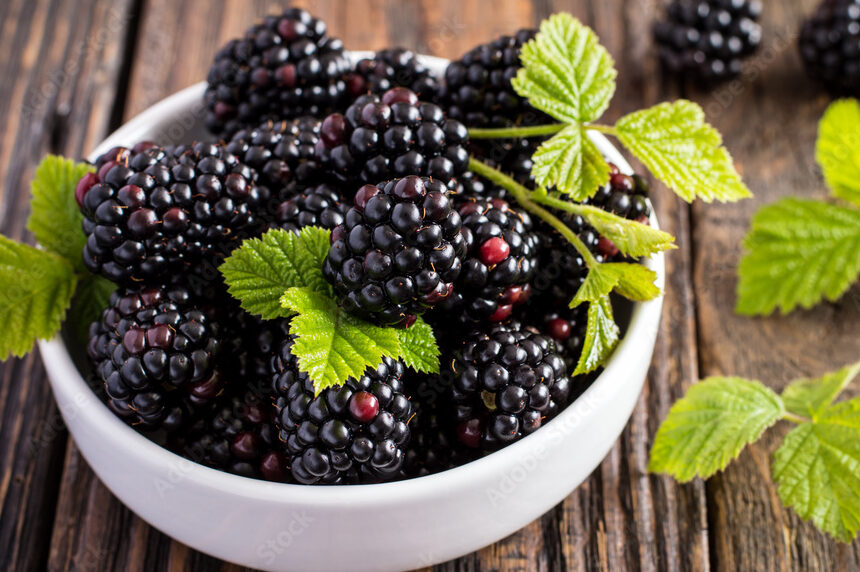
Synthetic fertilizers work quickly and precisely, but they do not build the soil. For a perennial planting like blackberries — one that you are hoping to harvest from for a decade or two — organic blackberries fertilizer options are worth incorporating into your long-term approach, either alongside synthetics or as a primary feeding strategy.
Reliable organic choices include:
- Composted manure (chicken or cow): a slow-release nitrogen source that also conditions soil structure
- Fish meal or fish emulsion: high in nitrogen, relatively fast-acting, and a solid choice for early spring feeding
- Kelp meal: a natural source of potassium and a wide range of trace minerals
- Bone meal: rich in phosphorus, well-suited to supporting root development and flower formation
- Worm castings: gentle, well-balanced, and safe to apply generously without risk of burn
The deeper advantage of organic blackberries fertilizer lies in what it does below the surface. It feeds soil biology — the microbial activity that improves water retention, nutrient cycling, and long-term root health. That is something a bag of synthetic nutrients cannot replicate, and it compounds in value the longer you maintain the planting.
5. Watch for Nutrient Deficiency Symptoms
Blackberry plants communicate nutritional stress through visible changes in leaf color, texture, and overall appearance. Learning to read those signals accurately will save you from applying the wrong blackberries fertilizer at the wrong time, which can sometimes make the underlying problem worse.
- Yellowing of older leaves, starting at the bottom of the plant: a sign of nitrogen deficiency, indicating a need for a nitrogen-forward blackberries fertilizer
- Purple or reddish tinting on leaves: often phosphorus deficiency, frequently triggered by cold soil temperatures in early spring
- Scorched or browned leaf edges combined with poor fruit set: typically potassium deficiency
- Yellowing between the leaf veins while veins remain green (interveinal chlorosis): usually iron or magnesium deficiency, most often caused by high soil pH locking out those nutrients rather than a true absence of them
Always cross-reference what you see visually with your soil test data. Treating symptoms without understanding the root cause rarely produces lasting results.
6. Apply Fertilizer Correctly to Avoid Root Burn
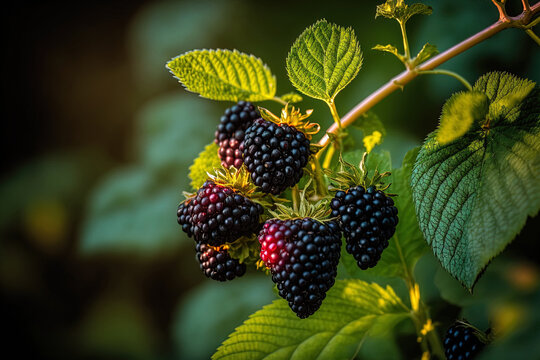
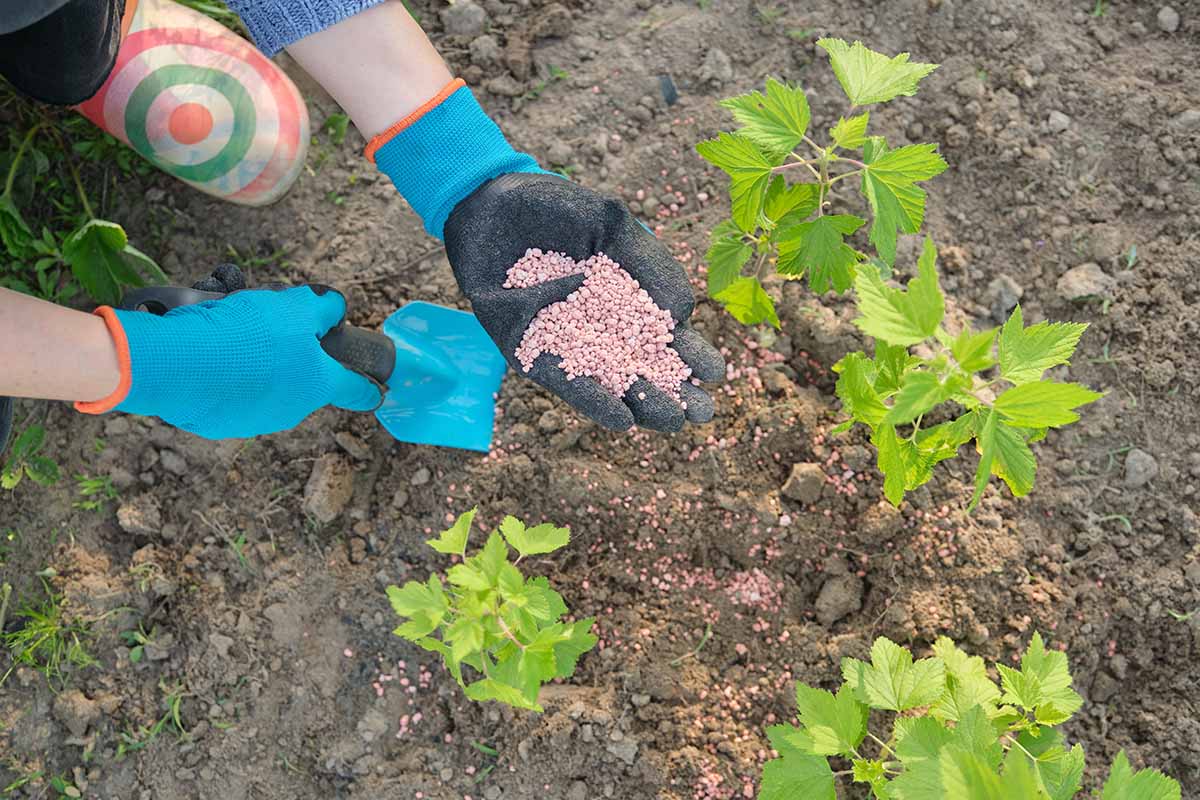
Even a well-chosen blackberries fertilizer can harm your plants when applied without care. For granular products, broadcast in a ring around each plant beginning about six inches from the crown and extending outward to the drip line — the outer edge of the plant’s canopy. Piling fertilizer directly against the canes or at the base of the crown risks concentration burn to the most sensitive tissue.
After applying granular blackberries fertilizer, water the area thoroughly to begin dissolving the granules and moving nutrients down toward the root zone. For liquid products, always apply to soil that is already moist. Applying liquid fertilizer to dry soil increases the risk of nutrient burn and reduces absorption efficiency considerably.
7. Mulch Works With Your Fertilizer, Not Against It
A three to four inch layer of organic mulch — wood chips, straw, or shredded leaves all work well — creates conditions where your blackberries fertilizer can perform at its best. Mulch moderates soil temperature through seasonal extremes, slows moisture loss between watering or rain events, and breaks down gradually over time to add organic matter back into the soil.
Beyond those direct benefits, mulch suppresses weeds that would otherwise compete with your blackberry plants for the very nutrients you are working to provide. In that sense, mulching is one of the most cost-effective ways to protect your investment in a good blackberries fertilizer program and extend its impact through the season.
Organic vs. Synthetic Blackberries Fertilizer: Which Is Right for You?
Both approaches have legitimate value, and the better fit depends on what you are trying to achieve. There is no universally correct answer here, which is worth acknowledging upfront.
For commercial growers or anyone dealing with a severe, confirmed nutrient deficiency, synthetic blackberries fertilizer offers precision and speed that organic products generally cannot match. Products like ammonium sulfate, superphosphate, and potassium sulfate are consistent in their nutrient content, straightforward to measure, and relatively inexpensive at scale.
For home growers whose primary goals are flavor quality, long-term soil health, and sustainable productivity, organic blackberries fertilizer is usually the more rewarding direction. Berries grown in biologically active, well-conditioned soil tend to have a noticeably richer flavor profile compared to those grown in chemically maintained ground. That difference may be subtle in year one, but it becomes more apparent over time.
Many experienced growers settle on a practical middle ground — organic matter as the consistent base, with targeted synthetic applications to address specific deficiencies when soil testing reveals a need.
How Much Blackberries Fertilizer Should You Actually Apply?
Over-fertilizing is considerably more common than under-fertilizing in home gardens, particularly among enthusiastic growers who equate effort with results. These application guidelines apply to established plantings and offer a reasonable starting point:
- Granular 10-10-10: apply half a cup to one cup per plant in early spring
- Ammonium nitrate (34-0-0): no more than a quarter cup per plant in early spring
- Composted manure: spread two to three inches as a top-dress around each plant
- Liquid fish emulsion: dilute per label directions and apply every three to four weeks during active growth
For plants in their first year of establishment, reduce these rates by roughly half. Young canes are more sensitive to fertilizer concentration than mature plants, and pushing growth too aggressively early on can stress the root system rather than strengthen it.
Common Blackberries Fertilizer Mistakes That Kill Harvests
Have you ever followed a fertilizer schedule consistently and still ended up with a disappointing yield at the end of the season? It happens more than most growers like to admit. These are the errors that most often explain the gap between effort and result.
Fertilizing at the wrong pH. This is the single most common problem, and it undermines everything else. No blackberries fertilizer performs well in soil with a pH above 7.0 or below 5.5. Without addressing pH first, the rest of your program is working against itself.
Applying nitrogen too late in the season. Late-season nitrogen promotes soft, lush growth that is vulnerable to early frost and does nothing for fruit quality. In fact, it often reduces the sugar content of berries that are already forming. Nitrogen-heavy feeding should wind down by midsummer at the latest.
Ignoring micronutrients. Iron, boron, zinc, and magnesium all contribute to fruit development in ways that primary NPK nutrients cannot cover. A quality organic blackberries fertilizer or a purpose-formulated micronutrient blend fills this gap. Standard NPK products alone do not.
Forgetting to water after application. Granular blackberries fertilizer sitting on the surface of dry soil is functionally inert. Nutrients need to dissolve and move into the root zone to do anything, and that requires adequate moisture either from irrigation or from rainfall following application.
Real-World Example: Turning Around a Struggling Blackberry Planting
A small-scale grower in North Carolina spent three seasons growing Navaho erect blackberries with consistently underwhelming results — thin canes, small berries, and yields that never justified the space the planting took up. A soil test eventually revealed the source of the problem: pH at 7.2, well above the range where blackberries can effectively use soil nutrients.
Over the following season, the grower applied sulfur amendments to bring pH down to 6.0 and restructured the entire blackberries fertilizer approach around what the soil test actually showed. Fish meal went down in early spring for a nitrogen-forward start. A 10-10-10 application followed six weeks later. Compost mulch went on and stayed on throughout the year.
By the second season under the new program, the results were visible in the canes themselves — noticeably thicker, healthier growth. Berry size increased measurably, and the total harvest nearly doubled compared to previous years. The change was not about applying more inputs. It was about applying the right inputs at the right time, starting with soil conditions that allowed a blackberries fertilizer program to actually function.
Frequently Asked Questions About Blackberries Fertilizer
What is the best fertilizer for blackberries?
A balanced 10-10-10 granular product is the most dependable all-purpose blackberries fertilizer for home gardens. For growers who prefer organic methods, composted chicken manure paired with fish meal provides strong nitrogen coverage and adds meaningful organic matter to the soil over time.
When should I fertilize blackberry plants?
The most effective timing for blackberries fertilizer is early spring as new growth begins to show, followed by a lighter second application four to six weeks later. Feeding after midsummer is generally not recommended and can do more harm than good.
Can I use tomato fertilizer on blackberries?
It is a workable substitute in a pinch, since tomato fertilizers often carry a reasonable NPK balance and tend to include potassium. However, a product designed specifically as a blackberries fertilizer or formulated broadly for fruit and berry production will serve your plants better over the long term.
How often should blackberries be fertilized?
For most home plantings, two applications of blackberries fertilizer per growing season — early spring and late spring — provide adequate nutrition. Growers aiming for higher yields can supplement with monthly liquid feeding during active growth, though this requires more careful attention to avoid overfeeding.
Is compost enough for blackberries?
Compost contributes meaningfully to soil health and can sustain adequate fertility at low production levels. For growers who want consistently strong yields, supplementing compost with a focused blackberries fertilizer ensures nitrogen and potassium levels stay sufficient during the periods of highest demand.
Conclusion: Feed Your Blackberries Right, and They Will Deliver Every Time
Blackberries fertilizer is not a complicated subject, but it does reward growers who approach it with some deliberateness. Test your soil, address pH before anything else, feed at the right points in the season, and match your choice of fertilizer to your actual goals. None of that requires expensive products or a great deal of time. It requires knowing what your plants need and acting on that knowledge consistently.
The most practical action you can take this season is to get a soil test done before you apply anything. That one step costs almost nothing and gives you a clear foundation for every blackberries fertilizer decision that follows. From there, the program builds itself around real data rather than guesswork.
Feed the soil, mulch consistently, and stay attentive to what your plants are telling you. Do those things well, and a strong harvest is a natural outcome.