Most people who spend time styling their homes end up with a space that looks nothing like what they had imagined. They buy what seems like the right pieces, follow the right interior accounts, and still walk into a room that feels somehow off. Disconnected. Like a mood board that looked perfect on screen but never quite translated into real life.
If that experience sounds familiar, the issue is probably not your taste. It is the approach.
Organic modern decor is one of the most livable and genuinely beautiful interior styles available today — but there are real principles beneath its seemingly effortless surface. Get those right, and you will have a home that feels both intentional and deeply comfortable. Get them wrong, and you end up with a room full of beige that, despite all the effort, still feels oddly cold.
This guide works through those principles honestly, one by one.
What Makes Organic Modern Decor Different From Everything Else
You have probably come across the labels. Boho. Japandi. Scandi. Coastal. The interior design world has a category for everything, and the categories keep multiplying. So where does organic modern decor actually sit among all of them, and why does it connect with so many different kinds of people right now?
The clearest way to put it: this is the style that refuses to choose between clean and warm. Between structured and soft. It takes the visual clarity of modern design — uncluttered spaces, considered layouts, restraint with decoration — and runs it through a filter of natural materials, tactile textures, and organic forms. The result is a home that feels both current and timeless. Sophisticated without ever feeling cold.
What sets organic modern interior design apart is not any single element in isolation but the relationship between elements. The way rough-hewn wood sits next to smooth linen. The way a curved plaster wall plays against the sharper geometry of a modern window frame. That controlled tension between the refined and the natural is exactly what gives these rooms their particular energy.
The 9 Honest Tips Nobody Tells You About Organic Modern Decor
Tip 1: Warm Whites Are Non-Negotiable
The single most common mistake people make when attempting organic modern decor is painting their walls the wrong white. It sounds like a small thing. It is not. Cool whites and stark grays actively work against every natural material you bring into a room — they flatten wood, drain the creaminess from linen, and make stone look lifeless.
Warm whites — those carrying yellow, pink, or soft green undertones — do the opposite. They make wood look richer, linen look layered, and ceramic look hand-finished rather than mass-produced. Paint options like “Alabaster” by Sherwin-Williams and “White Dove” by Benjamin Moore have become industry staples for exactly this reason. They read as white in photographs but carry just enough warmth to change how a room feels in person.
This is genuinely the highest-return investment in organic modern decor. A gallon of paint costs under $60. The shift it creates can be more dramatic than a furniture purchase three times the price.
Tip 2: Natural Materials Are the Foundation, Not the Finishing Touch
A common pattern in home styling is treating natural materials as decoration — a wooden tray here, a wicker basket there — while the larger structural pieces remain synthetic. In organic modern decor, that hierarchy is reversed. Natural materials are the foundation. Everything else is built around them.
This means your largest purchases — the sofa, the dining table, the area rug — should lead with natural materials. A solid wood dining table. A linen or bouclé sofa. A jute or wool rug. When the anchor pieces are grounded in real materials, the accessories that follow feel like a continuation of the same idea rather than an unrelated addition.
The term for what you are aiming for is material cohesion. When every element in a room seems to belong to the same world, that is not coincidence. It is the result of making material choices deliberately, from the largest piece down to the smallest.
Tip 3: Embrace Imperfection — That Is Where the Character Lives
Mass-produced furniture is designed to be perfectly consistent. Every edge identical, every surface flawless, every proportion uniform. And while that consistency is efficient, it is also, in many cases, what makes a room feel lifeless.
In organic modern decor, imperfection carries meaning. A handcrafted ceramic bowl with a slightly uneven rim. A wooden coffee table where the grain travels in its own direction. A woven throw where the texture varies subtly across the weave. These are not defects. They are evidence that something was made by hand or shaped by nature, and that story adds a quality of warmth that no amount of careful styling can manufacture.
When shopping for pieces, pay attention to the things that have real character — visible grain, slight tonal variation, texture that you can actually feel. Those are the pieces that hold their presence in a room over time.
Tip 4: Curves Do More Work Than You Might Expect
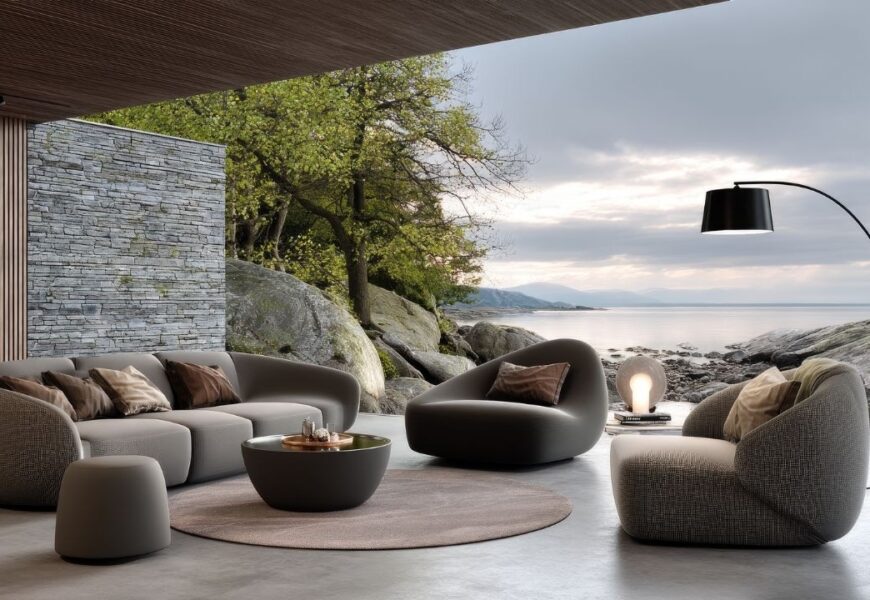
Most modern spaces default to straight lines. Sharp sofa corners, rectangular tables, angular pendant fixtures. There is a visual logic to that geometry, but it can also produce rooms that feel rigid and slightly unwelcoming. Organic modern decor addresses this directly through the use of curves.
An arched mirror above a console. A sofa with a rounded arm. A sculptural ceramic lamp with a flowing silhouette. A coffee table whose edges follow no strict geometric rule. Curves introduce a softness that reads as inherently more natural — which makes sense, because the natural world does not produce many straight lines. Trees branch in irregular directions. Rivers bend. Stones wear themselves smooth and round over centuries.
The practical note here: you do not need to replace your furniture to feel this shift. Adding one or two curved elements to a room — a mirror, a lamp, a single chair — changes the overall energy noticeably.
Tip 5: The Rug Is Doing More Work Than You Realize
In any well-designed interior, the area rug is doing significant work beneath the surface. But in organic modern decor specifically, it is doing double or triple duty. It anchors the furniture arrangement. It introduces texture underfoot. It defines separate zones in open-plan spaces. And it sets the material tone for everything placed above it.
In an organic modern room, the rug should almost always be a natural fiber — or at minimum carry the visual qualities of one. Jute, sisal, wool, and hand-knotted cotton are all strong choices. A high-pile wool rug brings a completely different warmth than a flat-weave jute, and choosing between them depends on how much textural weight that particular room needs.
One consistent rule: size up. The most common rug mistake in residential interiors is choosing a size too small. In a living room, all four sofa legs should sit on the rug, or at least the two front legs. A rug that sits in the middle of a seating arrangement with furniture hovering around its edges makes a room feel both smaller and less resolved.
Tip 6: Plants Function as Architecture in This Style
Plants work differently in organic modern decor than they do in more eclectic or maximalist styles. In maximalist spaces, plants are part of the layering — more is often more. In organic modern interiors, plants carry architectural weight. They are placed with the same intentionality as a piece of furniture, not scattered as afterthoughts.
One large fiddle leaf fig or monstera positioned in the corner of a living room can function the way a sculpture does — grounding the space, providing vertical movement, and introducing a quality of life that no object can replicate. A trailing plant on a high shelf adds movement and scale without visual clutter. Dried botanicals in an oversized ceramic vase bring earthy texture with no ongoing maintenance.
The principle is fewer plants with more presence rather than many plants with diffuse impact. Each one should be a decision, not a habit.
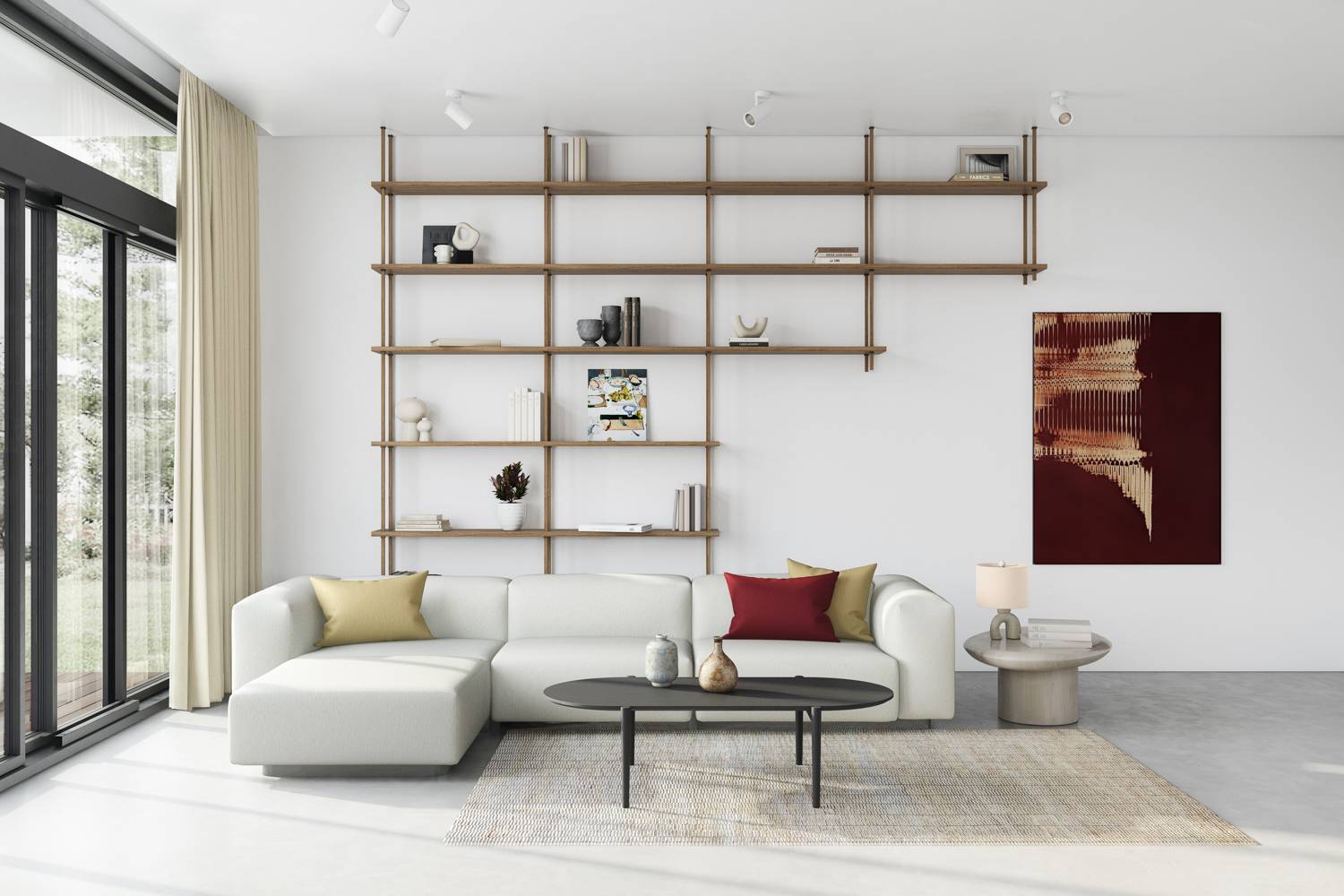
Tip 7: Lighting Temperature Changes Everything
It is possible to have beautifully sourced natural materials, a considered furniture arrangement, and a carefully edited accessory collection — and still have a room that feels wrong because the lighting temperature is off. This is one of the most underestimated variables in interior design.
Bulb temperature is measured in Kelvins. Anything above 4000K reads as cool or daylight-adjacent and will actively drain warmth from wood, linen, and stone. For organic modern decor, the target range is 2700K to 3000K throughout the home. This is the warm, amber-leaning range that makes wood glow, makes linen look layered, and creates an atmosphere that feels genuinely relaxed rather than clinically lit.
Beyond temperature, the structure of lighting matters. A single overhead fixture creates a flat, institutional quality that no rug or plant can overcome. Adding a floor lamp, a table lamp, and even candles in the evenings creates depth through layering — and that depth is ultimately what separates a room that feels designed from one that simply feels furnished.
Tip 8: Edit More Than You Add
Here is the piece of advice that feels most counterintuitive but consistently has the most impact: in organic modern decor, what you remove matters as much as what you bring in. Every surface, every shelf, and every corner should earn its place in the room rather than occupy it by default.
A practical approach is to walk through one room and identify everything that is there purely by inertia — objects that were never consciously chosen to stay, they simply never left. Remove those first. Then look at what remains and ask honestly whether each piece adds warmth, texture, or genuine visual interest to the space. If it does not, it probably does not need to be there.
This is not about minimalism as a philosophy. It is about creating enough visual breathing room for the pieces you have genuinely chosen to be seen and appreciated. A well-made ceramic bowl disappears among fifteen smaller objects. On a clean shelf, it becomes the focal point of the room.
Tip 9: Stop Trying to Make It Look Like a Magazine
This is the most important tip in the list, and the one most people resist. The rooms that appear in shelter publications and on design accounts are staged for photography, not for living. They have been cleared of all the objects that make a home functional and human — the books are chosen for their spines, the throw is arranged rather than used, the plants were just purchased and will be replaced before the next shoot.
The best organic modern decor in real homes has something those photographs do not: evidence of actual life. A throw that has been used and draped casually over a chair. A coffee table with a book left open, spine up. A kitchen counter with the cutting board and the olive oil you reach for every evening. Organic modern interior design, practiced honestly, is a style that accommodates real life rather than being disrupted by it.
A Style Comparison Worth Bookmarking
| Style | Material Focus | Color Story | Texture Level | Best For |
|---|---|---|---|---|
| Organic Modern | Wood, stone, linen, ceramic | Warm neutrals, earthy tones | Medium to high layering | Any room, especially living areas |
| Japandi | Light wood, rice paper, cotton | Cool neutrals, black accents | Low, very restrained | Bedrooms, minimal spaces |
| Warm Minimalism | Wood, concrete, glass | Off-whites, warm grays | Low to medium | Open-plan modern homes |
| Bohemian | Rattan, macramé, mixed textiles | Rich jewel tones, bold patterns | Very high, layered | Eclectic, personalized spaces |
| Coastal | Bleached wood, linen, jute | Blues, whites, sandy tones | Medium | Airy homes and beach-adjacent spaces |
The Room-by-Room Breakdown
Living Room
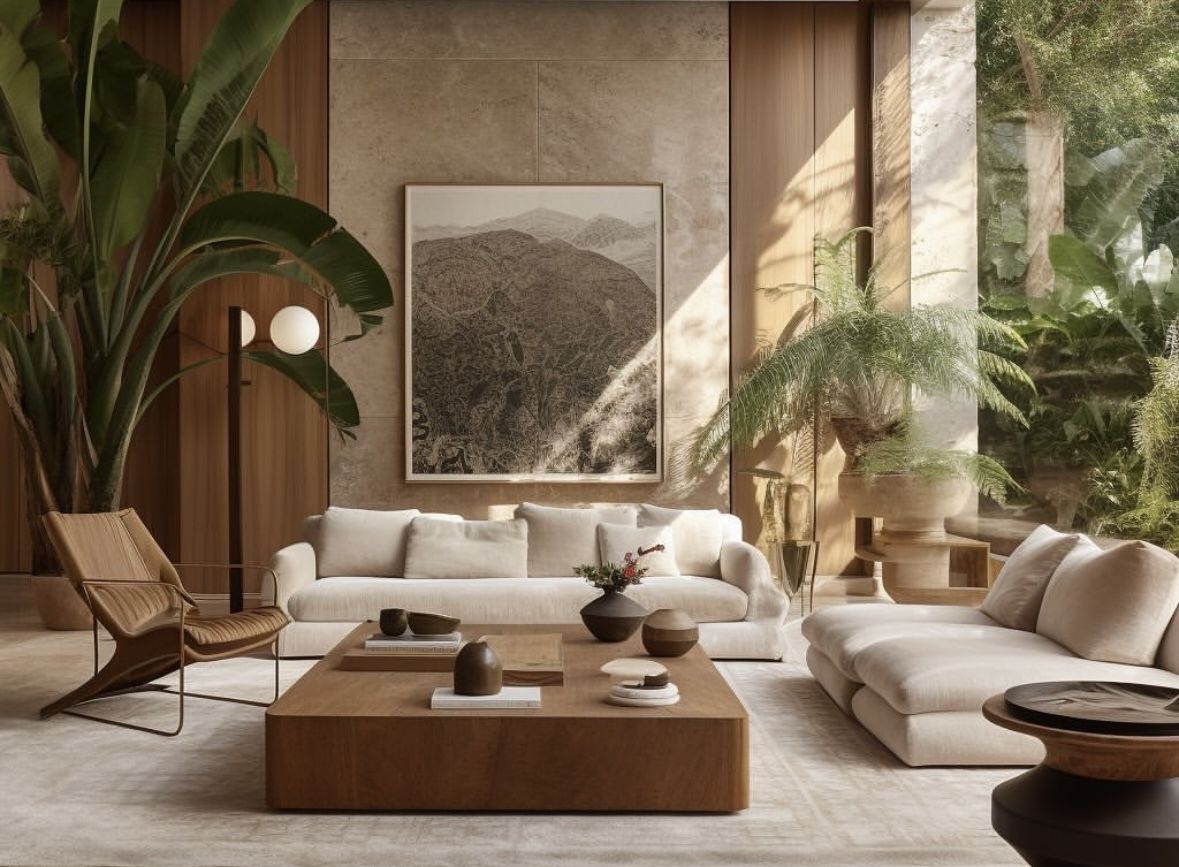
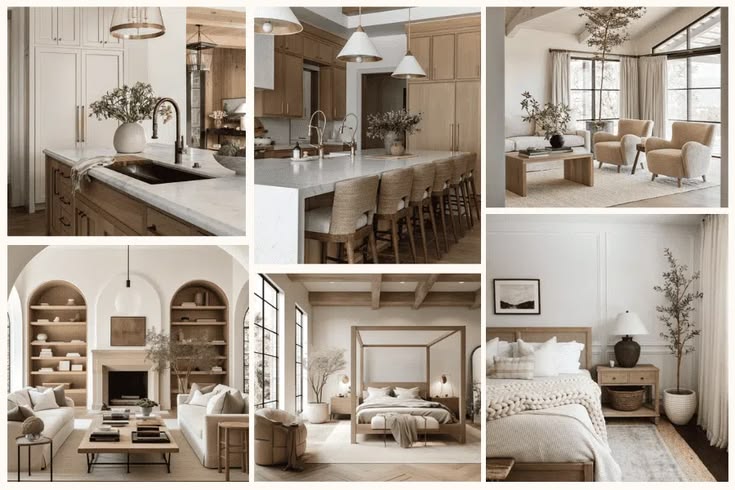
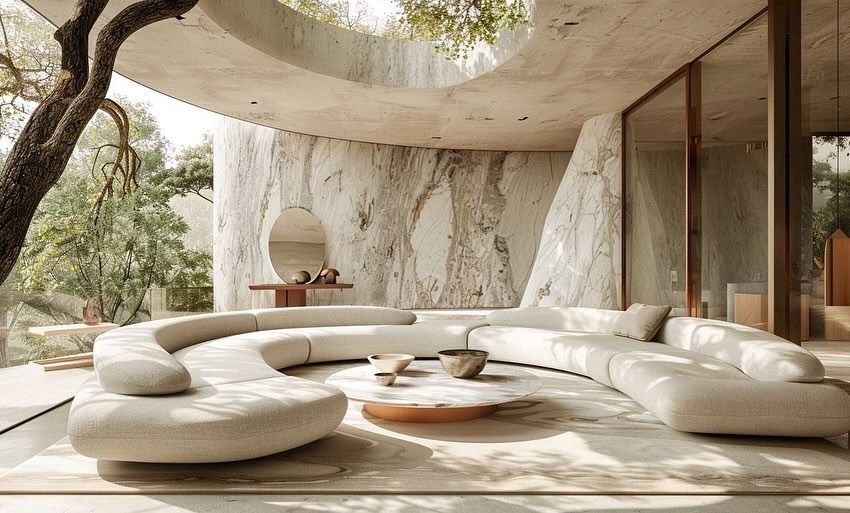
The living room is typically where organic modern decor makes its most dramatic impact, and it is where most people choose to start. A reliable formula: a sofa in a natural fabric — linen, bouclé, or textured cotton — in a warm neutral tone, anchored by a generously sized natural fiber rug. A coffee table with genuine material character, whether live-edge wood, travertine, or a combination of both. One large plant positioned intentionally in a structural corner. Lighting layered across at least two non-overhead sources. Accessories edited down to three or four considered pieces rather than a broad collection of smaller objects.
Bedroom
In the bedroom, organic modern decor leans more heavily into softness and tactile texture than in any other room. Linen bedding in warm white or oat tones is almost a signature element of this style. Layer a textured throw across the foot of the bed, add one or two woven cushions, and choose a wooden nightstand with visible grain. Keep surfaces intentionally clear — a lamp, a book, perhaps a small plant or a smooth stone. The restraint on surfaces is part of what makes the room feel genuinely restorative.
Kitchen
Natural modern kitchens tend toward warm wood cabinetry or open shelving, stone or concrete countertops, and hardware in unlacquered brass or matte black. If a full kitchen renovation is not realistic, begin with the accessories on the counter and in the open spaces: a wooden cutting board, a ceramic bowl holding fruit, linen dish towels, and a small collection of earthenware pieces on open shelving. These material shifts are modest in cost but make a real difference in how the space reads.
What Real People Are Saying About the Shift
A homeowner in Portland, Oregon, described her experience transitioning to organic modern decor in a way that resonates with many people who have made the same shift. She began not by buying anything new but by removing everything synthetic she could identify — polyester throw pillows, plastic storage baskets, shelving with faux-wood laminate. What remained looked spare, but it immediately felt more honest and more like a coherent space.
From there, she added back gradually. A jute rug. A linen slipcover for the sofa. A small collection of ceramics purchased at a local artisan market. Six months in, she described her home as the first space she had ever lived in that actually felt like hers. That particular quality — the feeling of genuine ownership over a space — is something people who have made this transition mention consistently, and it points to something true about what organic modern interior design, practiced well, is actually about.
Frequently Asked Questions
Is organic modern decor suitable for rental apartments?
Yes, and it may actually be one of the best styles for renters. Because so much of it relies on furniture, textiles, and accessories rather than fixed architectural changes, you can make a meaningful transformation without touching walls or fixtures. A natural fiber rug, linen curtains on removable hooks, a few plants positioned with care, and a set of considered accessories can substantially shift the character of a rented space.
How do I keep my organic modern space from looking too beige and flat?
The risk is real, and it typically comes from keeping every element at the same tonal value — everything a similar mid-range beige with no contrast. The solution is to introduce depth through contrast while staying within the warm, earthy palette. A darker wood tone against a lighter wall. A deep sage green plant against warm off-white surfaces. A matte black pendant light as a single strong accent. The palette remains earthy but gains visual dimension through the play of lighter and darker values.
Can organic modern decor work with a tight budget?
It can, and certain budget-conscious approaches actually produce better results than buying new. Thrift stores, estate sales, and second-hand furniture platforms are excellent sources for this style specifically. Worn wooden furniture, vintage ceramics, and pre-owned linen carry exactly the kind of natural patina and character that mass-produced pieces often spend years trying to simulate. In many cases, the affordable option is the better one.
What flooring works best with organic modern interiors?
Wide-plank hardwood in a warm, natural tone is the ideal choice. When that is not an option — whether due to budget, rental restrictions, or existing flooring — a high-quality natural fiber rug placed over the existing surface can largely reframe the material story of a room. Polished concrete and stone tile both integrate well in kitchens and bathrooms within an organic modern scheme.
How do I know when a room is finished in this style?
When you can walk into the room and feel calm without the space feeling empty — and when every object you see is something you consciously chose to keep there rather than something that simply drifted in — the room is working. Organic modern decor is less a destination than an ongoing process of refinement. The feeling it produces, when it is right, is unmistakable.
Conclusion
Organic modern decor is not a trend to chase or a look to replicate. It is a way of thinking about space — one that consistently prioritizes warmth over novelty, genuine materials over convincing substitutes, and the feeling a room produces over the image it projects.
The nine tips covered here are not abstract principles. They are concrete, actionable steps that create real shifts in how a home feels: the right paint color on the walls, a material hierarchy that starts with the largest pieces, surfaces edited with honesty, lighting chosen and layered with care, and plants placed with the same weight as furniture. None of this requires a significant budget or professional guidance.
The most useful place to start is one room. Choose the tip that speaks most directly to where that room is falling short — in many cases, it will be the paint color or a textile swap — and make that single change this week. A home that feels genuinely like yours is built through accumulated, intentional decisions made over time. That process is where organic modern interior design, at its most honest, really begins.
For evidence-based reading on how natural materials and biophilic elements affect residential wellbeing, the WELL Building Standard (wellcertified.com) and the research published through the Human Spaces initiative (humanspaces.com) both offer substantive, credible starting points.