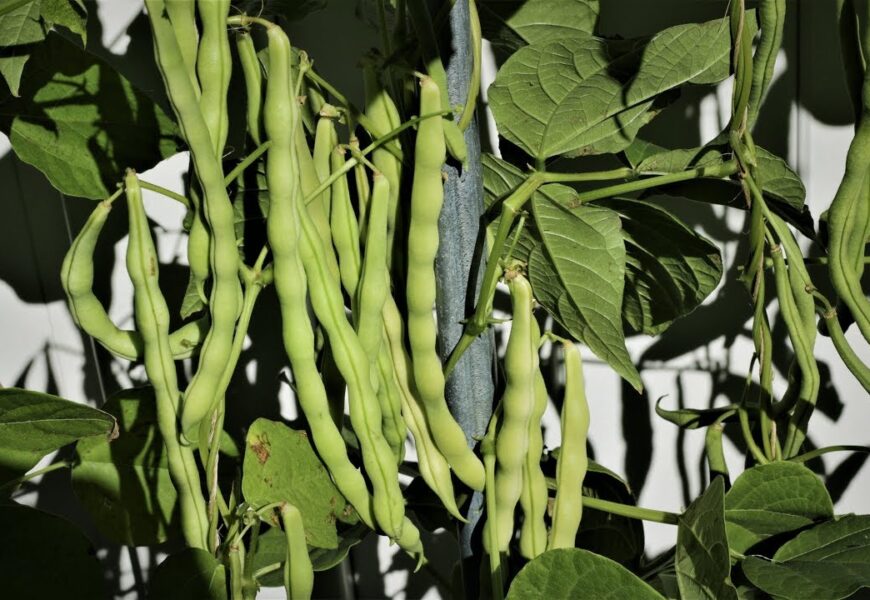
You did everything right. You prepared the bed, set up the trellis, watered consistently — and still, by midsummer, your pole beans looked exhausted. Yellowing leaves, sparse pods, vines that barely had the energy to climb. If that sounds familiar, you are not alone, and the problem is almost certainly not your effort. It is what you are feeding your plants, and when.
Choosing the best fertilizer for pole beans trips up even experienced gardeners, because beans behave differently from most vegetables in the garden. There are a few widely accepted feeding habits that quietly work against you season after season. Once you understand why, the fix becomes straightforward.
Why Pole Beans Have Unique Fertilizer Needs
Pole beans are not like tomatoes or squash. They belong to the legume family, which means they have a built-in biological advantage: a partnership with soil bacteria called Rhizobium that allows them to pull nitrogen directly from the air and convert it into a form the plant can use. It is a remarkable process, and it works well when the soil conditions support it.
The problem arises when gardeners, eager to see strong growth, apply heavy doses of nitrogen-rich fertilizer early in the season. When nitrogen is already plentiful in the soil, the plant has no reason to maintain that bacterial relationship. It simply absorbs what is readily available and redirects its energy toward producing lush, leafy vines rather than flowers and pods.
This is why the best fertilizer for pole beans is almost never a high-nitrogen product. Understanding this one biological reality will protect both your budget and your harvest year after year.
The NPK Ratio That Actually Works for Pole Beans
Every fertilizer bag carries three numbers — NPK, representing Nitrogen (N), Phosphorus (P), and Potassium (K). For most vegetables, a balanced ratio works well throughout the season. For pole beans, the approach needs to be more deliberate.
At planting, a balanced 10-10-10 fertilizer can help build general soil fertility and give seedlings a stable foundation. But once plants are established and beginning to climb, the best fertilizer for pole beans shifts toward lower nitrogen and higher phosphorus and potassium. A ratio like 5-10-10 or 4-8-8 supports flowering and pod development without interfering with the plant’s nitrogen-fixing process.
The table below offers a straightforward guide for matching fertilizer type to growth stage:
| Growth Stage | Recommended NPK | Why It Matters |
|---|---|---|
| Soil Prep (pre-planting) | 10-10-10 | Builds overall soil fertility |
| Seedling (first 2 weeks) | 5-10-5 | Gentle start, root development |
| Vine Growth (weeks 3–5) | Low or no nitrogen | Encourages natural N-fixation |
| Flowering & Podding | 5-10-10 or 4-8-8 | Supports bloom and pod set |
| Late Season | Potassium-focused | Strengthens pods, improves flavor |
Following this framework takes most of the guesswork out of fertilizing climbing beans and gives you a clear plan from seed to harvest.
7 Best Fertilizers for Pole Beans (Tried and Tested)
1. Bone Meal — The Phosphorus Powerhouse
Bone meal has earned its place in vegetable gardens for good reason. It is one of the best fertilizers for pole beans at the soil preparation stage, delivering slow-release phosphorus that gradually becomes available as roots expand through the bed.
Phosphorus is essential for root development and, critically, for encouraging a strong flush of flowers. Without adequate phosphorus for legumes, beans tend to flower late and drop blossoms before pods can form. Working a handful of bone meal into each planting hole — about two to three inches deep — gives your plants a quiet, steady supply right from the start.
2. Wood Ash — Potassium on a Budget
Not every effective fertilizer comes with a price tag. If you have a wood-burning fireplace or an outdoor fire pit, the ash left behind is genuinely useful in the vegetable garden. Wood ash is a natural source of potassium and calcium, two nutrients that pole beans rely on during pod fill and late-season production.
Apply it as a light surface dusting around your plants and work it shallowly into the soil. One important note: wood ash raises soil pH, and pole beans perform best in a range of 6.0 to 7.0. A thin application once or twice a season is appropriate. More than that can shift your soil chemistry in a direction that limits nutrient availability.
3. Compost — The Foundation of Any Good Garden
Ask any experienced vegetable gardener what single amendment they would not garden without, and the answer is almost always compost. It improves soil texture, promotes drainage in heavy soils while retaining moisture in sandy ones, and gradually releases a broad range of bean plant nutrients over the entire growing season.
Perhaps most importantly for pole beans, compost feeds and sustains the microbial community in the soil — including the Rhizobium bacteria responsible for nitrogen fixation. When you apply compost as a base layer before planting, you are essentially laying groundwork that makes every subsequent application of the best fertilizer for pole beans more effective.
Two to four inches worked into the bed before planting is a reliable starting point.
4. Fish Emulsion — The Quick Fix
There are moments in every growing season when a plant sends clear distress signals — pale leaves, slow growth, a general look of fatigue — and a slow-release amendment simply cannot respond fast enough. This is where fish emulsion earns its role in the vegetable garden.
Fish emulsion is a liquid organic fertilizer that moves into the root zone quickly and can also be absorbed through foliage as a foliar spray. Its NPK ratio typically sits around 5-1-1, meaning it does contain nitrogen, but in a fast-moving form that does not accumulate in the soil the way granular nitrogen products can.
Use it as targeted support for struggling seedlings or as a one-time intervention when plants show clear signs of stress. Once flowering begins, set it aside and switch to a phosphorus and potassium-focused approach.
5. Kelp Meal — The Micronutrient Secret Weapon
A conversation about the best fertilizer for pole beans that does not address micronutrients is missing something important. Nitrogen, phosphorus, and potassium are the primary players, but trace minerals — magnesium, zinc, iron, boron, and manganese — are equally necessary for the plant to function at its best.
Kelp meal, derived from dried seaweed, delivers this full spectrum of trace elements in a gentle, slow-release form. Gardeners who incorporate kelp meal into their routine often notice improved germination, fewer instances of mid-season yellowing, and pods with noticeably better flavor. The flavor improvement is not a small detail. It is the kind of difference that makes you want to grow more beans next year.
Blend it into your soil mix at planting time, or apply a diluted liquid kelp solution as a foliar spray during the growing season.
6. Balanced Granular Fertilizer (10-10-10)
For gardeners who prefer a simple, widely available product without a complex feeding schedule, a balanced granular fertilizer at 10-10-10 is a practical starting point. It is easy to find, easy to apply, and does a reasonable job of building baseline fertility before plants go in.
Scratch it into the top two to three inches of your bed about a week before sowing or transplanting and water it in well. What matters is knowing where this product belongs in your season — at the beginning, not throughout. Once your pole beans are actively growing, the best fertilizer for pole beans shifts away from balanced formulas and toward lower-nitrogen, higher-potassium options. Continuing with high-nitrogen granulars well into the season is one of the most reliable ways to end up with a beautiful vine and very few beans to show for it.
7. Espoma Garden-Tone or Similar Organic Blends
Organic granular blends formulated for vegetable gardens represent a genuinely dependable category of fertilizer for pole beans. Products like Espoma Garden-Tone, which typically carries a ratio around 3-4-4, are designed to release nutrients gradually and support long-term soil health rather than delivering a quick, short-lived boost.
They are forgiving to apply, carry minimal risk of root burn, and over multiple seasons they actively improve the biological quality of your soil. For gardeners who want a consistent, low-maintenance approach, this type of organic fertilizer for vegetables is the best fertilizer for pole beans to build a reliable routine around. Apply at planting, and once more when flowering begins, and you have covered the essential windows.
Organic vs. Synthetic Fertilizer for Pole Beans
This comparison comes up often, and it deserves a balanced answer rather than a strong stance in either direction.
Organic fertilizers feed the soil ecosystem as much as they feed the plant. They release nutrients slowly, support microbial life, reduce the risk of over-application damage, and contribute to better soil structure over time. The trade-off is that they act gradually and can be harder to calibrate precisely when a plant needs something specific, quickly.
Synthetic fertilizers work fast and allow precise control over NPK ratios. When used carefully and according to label guidance, they are effective. The risks — root burn from over-application, salt accumulation with repeated use, and potential disruption to beneficial soil organisms — are real but manageable with disciplined application.
For most home gardeners focused on vegetable garden fertilizer over the long term, organic options tend to produce better cumulative results. Your soil improves incrementally with each season, and the approach is generally more forgiving of small timing mistakes. That said, synthetic options used responsibly have a legitimate place in the garden. The right choice depends on your soil, your schedule, and what outcomes matter most to you.
How and When to Apply Fertilizer to Pole Beans
Even the best fertilizer for pole beans will underperform if the timing is off. Knowing when to feed matters as much as knowing what to apply.
At soil preparation: Incorporate compost and bone meal into the planting bed one to two weeks before sowing. This window allows the amendments to begin breaking down and integrating with the soil before roots arrive.
At planting: A light application of balanced granular fertilizer worked into planting holes or broadcast across the bed and watered in gives seedlings a stable nutritional foundation.
During early vine growth (weeks 3–5 after germination): This is the stage where restraint is most important. Avoid nitrogen-heavy products and allow the plant to establish its root nodule relationship with soil bacteria naturally. A healthy, green plant climbing its support structure at this stage is doing exactly what it should.
At first flower: Phosphorus and potassium take priority here. A side-dressing of bone meal or a targeted application of low-nitrogen liquid fertilizer — applied to moist soil and watered in — supports pod set without pushing excess vegetative growth.
One rule applies at every stage: always water thoroughly after applying any fertilizer. Dry product sitting on top of dry soil does not reach the root zone effectively, and concentrated fertilizer in contact with dry roots can cause damage.
Common Fertilizer Mistakes Pole Bean Growers Make
Have you ever compared notes with another gardener and wondered how their conditions could be so similar to yours while their harvest is twice the size? Fertilizer habits are often the answer.
The most widespread mistake is over-applying nitrogen. It seems logical — nitrogen supports plant growth, so more should mean better results. But pole beans are nitrogen-fixing plants. When nitrogen is abundant in the soil, the plant has no incentive to maintain its bacterial partnerships, and production suffers. Restraint with nitrogen is one of the most productive decisions you can make when fertilizing climbing beans.
Neglecting soil pH is another issue that quietly undermines even well-chosen fertilizer programs. The best fertilizer for pole beans cannot deliver its benefits if the soil pH is outside the plant’s preferred range. At the wrong pH, nutrients become chemically bound in the soil and unavailable to roots no matter how much product you apply. A basic soil test from your local cooperative extension service is inexpensive, takes only a few days to return results, and removes all guesswork about what your soil actually needs.
Finally, avoid fertilizing plants that are already under stress from heat or drought. A stressed plant cannot absorb nutrients efficiently. Water the bed deeply first, allow the soil to stabilize, and then apply your chosen product.
Quick Tips for Maximum Bean Yield
A few additional practices, applied consistently, can meaningfully improve both the quantity and quality of your harvest.
Inoculate your bean seeds with a Rhizobium inoculant powder before planting. This inexpensive product — often just a few dollars for enough to treat hundreds of seeds — introduces the specific soil bacteria responsible for nitrogen fixation directly to the seed coat. In soils that have not previously grown legumes, or in beds that have been heavily amended with synthetic fertilizers, natural populations of these bacteria can be low. Inoculation removes that variable entirely.
Mulch the soil around your pole beans generously with straw, shredded leaves, or wood chips. Mulch conserves moisture, moderates soil temperature during summer heat, and feeds the soil gradually as it breaks down. It is, in a quiet way, one of the best supplemental soil amendments you can provide at no cost.
Harvest pods frequently and consistently. Once pods reach full size, pick them. Leaving mature beans on the vine signals the plant that its reproductive cycle is complete and production slows considerably. Harvesting every two to three days at peak season keeps that signal from triggering and encourages continuous pod development throughout the summer.
Frequently Asked Questions
Is 10-10-10 good for pole beans?
A 10-10-10 balanced fertilizer is appropriate at the soil preparation stage, where it helps establish a nutritional baseline before planting. It is not, however, the best fertilizer for pole beans once vines are actively growing. The elevated nitrogen content can encourage heavy leaf and stem production at the direct expense of pod yield. Once plants are established, transition to lower-nitrogen formulas such as 5-10-10 to better align with the plant’s actual needs at that stage.
How often should I fertilize pole beans?
Two to three applications per season, each timed to a specific growth stage, is sufficient for most gardens. Fertilizing too frequently adds unnecessary cost and can disrupt the soil balance that supports nitrogen fixation. The best fertilizer for pole beans is one applied at the right moment — not necessarily the most often.
Can I use coffee grounds on pole beans?
Coffee grounds can serve as a modest soil amendment, contributing small amounts of nitrogen and improving drainage and texture in heavy soils. They should not be used as a primary fertilizer, and large quantities can make the soil too acidic for pole beans over time. Used in moderation — mixed into compost or blended into the top layer of soil — they contribute positively without causing harm.
What causes yellow leaves on pole beans?
Yellowing leaves can indicate several different conditions. When lower, older leaves yellow while newer growth remains green, nitrogen deficiency is often the cause — though in pole beans, this can also reflect a disruption in the nitrogen-fixation process rather than a simple lack of fertilizer. When yellowing appears between the veins while the veins themselves stay green, the pattern typically points to iron or magnesium deficiency. A kelp meal application or a balanced organic product can help address micronutrient shortfalls. Persistent yellowing that does not respond to feeding is often a pH problem and warrants a soil test.
Do pole beans need fertilizer at all?
Pole beans growing in well-amended soil with active nitrogen-fixing bacteria can produce a respectable harvest with very little added fertilizer. However, targeted applications of the best fertilizer for pole beans — particularly phosphorus and potassium sources at the flowering stage — consistently improve both yield and pod quality compared to unfertilized plants, even in good soil. The return on a small, well-timed investment is generally worth making.
Conclusion
A productive pole bean harvest does not come from applying the most fertilizer. It comes from understanding what the plant actually needs at each stage of its growth and providing it in the right amount at the right time. Pole beans are capable, resilient plants with their own built-in nutritional strategy. Your role as a gardener is to support that strategy, not override it.
Start with compost as your foundation. Add phosphorus through bone meal at planting. Hold back nitrogen once vines are climbing. Feed with a potassium-focused product as flowering begins. Pay attention to what your plants are communicating through leaf color, growth rate, and pod production — those are real signals worth responding to.
The best fertilizer for pole beans is ultimately the one that fits your soil conditions, your growth stage, and your approach to gardening. Whether you choose an organic granular blend, a homemade compost and bone meal combination, or a carefully applied synthetic product, the principles remain the same. Match the nutrient to the moment, and your harvest will reflect that care.
Your action step this week: Order or pick up a basic soil test kit and test your planting bed before the season begins. Knowing your soil’s pH and existing nutrient levels takes all the guesswork out of choosing the right product. From there, use the NPK table in this guide to build your fertilizer plan from planting through harvest. A little preparation now is worth far more than correcting problems mid-season.