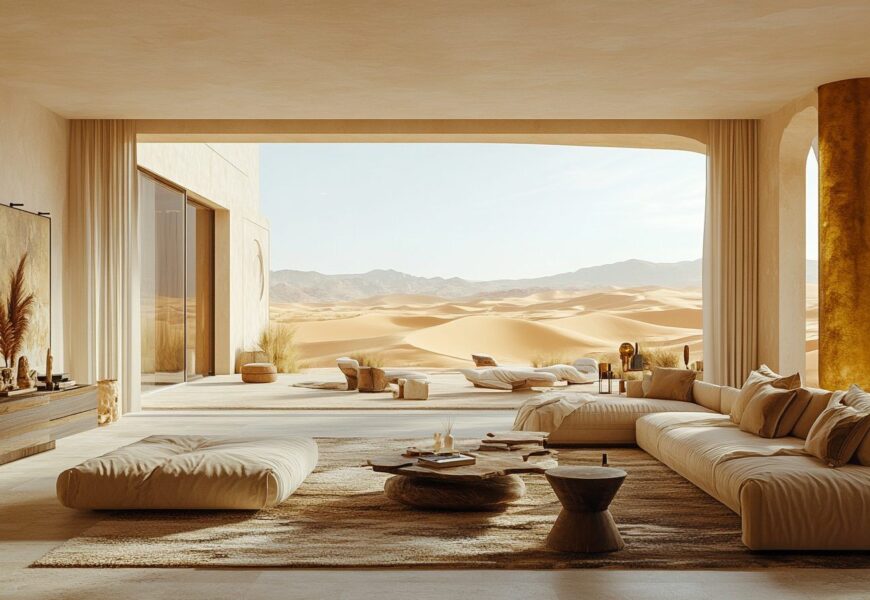
There is something about the desert that makes you pause. That vast silence. That dry, golden warmth. That sense of space opening up in every direction without apology. Now picture carrying that same feeling into your living room — intentionally, beautifully, and without a single tumbleweed in sight.
Desert modern decor has moved well beyond trend territory. It has become a genuine design philosophy — one that values warmth over coldness, natural materials over synthetic finishes, and quiet intention over visual noise. What makes it particularly appealing is how adaptable it is. Whether your home is a sun-soaked bungalow in Scottsdale or a compact apartment in Chicago, this aesthetic finds a way to work. The bones are flexible. The principles are consistent.
So what actually separates desert modern decor from the heavy, pattern-heavy Southwestern look that dominated interior design a few decades ago? Quite a bit, as it turns out.
What Is Desert Modern Decor, Really?
Before filling your cart with terracotta pots and raw linen throws, it helps to understand what this style is genuinely built on.
Desert modern decor draws from the organic, unpolished beauty of arid landscapes — sandy neutrals, sun-bleached stone, weathered clay — and pairs those natural references with the precision and restraint of modern design. It sits at the intersection of nature and architecture. The warmth is there, but it never tips into heaviness. The texture is present, but it never becomes clutter. Color appears, but always within a controlled, grounded range.
Interior designer Sarah Tripp, who works extensively in the Scottsdale market, once put it simply for a client: “Picture the desert at golden hour. That is your palette. Then remove anything that does not belong in that image.” That single mental exercise is more useful than any mood board. It keeps your decisions anchored and purposeful.
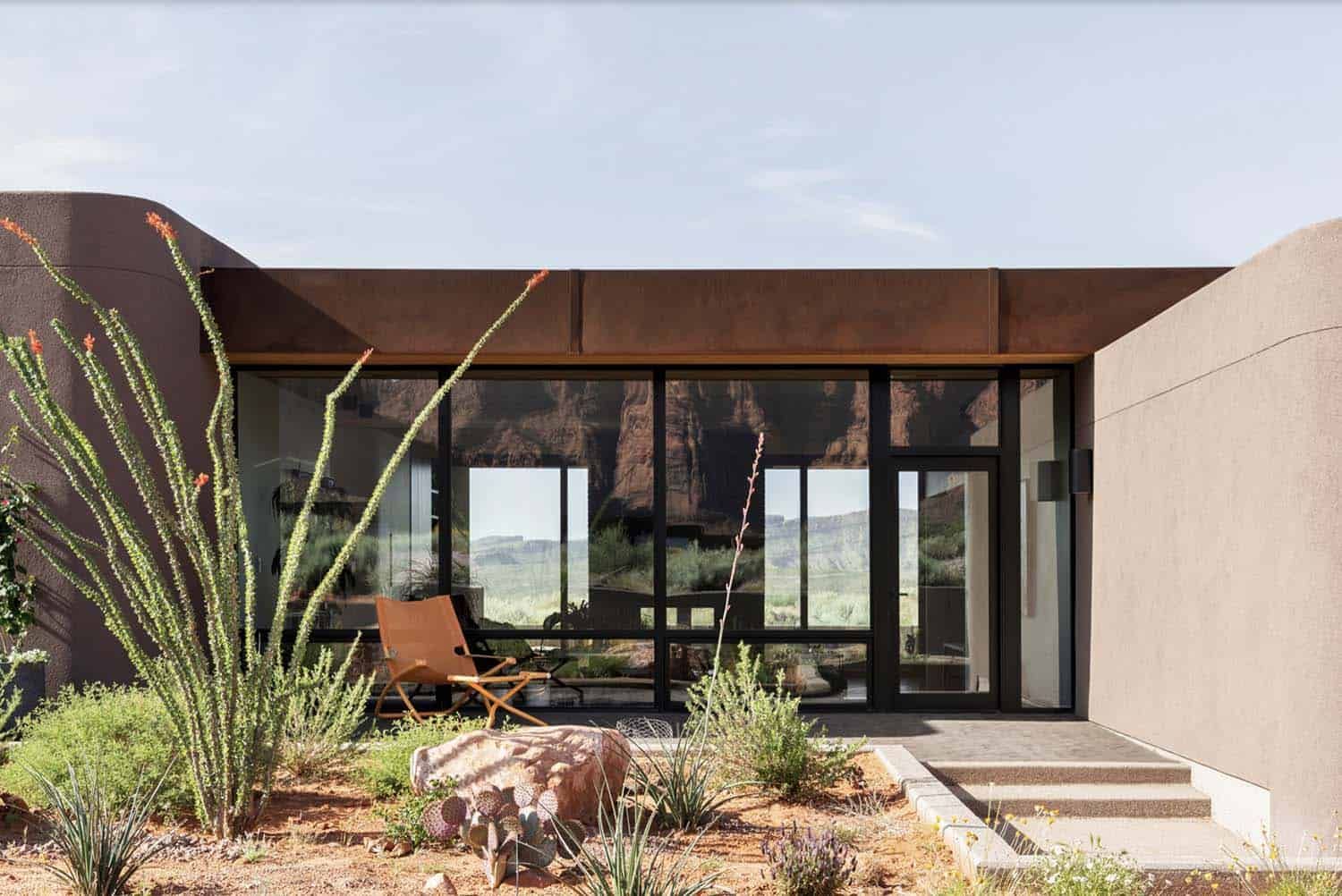
The 7 Core Elements of a Desert Modern Home
1. A Warm, Earthy Color Palette That Does the Heavy Lifting
Color is the first decision in desert modern decor, and it sets the tone for everything that follows. You are not working with cool-toned grays or crisp stark whites. You are drawing from the landscape itself — the colors that exist naturally in arid environments at different times of day.
Warm sand, dusty taupe, terracotta orange, sage green, burnt sienna, deep ochre. These are not simply variations of beige. They carry a psychological warmth that makes a room feel welcoming rather than sterile, lived-in rather than staged.
A reliable approach is to layer two or three tones from the same warm family. A base of warm white on the walls, a mid-toned linen sofa, and a deep terracotta feature wall creates visual depth without overwhelming the senses. The key restraint here is this: avoid going too dark without sufficient contrast. Desert light is expansive and bright. Your interior should breathe in the same way.
2. Natural Materials — The Soul of the Style
If desert modern decor had a defining characteristic, it would be its commitment to honest, natural materials. Raw wood, stone, rattan, jute, leather, clay, and concrete — these are the building blocks of this aesthetic, and they show up repeatedly across every well-executed example of the style.
What separates this from rustic or farmhouse design is the editing process. You do not pile every natural material into the same room. You select two or three and give them space to breathe. A concrete floor paired with a raw wood dining table and a single rattan pendant light — that combination works precisely because it is not overdone.
For those working with tighter budgets, concrete-look tiles are a practical and widely available alternative. In kitchens and bathrooms especially, they perform nearly identically to the real thing and photograph just as well.
3. Clean Lines With Organic Softness
The word “modern” in desert modern decor carries real design weight. It is not just a descriptor — it is the element that keeps the whole look from sliding into clutter or visual fatigue.
Purely organic interiors, however beautiful in theory, can start to feel heavy and unresolved without architectural structure to ground them. Clean lines, streamlined furniture silhouettes, and deliberate negative space provide that structure. Furniture sits low to the ground. Frames are simple and unadorned. Coffee tables read as solid forms rather than ornamental objects.
From there, organic softness is introduced with intention. A curved terracotta vase on a shelf. A round woven basket near the sofa. A sculptural cactus in a raw clay pot by the window. That quiet tension between geometric and organic is what gives a well-designed desert modern room its particular energy — interesting without being restless.
4. Texture Layering That Invites You to Touch
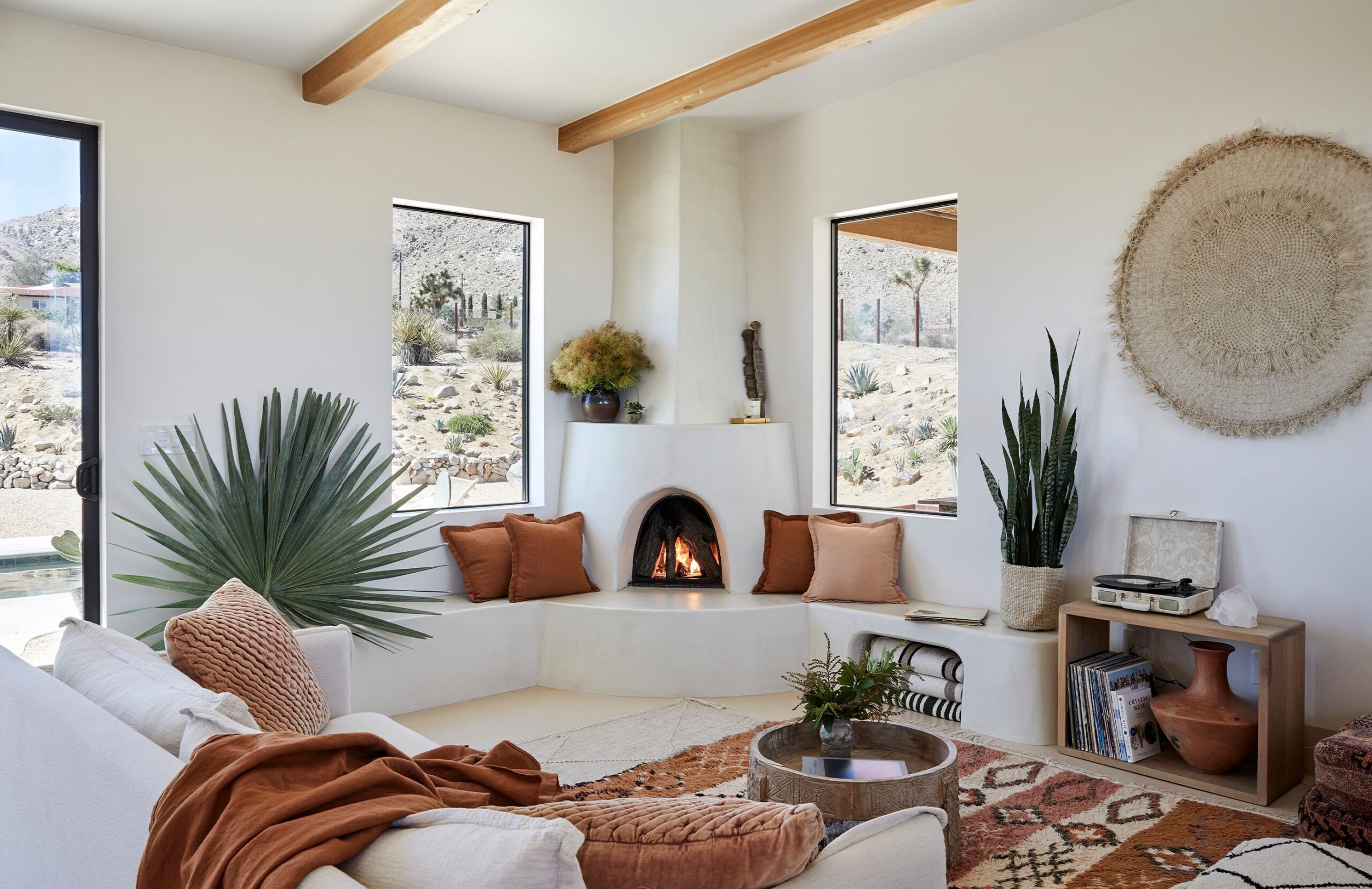
The desert is one of the most textural environments on earth. Rough sandstone. Smooth river rock. The fine abrasion of dried sage. Sand that shifts between coarse and silky depending on how the wind has moved it. Good desert modern decor brings that same layered sensory quality indoors.
Texture layering is also one of the most cost-effective ways to make a room feel considered and complete. The formula below works reliably across most room types:
| Layer | Material Example | Where It Works |
|---|---|---|
| Foundation | Jute or sisal rug | Living room, bedroom |
| Mid Layer | Linen or cotton throw | Sofa, armchair, bed |
| Accent | Woven wall hanging or leather cushion | Any wall or seating area |
| Detail | Hammered metal tray or raw clay bowl | Coffee table, shelf |
| Greenery | Dried pampas grass or column cactus | Corner, windowsill |
The intention is not to apply every layer simultaneously in every corner of the room. It is simply to ensure that no single surface feels entirely flat or without purpose. Each element should contribute something tactile to the overall atmosphere.
5. Desert-Friendly Plants That Actually Survive Indoors
In desert modern decor, plants are not secondary additions placed after everything else is complete. They are structural. A tall column cactus in the corner of a room functions almost like a piece of furniture — it anchors the space, adds height, and contributes to the organic warmth that makes this style feel genuinely alive rather than simply styled.
The practical advantage here is significant. Desert plants evolved to thrive with minimal water and low maintenance, which makes them realistic options for busy households. They are forgiving in ways that tropical houseplants simply are not.
Reliable choices for indoor desert style include saguaro or column cacti for vertical drama, prickly pear for sculptural interest, agave in large ceramic or concrete pots, aloe vera for both form and function, and snake plants or ZZ plants for their upright structure and low-light tolerance. House them in terracotta pots, raw concrete planters, or woven basket containers. Avoid anything glossy or overly finished — the material of the pot matters as much as the plant itself.
6. Lighting That Mimics the Desert Sun
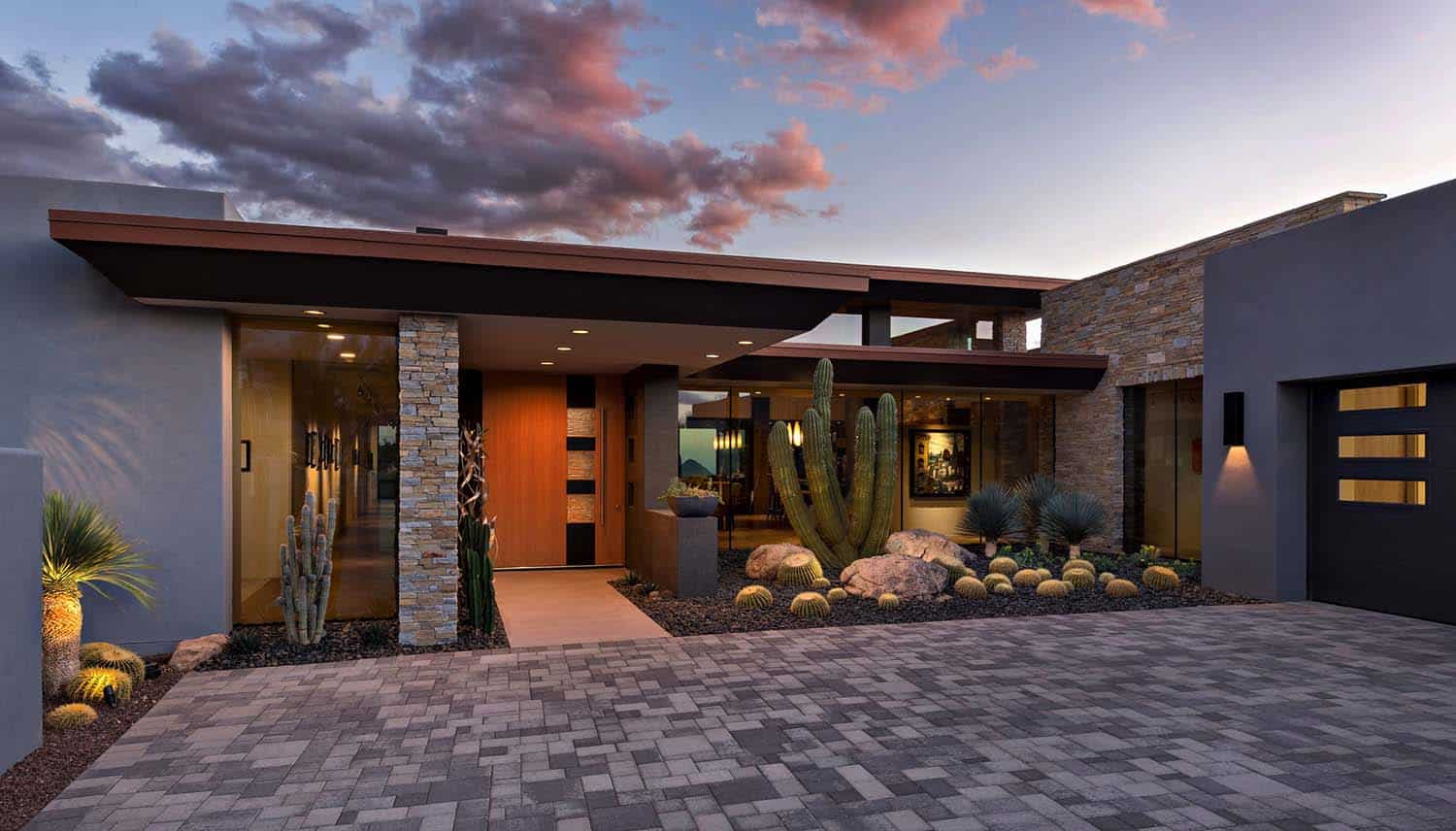
Natural light in desert climates carries a distinct quality. It is warm, golden, and slightly diffused — particularly in the early morning and late afternoon when the sun sits lower in the sky. The most successful desert modern interiors aim to replicate that quality indoors, especially during evening hours when artificial lighting takes over.
Layered lighting is essential here. Overhead fixtures alone produce a flat, functional quality that works against the warmth this style depends on. Instead, combine warm-toned bulbs in the 2700K to 3000K range with floor lamps fitted with linen or parchment shades. Add pendant lights in rattan, clay, or hammered metal to introduce texture at eye level.
Candles and amber-toned table lamps are particularly effective in this aesthetic. They produce the kind of low, directional glow that mirrors a desert sunset — an effect that works in any season. Installing dimmers wherever possible gives you the flexibility to shift a room’s entire atmosphere with a single adjustment, without changing a single piece of furniture.
7. Art and Accessories That Mean Something
Desert modern decor is not minimal in a cold or empty sense. It is selective. There is a meaningful difference between those two things, and understanding that difference is what separates a thoughtfully styled room from one that simply looks bare.
Wall art in this context gravitates toward abstract landscapes, organic line drawings, botanical or geological prints, and photography of natural formations — canyon walls, dune ridges, desert flora in close detail. Geometric patterns inspired by Southwestern textile traditions can also work beautifully when incorporated respectfully and sparingly.
When it comes to accessories, handmade and artisan pieces consistently outperform mass-produced alternatives in this style. A hand-thrown pottery bowl carries texture, imperfection, and a sense of human making that manufactured pieces cannot replicate. That quality aligns naturally with the values at the heart of this aesthetic.
Common Mistakes That Undermine the Look
Even well-planned rooms can lose their way. A few patterns appear regularly in desert modern spaces that miss the mark.
The first is going too warm without introducing any contrast. A room built entirely of terracotta, rust, and deep ochre will start to feel heavy and airless. A measure of cream, warm white, or aged linen gives the eye a resting point and keeps the space feeling open.
The second is overdoing the cactus theme. One real, well-placed cactus is a design decision. Cactus-print cushions, cactus-shaped accessories, and cactus motifs on every surface turn a considered interior into something closer to a novelty shop. The style depends on restraint.
The third is ignoring scale. Desert landscapes are expansive by nature, and that sense of proportion translates into the interiors it inspires. Furniture with generous dimensions and solid presence works far better than small, lightweight pieces that feel out of place in the composition.
Finally, the floor is often overlooked entirely. Cold tile or a flat neutral carpet can undermine every other well-considered decision in the room. A warm jute rug or natural wood flooring grounds the entire space and ties the elements above it together.
Can Desert Modern Decor Work in Small Spaces?
It can — and in many cases, it is more effective in smaller rooms than in larger ones. The principles at the core of this style, including warm restraint, intentional layering, and a disciplined color palette, are precisely the qualities that make compact spaces feel livable and complete rather than crowded.
In a small apartment, the approach is to anchor the room with one or two strong decisions rather than attempting to address every surface. A terracotta accent wall, a single large woven rug, and one sculptural plant in a well-chosen corner can define an entire space without overloading it. The goal is always to evoke the feeling of the desert — open, warm, and quietly composed — not to reproduce it literally.
Frequently Asked Questions
Is desert modern decor the same as Southwestern design?
Not quite. Southwestern interior design traditionally features bold geometric patterns, turquoise color accents, and overt cultural references drawn from Native American and Spanish colonial traditions. Desert modern decor draws from the same geographic region but processes those influences through a contemporary, minimalist lens. The result is warmer and more organic than conventional modern design, but considerably more restrained than classic Southwestern interiors.
What colors define a desert modern palette?
The base is built on warm neutrals — sand, cream, warm white, and taupe. Earthy accent tones layer in from there: terracotta, burnt sienna, sage green, dusty rose, and deep ochre. Cool tones appear rarely, if at all, and are used only in small, deliberate doses when contrast is needed.
How do I start transitioning my home to this style without a full renovation?
Paint and textiles are the most effective starting points. Replace cool-toned cushions with linen or cotton alternatives in warm neutrals. Add a jute or sisal area rug. Apply a warm terracotta or sandy tone to one wall. Bring in one or two desert plants in terracotta pots. Those four adjustments, taken together, are enough to shift the feeling of an entire room without requiring structural changes.
Is this style appropriate for humid or rainy climates?
Yes, completely. Desert modern decor is a visual and tactile aesthetic rather than a climate-specific one. Homeowners in Seattle, London, and Singapore have applied it successfully and often find that the warmth and texture of this style serve as a pleasant contrast to grey or wet outdoor environments.
What furniture brands are well-suited to this aesthetic?
Brands that emphasize natural materials and clean, unfussy silhouettes tend to be the best fit. CB2, Pottery Barn, West Elm, and Article each carry relevant pieces. That said, some of the most successful desert modern interiors come from mixing those sources with local artisan pieces, vintage market finds, and smaller sustainable furniture makers. A collected, layered approach almost always produces more authentic results than purchasing a single matching set.
Conclusion: Build a Space That Grounds You
At its core, desert modern decor is not about following a checklist or recreating the exact look from an editorial spread. It is about building a home that feels genuinely settled — warm in its materials, honest in its choices, and quietly connected to something real in the natural world.
The principles hold together simply: warm, grounded color, honest natural materials, clean architectural lines, layered texture, meaningful objects, and light that feels like it belongs to the sun. When those elements work in concert, the result is a space that feels right in a way that is difficult to fully explain. Calm without emptiness. Layered without complexity. Personal without clutter.
Your next step is a practical one. Choose one room. Identify one change from this guide that you can make within the next seven days. A paint sample tested on the wall. A rug ordered and on its way. A single terracotta pot picked up from a garden center. Begin there. The rest of the space will follow in time, and every decision after that first one will feel considerably more clear.