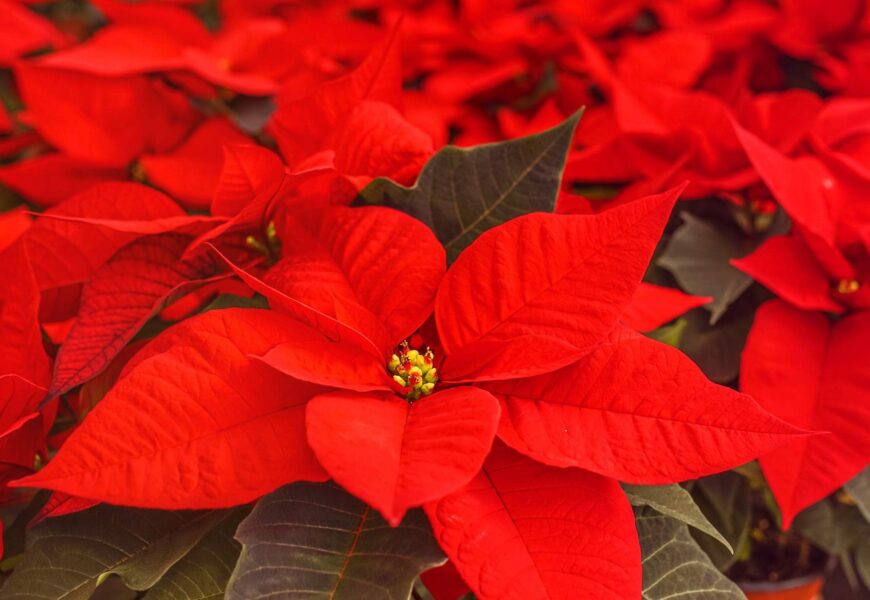
Most poinsettias are dead by February. Not because of cold drafts or overwatering — but because no one mentioned the right fertilizer for poinsettia that keeps them alive well past the holiday season. That single gap in knowledge costs more plants than almost anything else.
Poinsettias have this unfortunate reputation for being disposable. You bring one home in December, enjoy the bold color for a few weeks, and then watch it slowly shed its leaves somewhere around mid-January. What most plant guides quietly skip over is this: with the right feeding schedule and the correct fertilizer for poinsettia, these plants can rebloom year after year. Some growers have kept the same poinsettia thriving for over a decade.
Whether you’re caring for your first poinsettia or quietly mourning your third, this guide is written for you. No complicated jargon — just practical, tested advice you can actually use.
Why Fertilizing Your Poinsettia Actually Matters
Many people treat poinsettias the way they treat cut flowers — something to enjoy briefly and then replace. But that comparison doesn’t hold up when you look at what this plant actually is. Euphorbia pulcherrima is a subtropical shrub native to Mexico, where it grows wild up to 10 feet tall. It’s a real, living plant with genuine nutritional needs.
By the time a poinsettia reaches the shelf of your local garden center, its soil has usually been pushed hard by commercial growing. Nurseries feed these plants aggressively to produce the vivid, show-stopping bracts you see during the holidays. Once that process is done and the plant is in your home, the nutrients in the soil are largely spent.
This is exactly where the right fertilizer for poinsettia becomes essential. Without it, your plant is operating on empty — getting by, but never truly thriving.
A simple way to think about it: you could survive on plain rice and water, but you wouldn’t look or feel your best. Your poinsettia faces the same reality when its nutritional needs go unmet.
Understanding the NPK Ratio for Poinsettia Nutrition
Before reaching for the nearest fertilizer bottle, it helps to understand what those three numbers on the label actually mean. The NPK ratio tells you the percentage of nitrogen (N), phosphorus (P), and potassium (K) in the product — and each one plays a different role in your plant’s health.
For a balanced fertilizer for poinsettia, you’re generally looking for a ratio in the range of 20-10-20 or 15-15-15. Here’s what each element contributes:
Nitrogen (N) drives leafy, green growth. Too much of it and your plant stretches tall without blooming. Too little and the leaves begin to turn pale yellow.
Phosphorus (P) supports root development and flower formation. It becomes especially important when you’re working toward getting your poinsettia to rebloom.
Potassium (K) strengthens overall plant health, supports disease resistance, and helps regulate water movement through the plant — all of which keeps those bracts looking their best.
| NPK Ratio | Best Use Stage | Effect on Poinsettia |
|---|---|---|
| 20-10-20 | Active growing season | Strong leaf and stem growth |
| 15-15-15 | Transition/reblooming prep | Balanced overall nutrition |
| 10-30-20 | Pre-bloom period | Encourages bract color development |
| 20-20-20 | General maintenance | All-purpose seasonal feeding |
| Slow-release (14-14-14) | Spring repotting | Steady nutrient supply for months |
The Best Types of Fertilizer for Poinsettia
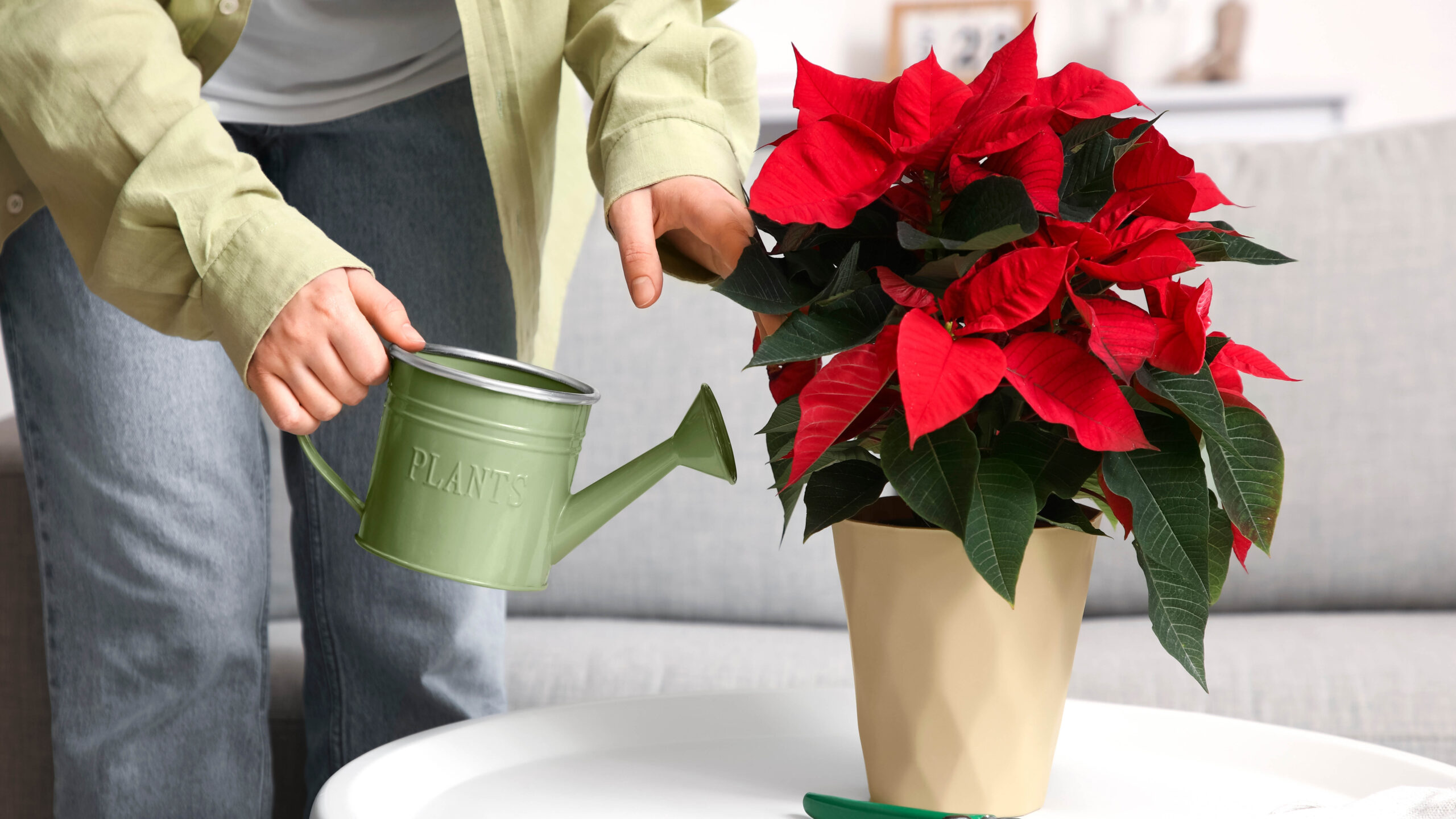
Not every fertilizer performs equally well for every plant, and poinsettias tend to respond differently depending on what you give them. Here’s what actually works in real growing conditions.
Liquid Water-Soluble Fertilizers
Liquid fertilizers are the most widely used option for poinsettia feeding, and the reasons are straightforward. They absorb quickly, allow for precise dosing, and are easy to adjust as your plant’s needs change through the seasons.
A quality water-soluble fertilizer for poinsettia — such as a 20-10-20 blend applied at half-strength — gives you the flexibility to respond to what you’re seeing. You can feed more often during active growth and pull back completely during dormancy. For most indoor growers, applying every two weeks during the growing season is a reliable rhythm.
Slow-Release Granular Fertilizers
If you tend to lose track of regular feeding schedules, a slow-release granular fertilizer is worth considering. These are typically mixed into the soil at the start of the growing season and quietly release nutrients over several months with no further effort required.
The trade-off is control. If the soil chemistry shifts or the plant shows signs of overfeeding, course-correcting takes more time than it would with a liquid product. That said, as a low-maintenance option, granular fertilizer for poinsettia is genuinely useful — particularly at the time of spring repotting when you’re refreshing the root environment anyway.
Organic Fertilizers
Fish emulsion, worm castings, and compost teas offer a gentler feeding approach that also benefits the soil itself over time. They carry a lower risk of fertilizer burn and suit growers who prefer to keep their plant care more natural.
Organic fertilizer for poinsettia works particularly well during the recovery period after the holidays, when the plant is gradually returning to active growth after months of commercial and retail stress. A softer approach during this phase tends to produce steadier, more reliable results.
When to Apply Fertilizer for Poinsettia: A Month-by-Month Guide
Timing matters as much as product choice when it comes to poinsettia feeding. Applying the wrong fertilizer at the wrong stage can delay blooming or cause unexpected leaf drop. Here’s how the year should unfold.
January to March — Recovery Phase
The holiday season has taken a toll. Bracts are fading, leaves may be dropping, and the plant needs rest more than it needs nutrients. Hold off on fertilizer for poinsettia during this phase unless yellowing leaves signal a clear deficiency. Water sparingly and let the plant move through its natural seasonal reset.
April to May — Time to Wake It Up
When you start seeing fresh green growth, the plant is ready to be fed. This is the moment to begin applying a balanced fertilizer for poinsettia every two weeks. If repotting is needed, this is the right window. Trim any leggy stems back to around six inches and move the plant to a spot with brighter light.
Working a slow-release granule into fresh potting mix at this stage can provide steady background nutrition for several months without additional effort.
June to August — Peak Growing Season
Active growth is underway, and your plant may be thriving outdoors if your climate allows for it. Continue with your regular fertilizer for poinsettia every two weeks. A nitrogen-forward formula supports the strong stems and healthy foliage that form the structural base for the bracts that come later in the season.
Pay attention to leaf color during this period. Deep, glossy green is a good signal. Pale or yellowish leaves suggest it may be time to increase feeding frequency or adjust to a slightly higher nitrogen ratio.
September to October — Preparing for Bloom
This window is genuinely critical. Around late September, shift away from high-nitrogen fertilizer for poinsettia and move toward a phosphorus-forward formula. This change signals to the plant that the time for vegetative growth is passing and energy should move toward bract development.
One point that often gets overlooked: poinsettias also require complete darkness for 12 to 14 hours each night during this period to trigger the color change in their bracts. Feeding alone won’t produce a bloom if the light conditions aren’t managed alongside it.
November to December — Show Time
Once the bracts are fully colored and the plant is on display, ease back on feeding. A light application of balanced fertilizer for poinsettia once a month is enough to sustain the plant without stimulating new growth that might distract from the visual display.
Common Fertilizer Mistakes That Wreck Poinsettias
Even experienced plant owners get tripped up with poinsettia feeding. These are the mistakes most worth avoiding.
Feeding a dry plant. Always water your poinsettia before applying liquid fertilizer. Applying nutrients to dry roots leads to fertilizer burn, where concentrated salts damage root tissue. The visible result is brown, crispy edges on the leaves.
Using full-strength doses. Most liquid fertilizer label instructions are written for outdoor garden applications. For indoor poinsettias, half-strength is both safer and sufficient. More product does not translate to better results here.
Fertilizing during dormancy. A resting plant cannot make productive use of nutrients. Instead, salts accumulate in the soil and create problems down the line. Skip fertilizer for poinsettia entirely through January and February and respect what the plant is telling you.
Ignoring soil pH. Poinsettias prefer a slightly acidic soil pH between 5.8 and 6.5. Outside that range, nutrients become unavailable to the roots regardless of how consistently you’re feeding. A simple, inexpensive pH meter can solve a lot of puzzling problems.
Signs Your Poinsettia Has a Nutrient Problem
Plants communicate when something is wrong — it just takes a little practice to read the signals.
- Yellow leaves with green veins often point to iron deficiency, commonly caused by soil that has become too alkaline.
- A pale, washed-out overall appearance typically indicates nitrogen deficiency. Time to revisit the fertilizer for poinsettia schedule.
- Dark or nearly black leaf edges can signal potassium deficiency or salt buildup from excessive feeding.
- Stunted growth and unusually small leaves may suggest phosphorus is lacking, particularly if the plant isn’t reblooming despite appropriate light management.
- Wilting that water doesn’t resolve sometimes points to root damage from over-fertilizing. Ease off feeding and flush the soil several times with plain water to help clear excess salts.
A Real-World Example: The Two-Year Poinsettia Comeback
A friend who tends a small collection of houseplants in a city apartment bought a poinsettia two Decembers ago. Like most people, she placed it on a bright windowsill, watered it occasionally, and watched it decline through January.
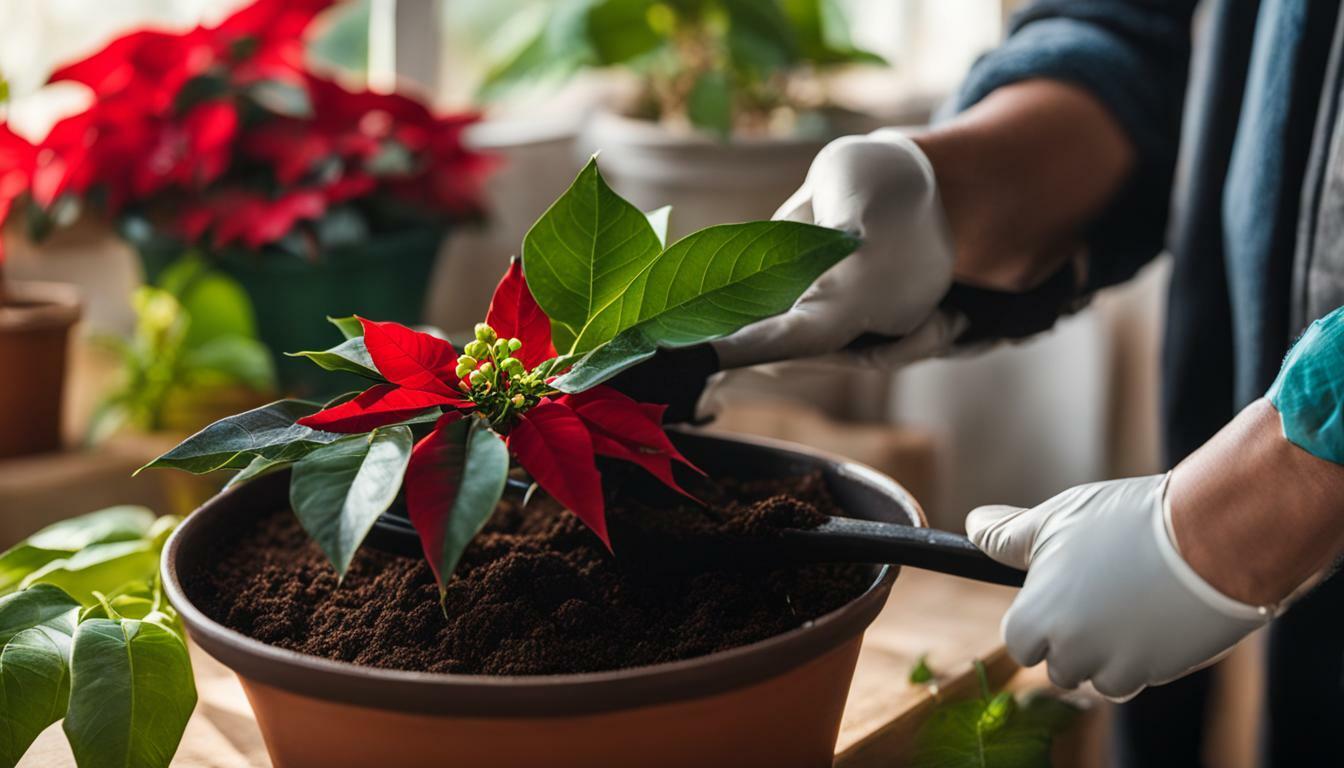
Rather than tossing it, she decided to try something different. In March, she cut it back, repotted it into fresh soil with a slow-release fertilizer for poinsettia worked in, and moved it somewhere sunnier for summer. She fed it with diluted liquid fertilizer every two weeks through June and July, then switched to a phosphorus-forward formula in September and started putting the plant in a dark closet for 14 hours each evening.
By late November, it had rebloomed. The bracts were full and a deep, rich red — not quite the scale of a professionally grown plant, but genuinely striking for a second-year poinsettia kept on a windowsill.
Her experience reinforces a straightforward truth: the right fertilizer for poinsettia at the right time, paired with proper light management, produces real and measurable results.
FAQs About Fertilizer for Poinsettia
How often should I apply fertilizer for poinsettia?
During the active growing season — April through September — feed every two weeks with a diluted balanced fertilizer. Reduce to once a month during the November and December display phase, and skip feeding entirely through January and February.
Can I use regular houseplant fertilizer for poinsettias?
Yes, a balanced all-purpose fertilizer is a reasonable starting point. Apply it at half the recommended strength, and plan to transition to a phosphorus-richer formula in early fall to support the development of bract color.
Is too much fertilizer bad for poinsettias?
It is. Over-fertilizing leads to salt accumulation in the soil, which damages root tissue and interferes with the plant’s ability to take up both water and nutrients. If you’ve applied too much, flush the soil thoroughly with plain water several times to help clear the excess.
What’s the best fertilizer for poinsettia to encourage reblooming?
A phosphorus-forward formula — something close to a 10-30-20 ratio — applied through late September and October helps shift the plant’s energy from vegetative growth toward bract development. This works best when combined with the darkness treatment during the same period.
Should I fertilize a newly purchased poinsettia?
Not right away. Allow a newly purchased plant two to three weeks to adjust to its new environment before beginning any fertilizer for poinsettia routine. Commercial soil often still carries residual nutrients, and adding more too soon can create unnecessary stress during an already uncertain transition.
Conclusion
Poinsettias are not throwaway plants. Treated with the care they actually deserve, they become genuinely rewarding — returning with color season after season. The right fertilizer for poinsettia, applied at the right stage and in the right amount, is one of the most meaningful steps you can take toward their long-term health and reblooming success.
Start simply: choose a balanced water-soluble fertilizer, begin feeding in spring when new growth appears, adjust the formula in fall, and honor the dormancy window in winter. That approach covers most of what these plants need.
The poinsettias that people keep alive for years are not the result of special talent or rare expertise. They are simply plants that are consistently, thoughtfully fed. Your next holiday poinsettia doesn’t have to end up discarded by Valentine’s Day. Give it the nutrition it needs and let the results speak for themselves.