Your tomatoes are showing yellowing leaves right in the middle of summer. Your zucchini keeps producing flowers that drop before anything develops. And your lettuce bolted several weeks ahead of schedule, despite everything looking fine from the outside. You watered consistently, gave them full sun, and chose decent soil. So what actually went wrong?
The answer, in most of these cases, comes down to nutrition. More specifically, it comes down to the timing and the form in which those nutrients were delivered.
This is precisely where water soluble fertilizer for vegetables makes a meaningful difference — not because it is an exclusive product reserved for professional growers, but because nutrients delivered in liquid form reach plant roots within hours rather than weeks. In a vegetable garden where a single week of nutrient stress can shift the outcome from a strong harvest to a disappointing one, that speed matters more than most gardeners ever stop to consider.
This guide covers everything you genuinely need to know about water soluble fertilizer for vegetables: how it works, which formulas suit which crops, how to apply it correctly, what the most common mistakes look like in real gardens, and how to build a fertilizing approach that actually fits your specific growing situation.
What Is Water Soluble Fertilizer, and How Does It Actually Work?
The name gives most of it away, but the mechanism is worth understanding clearly before moving to anything else.
Water soluble fertilizer is a concentrated nutrient formula — sold as a fine powder, granule, or pre-mixed liquid — that dissolves completely in water. Once dissolved, the nutrients exist in ionic form, which means plant roots can absorb them directly without waiting for microbial breakdown or any soil chemistry conversion to take place. This is the core distinction between water soluble fertilizer for vegetables and standard granular slow-release products.
Granular fertilizers release nutrients gradually as soil microbes break down the material. That process is sensitive to temperature, moisture levels, and soil biology, and it can take anywhere from several weeks to a few months before meaningful nutrients reach the root zone. For established perennials and woody plants with long growing windows, that gradual release is often a reasonable fit. For vegetables — crops that need to move from seed or transplant to harvestable produce in 60 to 100 days — waiting three weeks for a nutrient response is frequently too long to be useful.
Water soluble fertilizer for vegetables sidesteps that delay entirely. The process is straightforward: mix, apply, absorb. Most plants begin responding within 24 to 48 hours, and visible changes in leaf color, new growth, and general plant vigor can appear within a week of a well-timed application. That responsiveness is what makes this form of feeding particularly well matched to the pace at which vegetable crops actually grow and change.
Understanding NPK: The Foundation of Every Fertilizer Label
Before selecting any water soluble fertilizer for vegetables, you need to feel comfortable reading the three numbers printed on every fertilizer package. Those numbers communicate almost everything relevant about what the product contains and how it will behave in your garden.
The three numbers represent nitrogen (N), phosphorus (P), and potassium (K), always displayed in that order. Each element performs a distinct and important role within the plant.
Nitrogen (N) — Leaf and Stem Growth
Nitrogen is the primary driver of vegetative development. It is the nutrient most directly connected to the rich green color and vigorous upward growth that characterize healthy young vegetable plants. Leafy crops — lettuce, spinach, kale, cabbage — draw heavily on nitrogen throughout their growing cycle and respond well to formulas where the first number is higher relative to the others.
The important counterpoint: too much nitrogen applied at the wrong time redirects the plant’s energy toward foliage at the expense of flowers and fruit. Tomatoes, peppers, and squash that continue receiving high-nitrogen feeding after flowering begins will often produce full, beautifully green plants with very little to actually harvest. Getting the nitrogen timing right matters just as much as the quantity.
Phosphorus (P) — Roots and Fruit Development
Phosphorus supports two phases that most vegetable gardeners care most about: strong root establishment in young transplants, and productive fruit development in mature plants. It also plays a significant role in energy transfer processes within the plant and in seed development. A water soluble fertilizer for vegetables with a higher middle number is the appropriate choice at transplanting time, and again as fruiting crops move into their early flowering stage.
One practical reason liquid application of phosphorus outperforms granular broadcasting: phosphorus moves slowly through soil. Applied at the surface in granular form, it may take weeks to migrate toward the root zone. Delivered directly in solution form, it reaches the roots immediately, which is where it is actually needed.
Potassium (K) — Overall Plant Health and Stress Resistance
Potassium tends to be undervalued in home garden nutrition programs because its effects are less visually obvious than nitrogen’s. But its contribution is substantial. It regulates water movement within plant cells, supports natural disease resistance, influences fruit flavor and structural quality, and helps the plant manage temperature stress across the season. Vegetables grown under consistently low potassium may appear outwardly acceptable while producing fruit with noticeably less flavor, poorer shelf life, and softer texture than well-fed crops.
The third number on the fertilizer label becomes most important during the fruit development phase — and it is worth giving it specific attention at that stage.
Why Vegetables Specifically Benefit from Water Soluble Fertilizers
Not all plant types benefit equally from fast-availability liquid nutrition. Vegetables are genuinely one of the strongest use cases for water soluble fertilizer, and the reasons are grounded in how vegetable crops actually grow.
Vegetables are fast-cycling annual plants. Most complete the journey from transplant to harvest in 60 to 120 days. Within that compressed window, they move through several nutritionally distinct phases: establishment, active vegetative growth, flowering, fruit set, and fruit development. Each phase carries different nutritional priorities. The ability to adjust what you are feeding based on where the plant currently is in that cycle — which water soluble fertilizer for vegetables makes genuinely practical — aligns directly with how vegetable crops function.
There is also an intensity dimension. Raised beds, container setups, and actively managed in-ground plots are typically used for multiple crops per season, which means available nutrients are being drawn down consistently throughout the year. A single granular application at planting time often runs short during the most demanding growth phases, sometimes exactly when the plant is setting fruit and needs the most support.
Liquid supplementation fills those gaps in a way that is both timely and adjustable in ways that granular programs alone cannot replicate. And vegetables communicate quickly. Yellowing leaves, poor fruit set, soft new growth, early blossom drop — these visible signals appear relatively fast in vegetable crops, often within days of a nutritional shortfall beginning. Water soluble fertilizer for vegetables allows you to respond to those signals within the same timeframe, rather than waiting weeks for a slow-release amendment to eventually work its way into the root zone.
The Best Water Soluble Fertilizer Formulas by Vegetable Type
Not all vegetables share the same nutritional demands, and matching your formula to the specific crop type makes a measurable and consistent difference in what you harvest.
| Vegetable Type | Examples | Recommended NPK Focus | Notes |
|---|---|---|---|
| Leafy greens | Lettuce, spinach, kale, chard | High N (e.g., 20-10-10) | Feed every 2 weeks; watch for over-application |
| Fruiting vegetables | Tomatoes, peppers, eggplant | Balanced early, high K/P at fruiting (e.g., 8-32-16) | Reduce N after flowering begins |
| Root vegetables | Carrots, beets, radishes, turnips | Low N, moderate P/K (e.g., 5-10-10) | Excess N causes forked roots and excessive tops |
| Legumes | Beans, peas | Low N (e.g., 5-10-10) | Fix their own nitrogen; extra N reduces pod set |
| Brassicas | Broccoli, cabbage, cauliflower | Moderate N, higher K | Potassium critical for head development |
| Cucurbits | Cucumbers, squash, melons | Balanced vegetative, high K at fruit set | Consistent feeding prevents bitter fruit |
This table is a starting framework, not a set of rigid rules. Real-world factors — your specific soil composition, local weather patterns, and how individual plants are responding — should always inform adjustments along the way. A soil test conducted at the beginning of the season gives you a reliable baseline that makes every subsequent fertilizer decision more accurate and more purposeful.
How to Apply Water Soluble Fertilizer for Vegetables Correctly
Choosing the right product is only part of the equation. Correct application method determines whether that product reaches the plant in a form it can actually use.
Soil Drench (Root Zone Application)
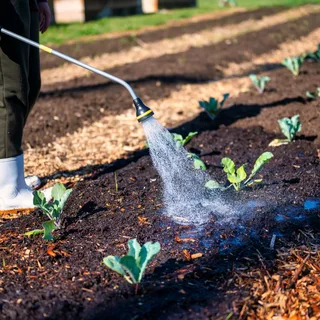
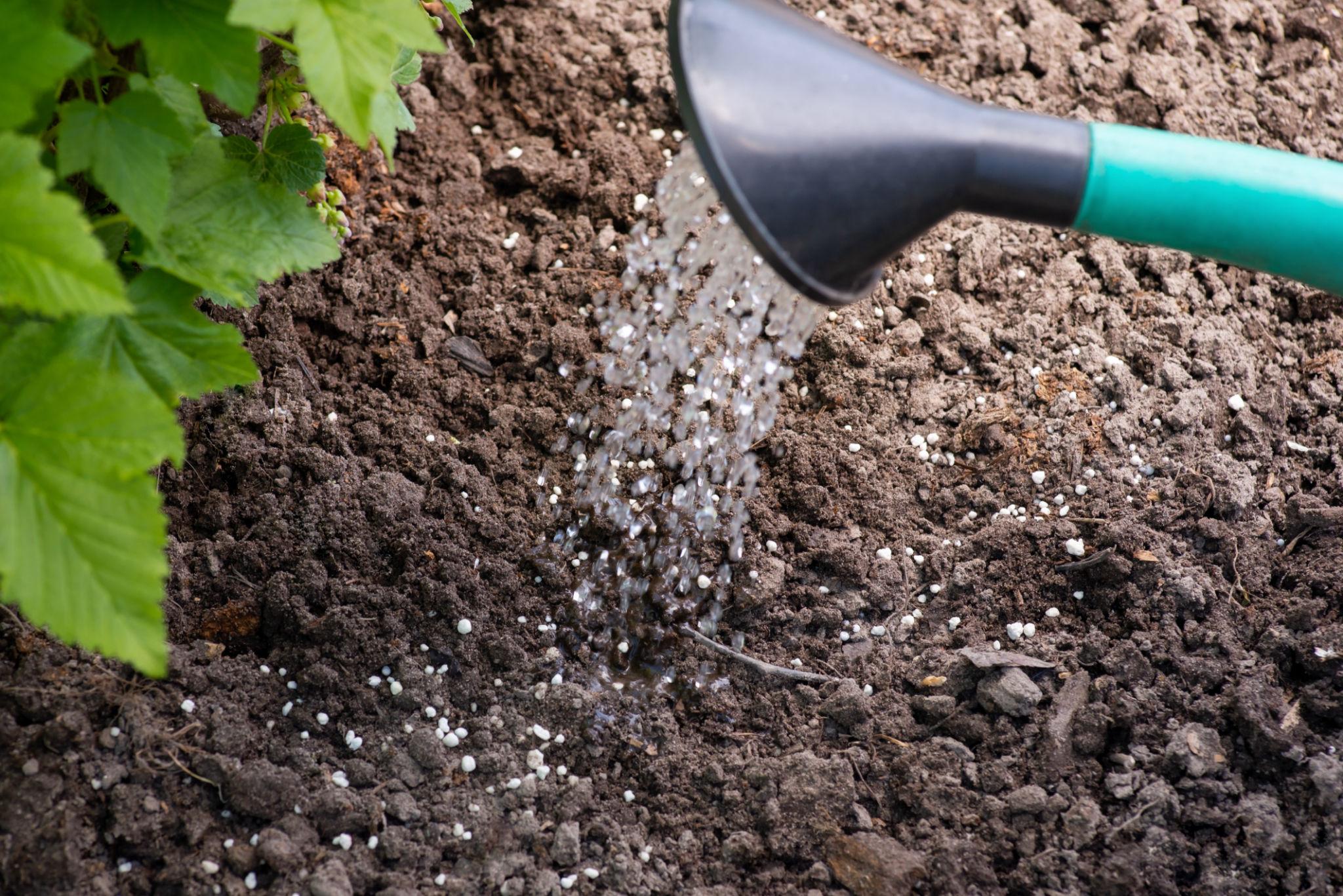
This is the most widely used and consistently reliable approach. Mix the water soluble fertilizer for vegetables according to the product label — typically somewhere between half a teaspoon and one tablespoon per gallon of water, depending on the concentration of the specific formula. Apply the solution directly to the soil around the plant’s base, working it into the root zone where absorption happens.
If the soil is very dry when you are ready to apply, water it lightly first and allow it to settle for a few minutes before adding the fertilizer solution. Applying concentrated liquid to severely dry soil can cause localized root stress. Following the fertilizer application with a second light rinse of plain water helps carry the nutrients further into the root zone rather than leaving a concentrated layer sitting at the surface.
Foliar Feeding
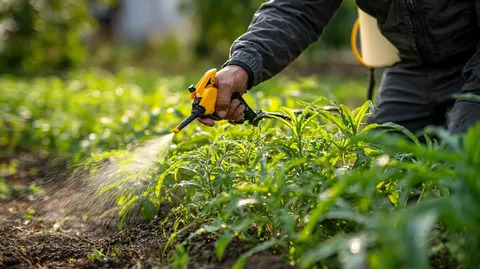
Foliar feeding — applying a diluted fertilizer solution directly to the leaf surfaces — is a well-established supplemental technique that is genuinely worth knowing how to use. Leaf tissue can absorb nutrients through the stomata, and this route can deliver visible correction of certain deficiencies faster than soil application alone. Magnesium deficiency, which presents as yellowing between leaf veins on otherwise green leaves, is a strong example: a diluted foliar magnesium application often produces noticeable improvement within just a few days.
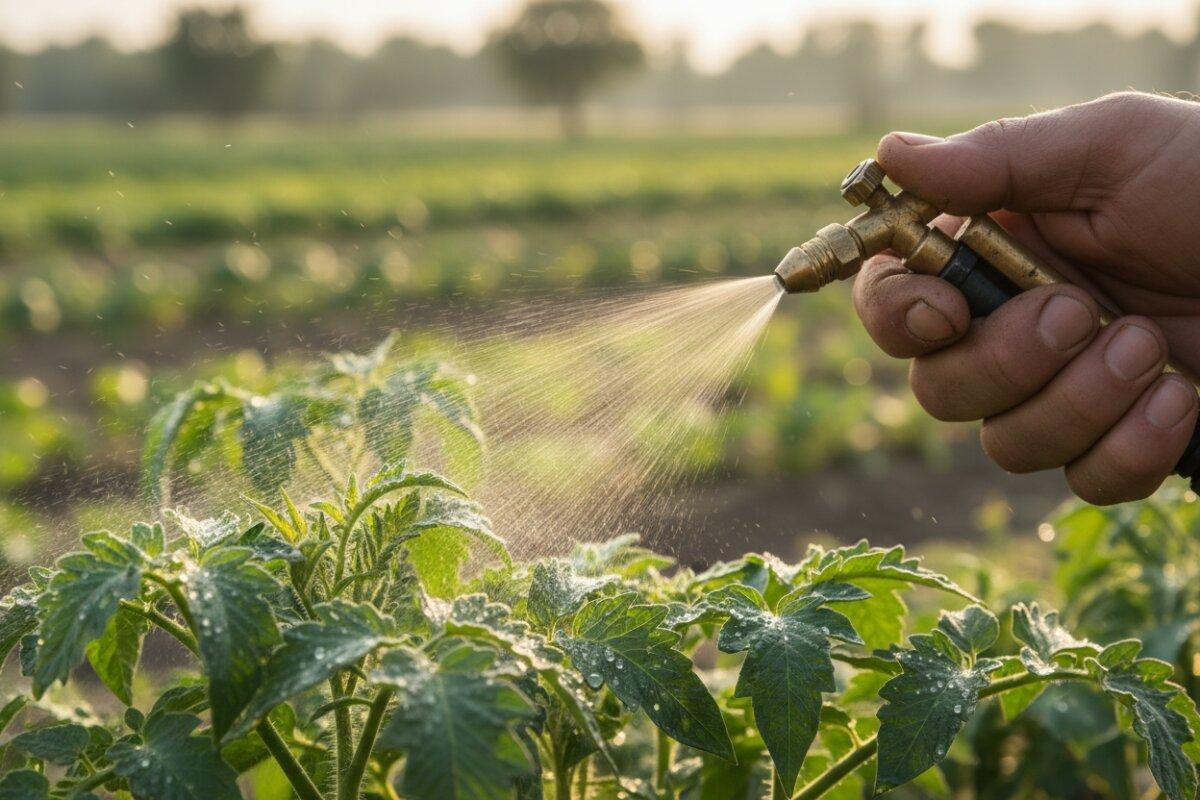
A few important points to observe: foliar applications should always use a more diluted concentration than soil applications — typically half strength or less — to avoid leaf damage. Apply during early morning or evening when the sun is low and temperatures are cooler, never in full midday heat, which causes rapid evaporation and increases the risk of leaf burn. Foliar feeding works best as a targeted supplement to regular soil application, not as a substitute for it.
Drip System Integration
For gardeners operating drip irrigation setups, water soluble fertilizer for vegetables fits naturally into the system through fertigation — the practice of delivering dissolved nutrients directly through the irrigation lines alongside water. This requires either a fertilizer injector or a venturi attachment and is somewhat more common in larger garden installations or greenhouse environments. That said, it is becoming increasingly accessible for serious home gardeners as the equipment has become more affordable. When set up properly, fertigation delivers nutrition directly into the root zone with minimal waste and considerable precision.
Building a Practical Fertilizer Schedule for Your Vegetable Garden
How often to apply water soluble fertilizer for vegetables is one of the questions that comes up most consistently, and the honest answer is that the right interval varies by crop stage, season, and baseline soil fertility. A workable general framework still helps considerably.
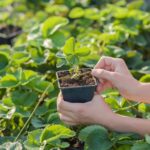
At transplanting: Begin with a phosphorus-forward formula — one where the middle number is highest — diluted to half the recommended strength. This supports root development and anchors the plant without pushing aggressive top growth before the roots are established enough to sustain it.
During vegetative growth (first three to six weeks after transplanting): Move to a balanced formula or one with moderate nitrogen. Apply every 7 to 14 days depending on how actively the plants are growing. Crops in warm conditions tend to grow and consume nutrients faster, which supports the shorter interval. Cooler or slower-growing periods call for the longer one.
At first flower: This stage represents a genuine nutritional turning point. Reduce nitrogen inputs and increase potassium and phosphorus. Many experienced vegetable growers make the transition to a tomato-specific or bloom-oriented formula at this stage — even for crops that are not tomatoes — because the nutritional emphasis of those products aligns well with the needs of any plant that is beginning to set fruit.
During active fruit development: Continue with the high-K, moderate-P formula on a 10- to 14-day schedule. Potassium at this stage has a direct bearing on fruit size, flavor development, and the structural quality of the skin or flesh. It is the most commonly under-applied nutrient during this phase in home gardens, and the results of consistent attention here are often clearly visible in the finished harvest.
Late in the season: Begin tapering applications as plants move toward the end of their productive cycle. Continuing to feed heavily at this stage encourages soft, immature new growth that will not have time to harden before the season closes — and that tender growth tends to attract aphids and other late-season pests more readily than hardened tissue.
Real-World Example: How One Gardener Turned a Struggling Tomato Season Around
Numbers and schedules are useful, but sometimes a concrete example of how water soluble fertilizer for vegetables works in practice makes the picture clearer.
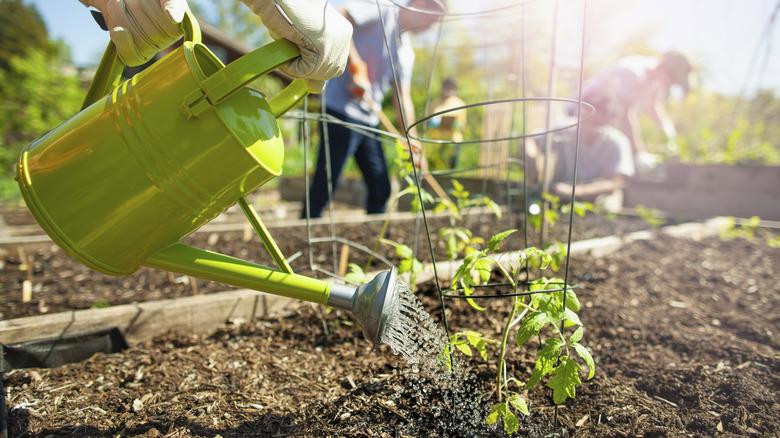
A home gardener in Virginia had been growing tomatoes for several years and always managed a reasonable harvest. Nothing failed dramatically. But nothing exceeded expectations either. The plants would look strong through June and into July, then something would shift — growth slowed, the lower leaves began yellowing, and blossom drop became a recurring problem in August just as daytime temperatures climbed toward their seasonal peak. She attributed it to heat stress and moved on, season after season.
After a conversation with a master gardener at her county extension office, the real picture emerged. She had been using the same high-nitrogen fertilizer from the first application straight through to harvest, never adjusting for the shift in what the plant needed as it moved from vegetative growth into fruit production. On top of that, she had never supplemented with calcium or magnesium — two secondary nutrients that deplete quickly in productive raised beds and that play a specific role in preventing the very symptoms she was seeing.
The following season, she restructured her approach from the start. She used a balanced water soluble fertilizer for vegetables at transplanting, switched to a tomato-specific high-potassium formula when the first flowers appeared, and added a diluted calcium-magnesium supplement on a three-week rotation throughout the season. She also set a consistent application schedule — every two weeks without exception — rather than fertilizing whenever the timing happened to work out.
The response was clear and measurable. Blossom drop stopped being a recurring issue. Fruit set across the plants was noticeably denser than in previous years. Lower leaf yellowing, which had always started in mid-July, did not appear until the very end of the season. Her total harvest weight was roughly double what she had achieved in her best previous year. The variety was the same. The garden location was the same. The soil had not changed. What changed was the fertilizer program — and the attention given to adjusting it as the season moved forward.
4 Costly Mistakes That Cancel Out a Good Fertilizer Program
Even with a quality product and reasonable intentions, these four errors consistently produce poor results. They appear frequently in home vegetable gardens, and all of them are avoidable once the underlying cause is clear.
Mixing at too high a concentration. The natural instinct when plants are struggling is to apply more. With water soluble fertilizers, that instinct tends to backfire. Exceeding the recommended dilution rate creates a solution where dissolved salt concentration is high enough to pull moisture out of root cells through osmotic pressure rather than nourishing them. The result is fertilizer burn — brown leaf margins, accelerated wilting, and in more severe cases, lasting root damage. When there is any uncertainty about rate, mixing toward the lower end of the label range is the safer choice. It will still feed the plant; it will not risk burning it.
Applying to already stressed plants. A plant that is visibly wilting from drought or heat is not physiologically positioned to absorb and process a fertilizer application. The vascular system is under stress, stomata are often closed, and root activity is suppressed. Applying water soluble fertilizer for vegetables in these conditions tends to compound the problem rather than resolve it. Rehydrate the plant with plain water first, allow it to recover its normal posture, and then resume feeding once it has stabilized.
Overlooking secondary nutrients and micronutrients. Nitrogen, phosphorus, and potassium receive the most attention on fertilizer labels and in growing guides, but several other nutrients play roles specific enough that their absence becomes a recognizable problem. Calcium deficiency causes blossom end rot in tomatoes, peppers, and certain squash varieties — a condition that appears as dark, leathery softening at the base of developing fruit. Magnesium deficiency produces the interveinal yellowing pattern that is often misread as nitrogen deficiency and treated incorrectly as a result. Choosing a complete water soluble fertilizer for vegetables that includes secondary and trace nutrients, or supplementing those elements separately, prevents a category of problems that basic NPK formulas will not address on their own.
Continuing the same formula across all growth stages without adjusting. This is probably the single most common fertilization error in home vegetable production, and it is also the one with the clearest and most consistent impact on harvest outcomes. Vegetable crops change their nutritional priorities significantly as they move through each growth phase. A formula that serves a young transplant well will actively work against a plant that has entered flowering and fruit development if it continues unchanged. Observing the plant — its current growth rate, leaf color, flowering behavior, fruit set — and adjusting the formula accordingly is what separates a fertilizer program that genuinely supports the crop from one that only looks like it does.
Organic vs. Synthetic Water Soluble Fertilizer for Vegetables
The question of whether to use organic or synthetic products comes up regularly in vegetable gardening conversations, and it deserves a clear and balanced answer rather than an ideological one.
Conventional water soluble fertilizers are derived primarily from synthetic mineral salts — compounds like potassium nitrate and ammonium phosphate. They are formulated to precise and consistent nutrient ratios, dissolve reliably in water, and act quickly at the root level. The practical limitation is that they contribute nothing to soil biology. Used exclusively over multiple seasons without organic inputs, they can gradually reduce the microbial activity that healthy soil depends on for long-term structure and natural nutrient cycling.
Organic water soluble options — fish emulsion, liquid kelp and seaweed extracts, compost teas, and various OMRI-listed commercial blends — feed the plant more gently and simultaneously support the biological layer of the soil. Their nutrient concentrations are typically lower and less precisely controlled, which makes them more suitable as regular supplements and soil health contributors than as primary feeding sources during the high-demand phases of fruiting vegetable production.
For most home vegetable gardeners, the most productive position sits between the two. Organic matter inputs — compost, cover crops, mulch — build and maintain the biological foundation of the soil over time. Water soluble fertilizer for vegetables, whether organic or synthetic in origin, functions as the responsive and adjustable layer applied on top of that foundation. These two approaches serve different purposes within the same system, and treating them as mutually exclusive options limits the effectiveness of both.
Reading Plant Signals: What Your Vegetables Are Telling You
One of the most genuinely useful skills in vegetable gardening is learning to read visible nutrient deficiency symptoms with reasonable accuracy. A calendar schedule for water soluble fertilizer for vegetables is a helpful starting point, but the most effective programs are also responsive to what the plants themselves are showing in real time.
Here are the most common visible signals and what they most often indicate:
- Yellowing that starts with the oldest, lowest leaves and moves upward over time: This is the classic presentation of nitrogen deficiency. The plant is drawing nitrogen out of its older tissue to redirect toward new growth. Respond with a nitrogen-forward formula as soon as the pattern becomes clear.
- Purple or reddish coloration on the undersides of leaves and on lower stems: This often points to phosphorus deficiency, particularly when it appears early in the season during cool weather, when root activity is naturally slower. A phosphorus-focused application typically resolves the discoloration within two weeks.
- Brown margins along leaf edges on otherwise healthy-looking leaves: Two separate causes can produce this symptom. One is potassium deficiency. The other is fertilizer burn from an application that was too concentrated. Reviewing recent application rates and timing helps distinguish between them.
- Yellow tissue between leaf veins while the veins themselves remain green: This interveinal chlorosis pattern typically indicates magnesium or iron deficiency. Magnesium deficiency tends to appear first on older, more established leaves. Iron deficiency typically shows up on the newest growth at the tips of the plant.
- Soft, darkened, leathery patches at the base of developing tomatoes, peppers, or squash fruit: This is blossom end rot, caused by calcium deficiency or, more precisely, by disrupted calcium uptake — which inconsistent watering commonly triggers. Addressing both calcium supplementation and soil moisture consistency together is usually the most effective response.
- Flowers that open and drop without setting any fruit: Boron deficiency is one possible cause. High temperature stress during bloom is another. And continued high-nitrogen feeding past the flowering stage is a very common contributing factor that often gets overlooked.
These signals do not always point to a single, definitive cause. But they provide a practical starting point for adjusting your water soluble fertilizer for vegetables program in a targeted, evidence-based way — which is almost always more effective than adjusting blindly.
Frequently Asked Questions
How often should I apply water soluble fertilizer for vegetables?
For most vegetable crops in active growth, an application every 10 to 14 days provides a reliable baseline. Fast-growing crops during warm weather and vegetables grown in containers — where frequent watering flushes nutrients through the soil more quickly — can benefit from weekly applications at half the standard strength. During cooler stretches or slower growth phases, extending the interval to every two to three weeks is appropriate. The broader principle is that consistent, moderate feeding generally produces better outcomes than irregular, heavy applications.
Can I use water soluble fertilizer for vegetables on seedlings?
Yes, though dilution is important at this stage. Seedlings have small, sensitive root systems with limited tolerance for concentrated applications. Use water soluble fertilizer for vegetables at one-quarter to one-half the recommended strength when feeding seedlings, and begin only after the first true leaves have developed past the initial seed leaves. Applications that are too early or too strong at this stage can set back germination and damage the roots that have just begun to establish.
Is water soluble fertilizer safe for organic vegetable gardens?
The answer depends entirely on the specific product being used. Many water soluble fertilizers are synthetic in origin and are not compatible with certified organic production standards. Genuinely organic alternatives — fish emulsion, liquid seaweed extracts, and products carrying an OMRI (Organic Materials Review Institute) listing — are fully appropriate for organic methods. If organic compliance matters for how you grow, checking for OMRI certification on the label before purchasing is the most direct way to verify compatibility.
What happens if I apply too much water soluble fertilizer for vegetables?
Over-application produces a condition known as fertilizer burn or salt injury. The high concentration of dissolved salts in the soil solution draws moisture out of root cells rather than allowing them to absorb it, causing wilting, brown leaf margins, and in more serious cases, lasting root damage. If over-application is suspected, flush the soil thoroughly with plain water — several passes — to dilute and carry away the excess. Incorporating compost into the affected area helps stabilize soil chemistry, and feeding can resume at the correct rate once the plant has recovered and the soil has been flushed.
Can water soluble fertilizer for vegetables be used in raised beds and containers?
Raised beds and containers are actually the growing environments where water soluble fertilizer for vegetables tends to perform most reliably and consistently. Both involve limited soil volumes that exhaust available nutrients faster than larger in-ground beds, and liquid fertilizers allow for frequent, precisely controlled top-ups that match the faster nutrient turnover of these growing spaces. One relevant consideration for containers specifically: because they drain freely, nutrients can move through the growing medium and out the drainage holes relatively quickly. This favors more frequent, lighter applications over less frequent heavier ones.
Does water soluble fertilizer expire or lose effectiveness over time?
Mixed solutions lose effectiveness quickly and should generally be used within 24 hours of preparation. Unmixed dry powders and concentrated liquid products, when stored in sealed containers away from heat and direct light exposure, typically remain effective for two to three years. Some degree of clumping or settling in dry products does not necessarily mean the product has degraded — remixing and dissolving as normal is usually sufficient to restore usability. Significant changes in odor or a notable shift in color are more reliable indicators that a product has deteriorated.
Conclusion: Feed Smarter, Harvest Better
The central idea running through everything in this guide is straightforward: vegetables are nutritionally demanding crops that move through distinct phases quickly, and the fertilizer approach that actually serves them well is one that responds to those phases rather than ignoring them.
Water soluble fertilizer for vegetables gives you a level of practical control and timing flexibility that granular-only programs cannot match. You can shift the formula as the plant moves from establishment to vegetative growth to fruit production. You can respond to visible deficiency symptoms within days of noticing them. You can support young transplants, feed heavy-producing fruiting crops, and supplement specific secondary nutrients — all through the same straightforward delivery system. That adaptability, used thoughtfully, is where the real value of liquid fertilization lies.
The most consistently productive vegetable gardeners are not necessarily working with the most expensive products or the most elaborate setups. They are the ones paying close attention: observing how their plants respond, adjusting inputs based on what they see, maintaining healthy soil biology as the underlying foundation, and using water soluble fertilizer for vegetables as the responsive, precision layer applied on top of that foundation.
Your most immediate action step is simple. Walk through your vegetable garden today and look carefully at the leaves — the color, the margins, the pattern of any yellowing, and where on the plant it first appeared. Then consider what fertilizer you have been applying and how recently. If the signals on the plant do not align with where it should be nutritionally — if you are still applying the same high-nitrogen formula on a plant already in full flower — that gap is your starting point. Adjust the formula, apply it at the correct rate and dilution, and observe what changes over the following 10 days.
The plants communicate clearly when you know what to look for. Pay attention, and they will guide the rest of the program for you.