Picture this: you water your tomato plants every day, give them full sun, use decent soil, and still end up with stunted growth and a handful of small fruit by late summer. Meanwhile, a neighbor three doors down is harvesting armfuls of tomatoes from what looks like identical setup. The difference, more often than not, comes down to one decision made before the season even started — choosing the right grow bag size for tomatoes.
This single factor shapes nearly everything that follows. Root development, water retention, nutrient availability, and final yield all trace back to how much space a tomato plant’s roots are given to work with. Choosing the wrong grow bag size for tomatoes is one of the most common and financially frustrating mistakes home gardeners make, largely because the consequences show up slowly and are easy to misdiagnose.
Whether you are growing on an apartment balcony, a small patio, or a backyard with limited ground space, understanding the correct grow bag size for tomatoes will directly shape how many fruits you bring in, how vigorous your plants stay through the season, and how much effort your watering and feeding routine actually demands. This is not abstract gardening theory. It is practical tomato container gardening knowledge built from real-world growing experience, and it is worth getting right before you spend a single dollar on supplies.
Why Grow Bag Size for Tomatoes Actually Matters More Than You Think
When gardening season arrives, it is tempting to grab whatever grow bag is available and get a seedling in the ground quickly. That impulse is understandable, but tomatoes are not forgiving plants when it comes to root space. They are heavy feeders with wide, deep root systems that behave very differently in containers compared to open garden beds. A cherry tomato plant grown under ideal conditions, for example, can spread its roots 18 to 24 inches wide and push 12 to 18 inches downward. That kind of growth demands corresponding soil volume.
When a tomato plant is placed in an undersized container, the consequences follow a predictable pattern. Roots reach the wall of the bag, begin circling, and eventually become root-bound. Once that happens, nutrient uptake drops significantly because the soil volume is simply too small to hold adequate fertilizer. On a warm afternoon, a small container can dry out within a few hours of watering, triggering heat stress and causing flowers to drop before they can set fruit. You end up watering more, feeding more, and harvesting less — a poor return for real effort.
The opposite problem is equally real. An oversized grow bag size for tomatoes used with a compact variety creates excess soil that stays wet far too long between waterings. That consistently damp environment invites root rot and fungal disease, both of which can quietly destroy a plant before visible symptoms appear above soil level.
Selecting the correct grow bag size for tomatoes is not about being overly precise or perfectionistic. It is simply about giving your plants a fair environment from the start and then letting good growing practices do the rest.
The Quick-Reference Size Chart: Grow Bag Size for Tomatoes by Variety
Before going further into the details, this table provides a practical reference point for the most common tomato types and the appropriate grow bag size for tomatoes for each. Keep it accessible when planning your season.
| Tomato Type | Examples | Minimum Bag Size | Recommended Bag Size |
|---|---|---|---|
| Dwarf / Micro | Tiny Tim, Tumbling Tom | 3–5 gallons | 5 gallons |
| Cherry / Grape | Sweet 100, Sun Gold | 5 gallons | 7–10 gallons |
| Determinate (Bush) | Roma, Celebrity, Patio | 5–7 gallons | 10 gallons |
| Indeterminate (Vining) | Beefsteak, Better Boy | 10 gallons | 15–20 gallons |
| Large Heirloom | Brandywine, Cherokee Purple | 15 gallons | 20–25 gallons |
Print this table and keep it near your seed packets or planting notes. The grow bag size for tomatoes you settle on before planting effectively sets the ceiling on what that plant can produce all season long. Starting with the right container is one of the few decisions you cannot easily correct once the plant is established.
Breaking It Down: What Each Gallon Size Can Actually Do
Understanding the chart is one thing. Understanding why each size works — and where it falls short — helps you make better decisions across different seasons, varieties, and growing conditions.
3 to 5 Gallon Grow Bags
These represent the smallest practical option for growing tomatoes in containers, and they serve a specific purpose well. Compact dwarf varieties like Tumbling Tom and Tiny Tim were developed with limited root systems in mind, which makes them genuinely well-suited to smaller bags. Their root structure naturally matches the available soil volume, so growth remains balanced rather than restricted.
For gardeners working with a narrow balcony or minimal outdoor space, a 5-gallon grow bag size for tomatoes paired with a dwarf cherry variety is a sensible, productive choice. Daily watering will be necessary during warm months, but real fruit production is entirely achievable. One home gardener in Chicago ran four 5-gallon bags with Tumbling Tom on a balcony less than four feet wide and harvested more than 200 cherry tomatoes over the course of a single season. The key was matching the variety to the container, not forcing a larger variety into a space it could not support.
7 to 10 Gallon Grow Bags
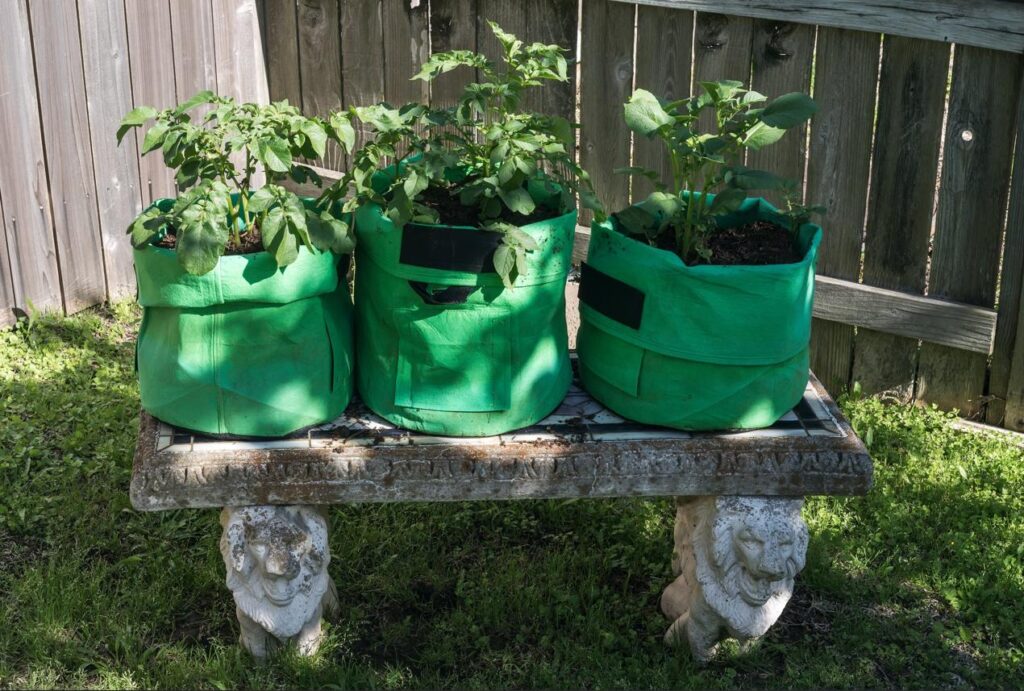
This range represents the most versatile and widely recommended grow bag size for tomatoes for the average home gardener. A 10-gallon fabric pot provides a cherry or grape tomato enough root territory to develop properly, retain moisture adequately between waterings, and sustain consistent fruit production through a full growing season.
Roma tomatoes, among the most commonly grown paste varieties in home gardens, perform reliably well in 10-gallon containers. The increased soil volume supports better flavor development, reduces the frequency of stress-related watering, and gives the plant a stable nutrient base. If you are selecting a grow bag size for tomatoes for the first time and are uncertain where to begin, a 10-gallon bag is the most sensible starting point across a wide range of standard varieties.
15 to 20 Gallon Grow Bags
Indeterminate tomato varieties — the vining types that continue growing and fruiting until frost ends the season — require considerably more root space than their determinate counterparts. When growing Beefsteak, Better Boy, or similar indeterminate hybrids, a 15 to 20 gallon grow bag size for tomatoes provides the root territory these plants genuinely need to perform at a high level.
These bags demand more investment. They require more potting mix to fill — typically 1 to 1.5 cubic feet per bag — and cost more upfront than smaller containers. However, the difference in seasonal output is substantial. A home gardener in Texas who moved his Better Boy plants from 10-gallon to 20-gallon bags reported that fruit output roughly doubled the following season, with noticeably larger individual fruits and a longer productive period before the plants began declining. When root space expands to match the plant’s natural capacity, productive energy follows.
25 Gallon Grow Bags and Larger
Large heirloom varieties like Brandywine and Cherokee Purple are in a category of their own. These plants are slow to mature, demanding of soil nutrients, and capable of producing fruits that weigh well over a pound each under the right conditions. For heirlooms, a minimum of 20 gallons is necessary, and 25 gallons is the more practical target.
At this size, the grow bag size for tomatoes begins to approximate the growing conditions of an in-ground bed. The larger soil mass creates meaningful buffering capacity for both water and nutrients, which explains why heirloom tomatoes grown in 25-gallon fabric bags often produce fruit with flavor and texture nearly equivalent to garden-grown plants. The investment in a larger container pays back in fruit quality, not just quantity.
Fabric Grow Bags vs. Plastic Containers: Does It Change the Size Decision?
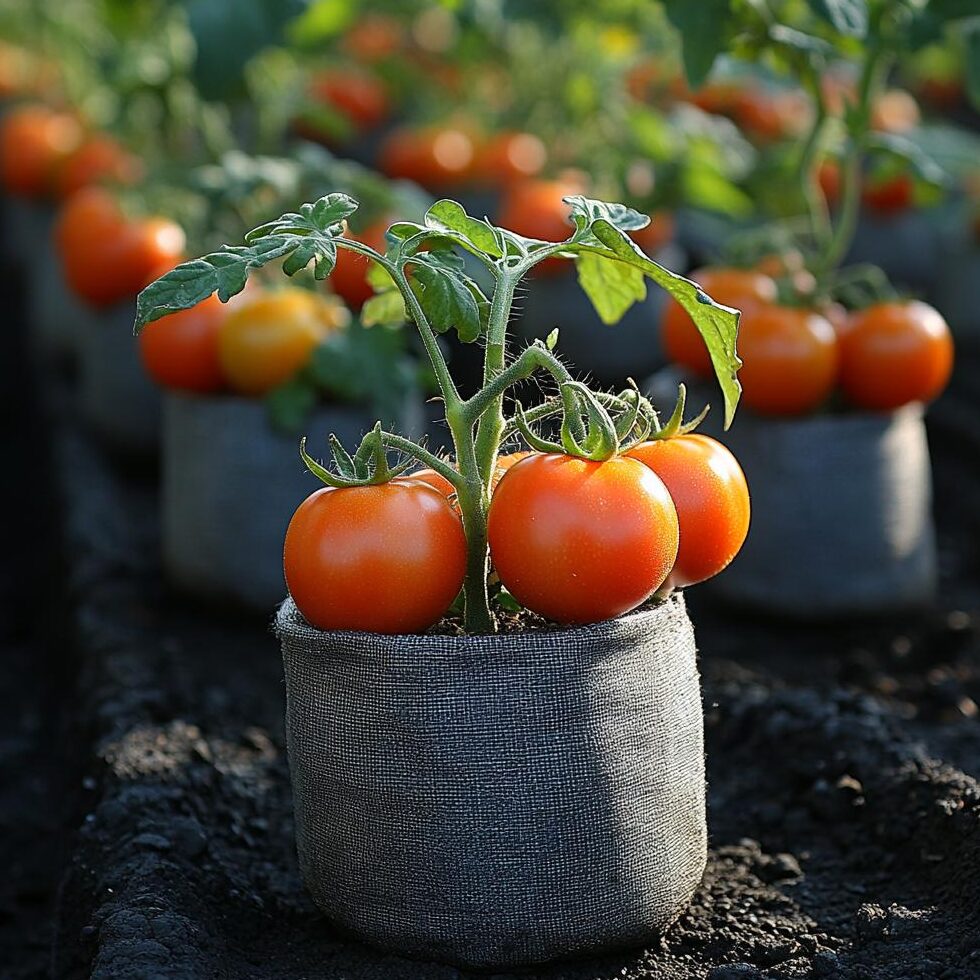
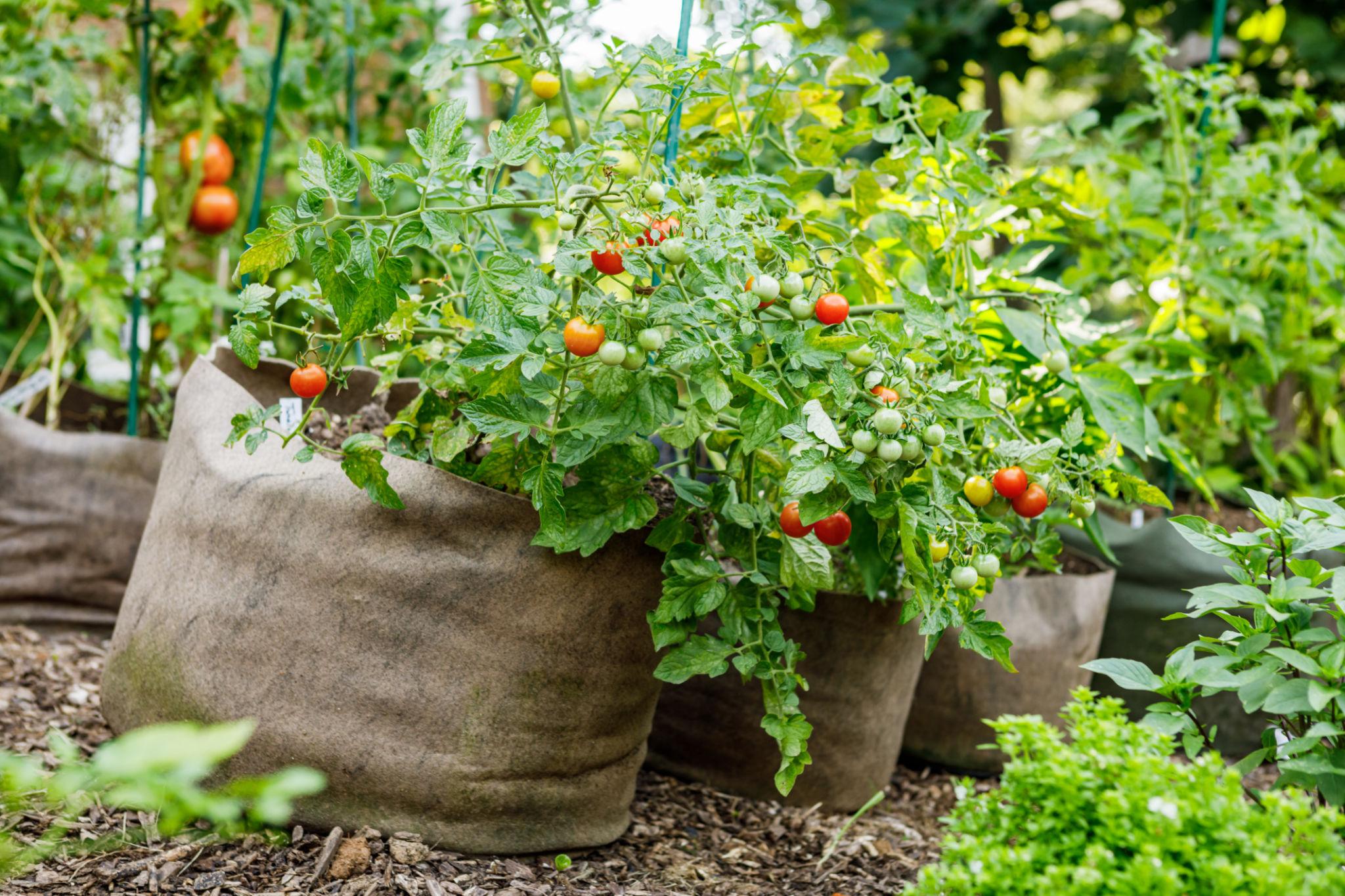
The container material does affect how you think about sizing, and it is worth addressing directly. Fabric grow bags, which are typically constructed from breathable non-woven polypropylene, work through a process called air pruning. When roots reach the outer wall of a fabric bag, they encounter air instead of a solid barrier. Rather than circling and becoming root-bound, the root tip stops growing and the plant redirects energy into generating new feeder roots deeper within the soil volume. The result is a denser, more efficient root system throughout the bag.
This air pruning effect means a 10-gallon fabric pot for tomatoes functionally performs closer to a 12 to 14 gallon plastic container in terms of how well it supports root development. So when selecting grow bag size for tomatoes in fabric, you can reasonably size down one step compared to what you would choose in a traditional plastic pot without sacrificing performance.
The tradeoff is real, though. Fabric bags dry out considerably faster than plastic containers, particularly in warm weather. A 10-gallon fabric grow bag supporting a mature tomato plant in full afternoon sun may need watering twice in a single day. This is not a reason to avoid fabric containers — they offer genuine advantages in root health and drainage — but it is a factor worth planning for before the heat of summer arrives.
The Soil Volume Rule: A Simple Formula Gardeners Swear By
Alongside the variety chart, there is a practical calculation that experienced container gardeners use as a secondary check when confirming grow bag size for tomatoes:
For every 1 foot of mature plant height, provide at least 4 to 5 gallons of soil volume.
Applied practically: a cherry tomato variety that reaches approximately 4 feet at maturity needs a minimum of a 5-gallon container, with a 10-gallon bag offering a healthier margin. An indeterminate tomato variety capable of reaching 6 to 8 feet points directly to a 20-gallon bag as the appropriate starting point.
This formula is not a rigid rule, and variables such as soil quality, the specific variety’s root habits, and your local watering frequency all influence the outcome. What it offers is a fast, logical cross-check against your initial size selection — a way to confirm that your grow bag size for tomatoes is at least in the right range before committing to a full planting plan.
Common Mistakes That Make Even the Right Bag Size Fail
Choosing the correct grow bag size for tomatoes is an important first step, but it does not guarantee a successful harvest on its own. Several avoidable mistakes routinely undermine even a well-sized grow bag setup, and they are worth knowing before the season begins.
Using garden soil instead of potting mix. Standard garden soil compacts significantly inside containers, restricts drainage, and suffocates roots over time. A quality potting mix formulated specifically for container growing is the appropriate choice. Adding perlite at roughly 20% of total volume improves drainage further, which is especially useful in fabric bags where consistent moisture management matters.
Skipping consistent fertilization. Any container, regardless of size, holds a finite amount of nutrients. In a 10-gallon grow bag, the available nutrients are typically consumed within 4 to 6 weeks of transplanting. After that point, regular feeding becomes essential. A balanced slow-release fertilizer applied at the time of planting, supplemented with a liquid tomato feed every 7 to 10 days once flowering begins, gives plants a reliable nutritional foundation throughout the season.
Underestimating how quickly grow bags dry out. Tomatoes in containers, particularly in fabric pots, lose moisture much faster than most gardeners expect. Checking soil moisture by pressing a finger 2 inches into the surface and watering promptly when it feels dry prevents the stress cycles that lead to calcium deficiency and blossom end rot — two of the most common and discouraging problems in container tomato growing.
Placing more than one plant per bag. Even in a large 20-gallon container, two tomato plants will compete aggressively for the same root space, water, and nutrients. The outcome is two underperforming plants rather than one productive one. One tomato plant per grow bag, regardless of grow bag size for tomatoes, is the standard that experienced container gardeners consistently follow.
Practical Setup Tips: Getting the Most From Your Grow Bags
A few setup decisions made before planting can meaningfully improve the performance of any grow bag size for tomatoes throughout the season.
- Elevate bags on pot feet or a raised platform. Lifting bags off the ground improves airflow beneath the container, prevents moisture from pooling under the base, and makes the air pruning effect of fabric bags more consistent.
- Position indeterminate varieties near a structural support. A wall, fence, or fixed trellis placed before planting saves considerable effort later. A mature indeterminate tomato in a 15 to 20 gallon bag becomes a heavy, top-loaded plant that requires stable support.
- Group smaller bags together in clusters. Placing 5-gallon and 10-gallon bags close to one another moderates the temperature of individual containers, reduces wind exposure for each plant, and creates a more stable microenvironment for developing fruit.
- Use labels from day one. When managing multiple grow bag sizes for tomatoes across different varieties, clear labeling prevents confusion as plants mature at different rates and respond differently to feeding and pruning.
How Temperature Affects Your Grow Bag Size Decision
Soil temperature inside containers is a factor that receives less attention than it deserves, particularly for gardeners in warmer regions. In USDA hardiness zones 9 and above, dark-colored grow bags placed in direct sun can accumulate soil temperatures exceeding 90°F by midafternoon. At those temperatures, root activity slows significantly, nutrient uptake is impaired, and the plant redirects energy away from fruiting.
In this context, the grow bag size for tomatoes carries a thermal dimension beyond root space. Larger soil volumes heat up more gradually and retain more temperature stability throughout the day. A 20-gallon bag in afternoon sun will stay cooler longer than a 5-gallon bag in identical conditions, simply because there is more soil mass to absorb and moderate heat. For gardeners in consistently hot climates, choosing the upper end of the recommended size range for each variety is a sound strategy.
The color of the grow bag also plays a role. Light tan or white fabric bags reflect more sunlight and keep root zones meaningfully cooler than dark-colored options. When finalizing your grow bag size for tomatoes selection in a hot climate, pairing a larger volume with a lighter-colored bag addresses both the thermal and root space challenges at the same time.
FAQs
What is the best grow bag size for tomatoes in general?
For most home gardeners growing standard cherry or determinate varieties, a 10-gallon grow bag represents the most reliable starting point. It provides adequate root volume for healthy development, retains moisture reasonably well between waterings, and remains manageable to move when needed. Gardeners committed to indeterminate or large heirloom varieties should plan for 15 to 20 gallons to match the plant’s actual root demands.
Can I grow tomatoes in a 5-gallon grow bag?
Yes, but the variety selection must match the container. A 5-gallon grow bag size for tomatoes is well-suited to compact dwarf cultivars like Tiny Tim and Tumbling Tom, which were specifically bred for limited root space. Placing a standard cherry tomato or any indeterminate variety in a 5-gallon bag will result in a plant that is perpetually stressed — producing smaller fruit, requiring more frequent watering, and declining earlier in the season than a properly-sized container would allow.
How many tomato plants fit in one grow bag?
One plant per grow bag, without exception. Even in a 20-gallon container, two tomato plants will compete for root space, water, and nutrients in ways that limit both plants’ productivity throughout the season. Each tomato deserves its own container, regardless of how large the grow bag size for tomatoes appears at the time of planting.
Do bigger grow bags mean more tomatoes?
To a meaningful degree, yes — but only when the bag size is appropriately matched to the variety. Providing the correct grow bag size for tomatoes removes one of the primary limiting factors in container production. Beyond that matched threshold, however, oversizing does not continue to increase yield. A dwarf cherry variety in a 20-gallon bag will not outperform the same variety in a 10-gallon bag — it will simply leave half the soil underused. The goal is matching the container to the plant’s root needs, not maximizing container volume.
Is it better to use fabric or plastic grow bags for tomatoes?
Fabric grow bags are generally the preferred choice for tomato container gardening because of their air pruning properties, superior drainage, and better temperature regulation compared to plastic. The meaningful consideration is watering frequency — fabric bags dry out faster and require more attentive moisture management. In climates with extreme heat and limited access to daily watering, a plastic pot sized one step larger than the fabric equivalent may produce more consistent results through the warmest weeks of the season.
Conclusion: Start With the Right Size and Let the Plant Do the Rest
Every decision you make after planting — how often to water, how much to feed, when to prune — becomes easier and more effective when the foundation is right. Choosing the correct grow bag size for tomatoes is that foundation. It determines the root environment your plant lives in for the entire season, and a root environment that matches the plant’s actual needs makes everything else downstream more manageable.
Use the reference table in this guide as your anchor when planning. Match each variety to its appropriate size range. When in doubt, lean toward the larger recommended option, particularly if you are in a warm climate or planning to grow through a long season. Fill every bag with quality potting mix, establish a consistent watering and feeding routine, and give each plant its own container.
Your action step today is simple: review what you are planning to grow this season and verify that the grow bag size for tomatoes you already have — or are about to purchase — actually aligns with those variety types. A single correction made before planting, adjusting one bag size up or down to properly match your tomato variety, can be the difference between a frustrating season and a harvest that rewards every hour of effort you put in.